
Pilates is a practice with many entry points. This guide offers useful context without making the experience more complicated than it needs to be.
Different roots, similar audiences
Barre and Pilates attract similar participants: people who want focused, low-impact movement that builds strength and coordination without jumping or heavy lifting. But the two formats come from different places. Barre borrows from ballet training and dance conditioning, organizing class around a barre, standing work, and high repetitions of small, precise movements. Pilates is its own twentieth-century method, built on a defined repertoire and a family of spring-based apparatus.
The difference matters when you are choosing a class. A barre class may feel rhythmic and muscular, with pulses, light weights, and small ranges that create a burn. A Pilates class may feel more analytical, with the teacher explaining how a movement is organized and adjusting springs or props to fit your body. Both can be excellent; they simply teach different things.
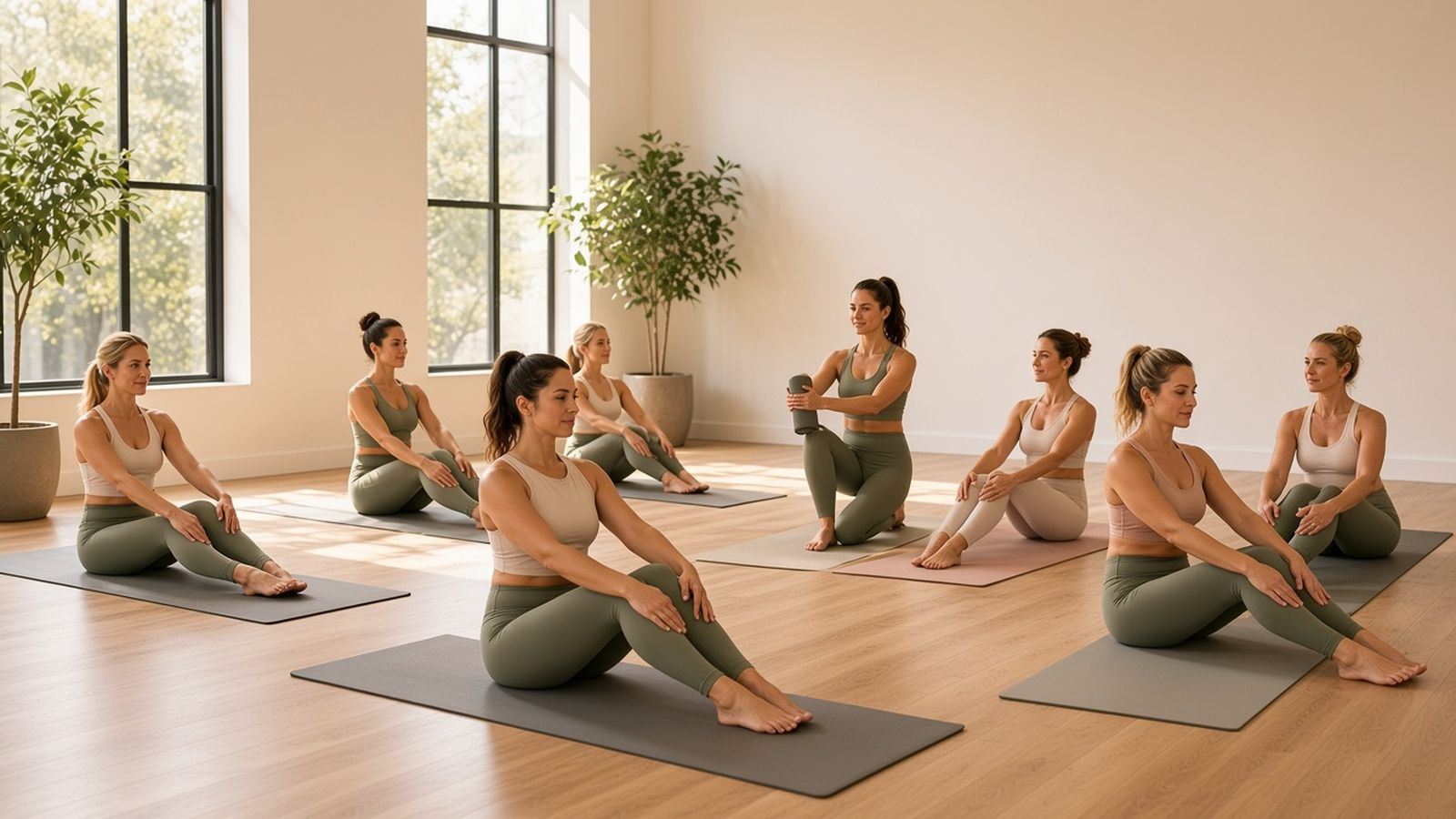
What a barre class looks like
A typical barre class moves between the barre and the center of the room. You might see plié variations, leg lifts, calf raises, and small pulses, interspersed with stretches. Light weights, resistance bands, and small balls are common. Music often sets the pace, and the overall effect is a steady, continuous effort with an emphasis on posture and endurance.
Barre requires no prior dance experience. Instructors generally demonstrate everything and offer modifications for balance or flexibility. If you enjoy moving to music and the satisfaction of small, precise effort, barre can be a welcoming entry point into structured exercise.
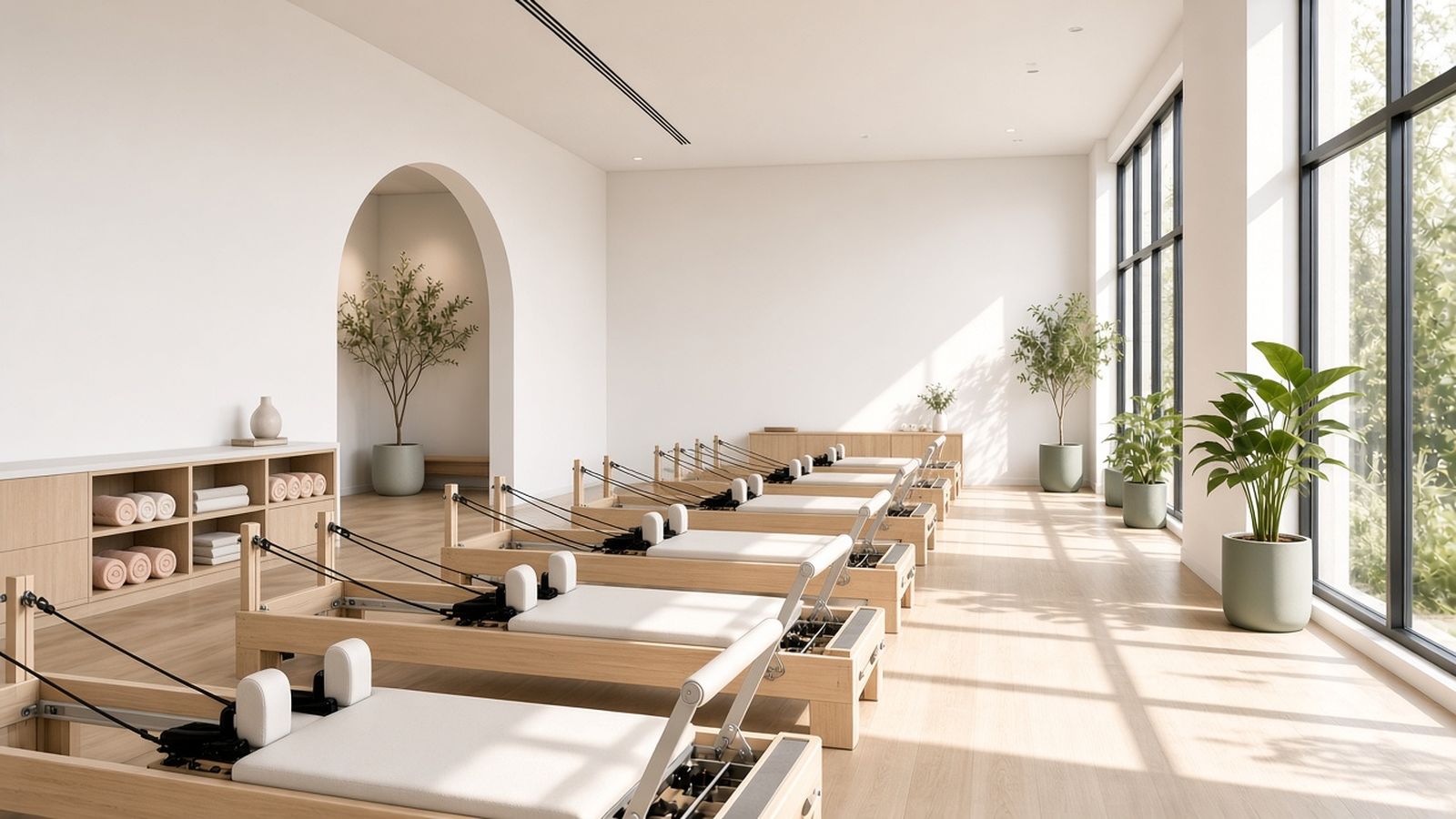
What a Pilates class looks like
A Pilates class, whether on a mat or a reformer, is organized around a repertoire of named exercises with a defined purpose. The teacher cues breath, positioning, and the quality of the movement rather than counting repetitions to music. On apparatus, springs replace gravity as the main source of resistance, which lets the same exercise become easier or harder in a very controlled way.
The pace is often slower than barre, with more explanation and more individual attention to setup. That is not a lack of intensity; controlled spring resistance can be demanding. If you like understanding why you are doing what you are doing, and you enjoy feeling exactly where an effort comes from, Pilates may suit you well.
Where they overlap
Both formats value precision, alignment, and small controlled movement. Both are low impact and joint-friendly for most people, and both build trunk strength and postural endurance. It is common for teachers in one discipline to borrow useful ideas from the other.
Equipment and studios
Barre needs a barre, which any wall or sturdy chair can imitate at home, plus light props. Pilates needs a mat for mat work and dedicated apparatus for reformer or equipment classes, which is why equipment Pilates usually happens in a studio. That difference shapes cost and logistics: barre classes are common in gyms and dance spaces, while reformer Pilates is usually booked through a dedicated studio.
If you are deciding between the two, look at the schedule and location as well as the format. The class you can attend consistently at a time that suits your week will do more for you than the theoretically superior option across town. Many cities have both, and trial classes make comparison easy.
Health considerations
Both barre and Pilates are generally adaptable, but individual circumstances matter. If you are pregnant, returning from injury, or managing a health condition, ask your doctor or another qualified professional what is appropriate before starting either format. Then tell your instructor. A good teacher in either discipline will offer options and stay within their training.
Notice how each class communicates about difficulty. A supportive room offers rest without commentary and treats modifications as normal. If a class culture pushes you to ignore pain or to compete with neighbors, that is a signal to look elsewhere, whatever the format.
Choosing your format
Choose barre if you want a music-driven, continuous, dance-inspired class with standing work and light resistance. Choose Pilates if you want a methodical repertoire, close attention to mechanics, and the option of spring-based apparatus. If you cannot decide, alternate for a few weeks; many participants discover they value both and keep one of each in their schedule.
You can also let your goals lead. If your aim is a structured, progressive movement practice with measurable control, Pilates offers a clear pathway. If your aim is an energizing class that keeps you moving the whole time, barre delivers that reliably. The honest answer is that both are good, and the best one is the one you keep attending.
Helpful next reads
Find a studio near you.
Explore local studios and choose a place that fits your schedule, questions, and way of moving.
FAQ
Is barre the same as Pilates?
No. Barre is dance-inspired training built around barre work and high repetitions, while Pilates is a distinct method with its own repertoire and apparatus.
Do I need dance experience for barre?
No. Barre classes are beginner friendly and instructors demonstrate every movement. No dance background is expected.
Which is better for building strength?
Both can build strength. Barre uses light resistance and endurance work; Pilates uses body weight and spring resistance. The better choice depends on the teaching and your preferences.
Can I switch between barre and Pilates?
Yes. The two complement each other well, and many people keep one of each in their weekly routine.
Is either format safe during pregnancy?
Ask your doctor or midwife first, then work with an instructor trained in prenatal modifications. Both formats can often be adapted with appropriate guidance.