
Pilates is a practice with many entry points. This guide offers useful context without making the experience more complicated than it needs to be.
Start with your own priorities
There is no universally best Pilates studio. The right choice depends on what you want from the experience and what you can realistically sustain. You may care most about a nearby location, small groups, reformer equipment, classical teaching, mat classes, private instruction, a welcoming beginner policy, or a schedule that fits around work and family. Write down your top three priorities before comparing options so marketing language does not make the decision feel more complicated.
Think about the kind of room where you learn well. Some studios feel intimate and quiet; others are energetic and social. Some teach a consistent lineage, while others blend contemporary movement ideas. Variety can be a strength, but a clear explanation of the method and class levels matters more than a particular label.
Location is part of quality
A studio that is easy to reach is more likely to become part of your life. Consider travel time, parking or public transit, accessibility, class start times, and whether the route still works on a busy day. Convenience is not a shallow preference; it is part of consistency.
Review instructor credentials and communication
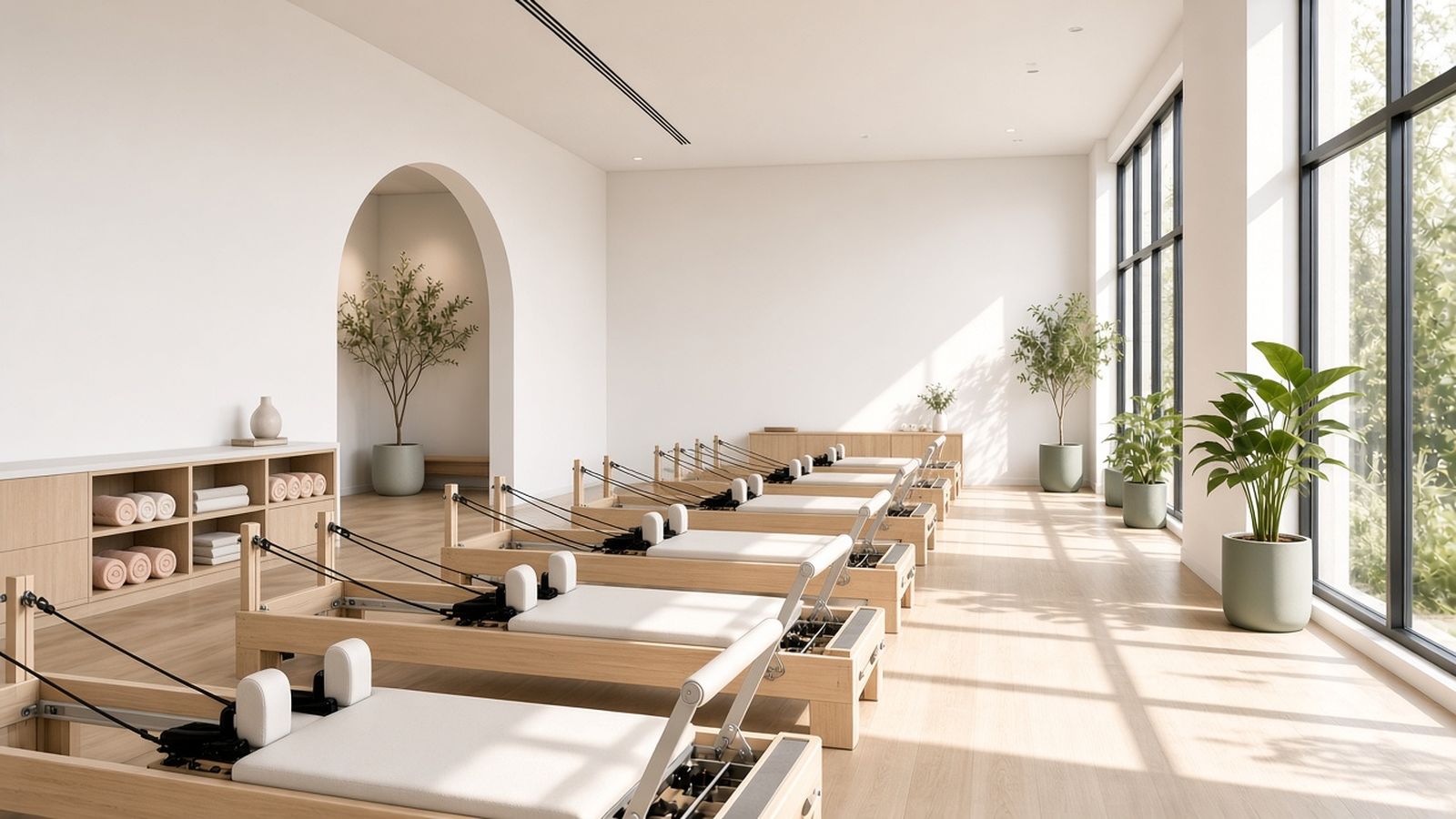
Ask what foundational education the instructors have completed, whether they pursue continuing education, and how the studio supports teaching quality. A credential is one piece of the picture, not a ranking. You can also look for experience relevant to your goals, such as prenatal and postnatal work, older-adult classes, apparatus, accessibility, or collaboration with healthcare professionals.
Communication is equally important. Does the studio answer questions directly? Does it explain what happens in a first class? Are modifications presented as normal options rather than signs of failure? A teacher who can describe the purpose of an exercise and offer a clear alternative is often more useful than a studio that relies on impressive claims.
Compare class size and equipment
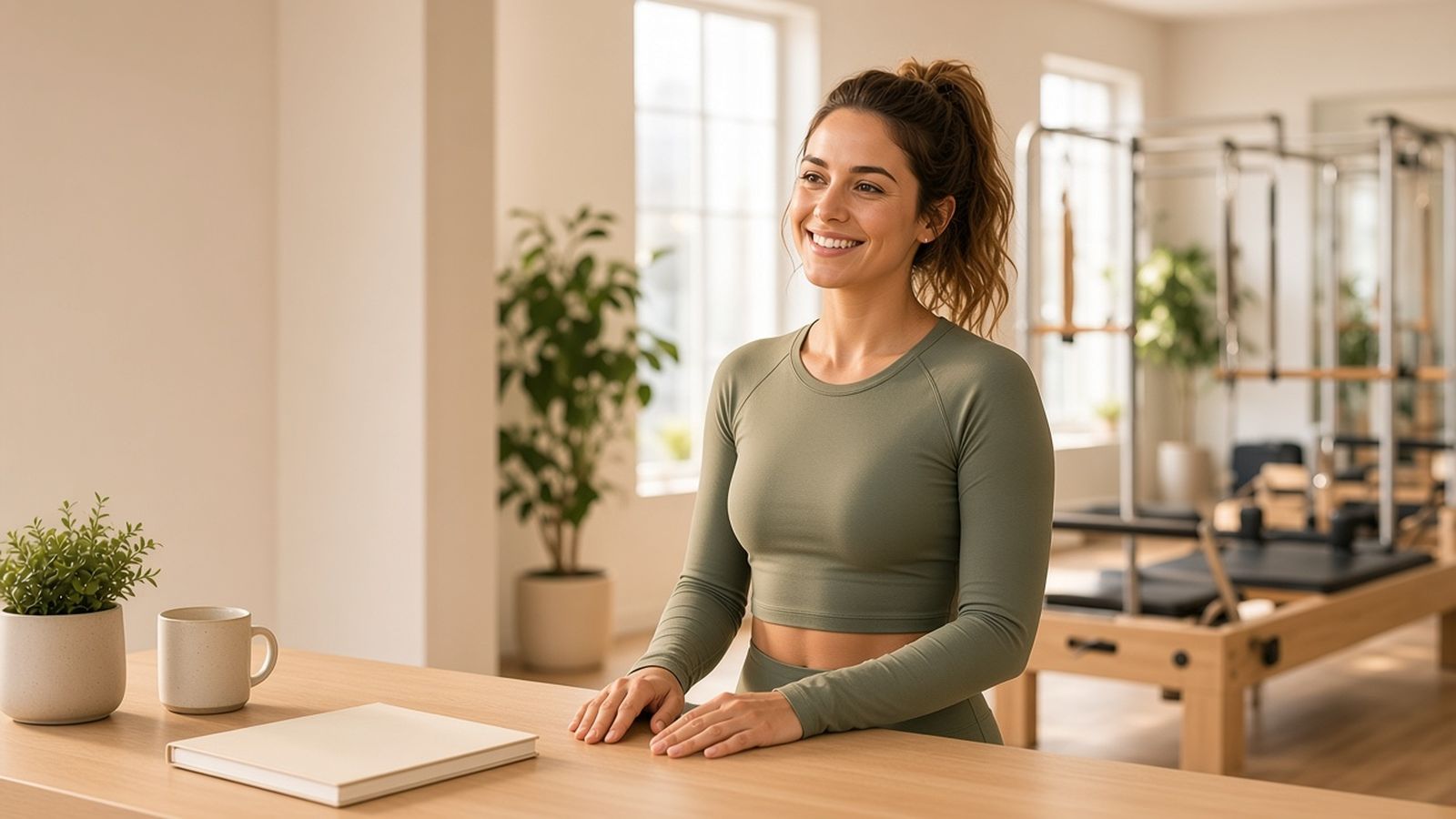
Class size affects the kind of attention an instructor can offer. A small group may allow more individualized feedback, while a larger class can provide energy and a lower price. Ask how many people share the equipment, whether the teacher has an assistant, and how new clients are oriented. The right number depends on the space, the instructor, and the level of the class.
Equipment should appear clean, stable, and well maintained. For reformer sessions, notice whether springs, straps, footbars, and carriage spaces are explained before use. For mat sessions, look for enough room to move without crowding. If you are curious about the Cadillac, chair, barrels, or props, ask whether they are used in group classes or reserved for private instruction.
A good studio explains its limits
No studio can be the right place for every need. A thoughtful team will say when a class is not appropriate, refer medical questions to a qualified professional, and help you find another option when necessary. Honest boundaries are a positive sign.
Use trial classes and reviews wisely
A trial class, introductory session, or studio tour lets you evaluate the experience before buying a pack. Notice the welcome, the pace, the clarity of the instructions, the condition of the room, and how the instructor responds to questions. You do not need to feel perfectly coordinated on the first visit. You do need to feel that learning is expected and that you can ask for support.
Reviews can reveal patterns about communication, cleanliness, scheduling, and customer service, but they are not a substitute for your own judgment. Look for recent, specific comments rather than treating a score as a guarantee. Ask friends whose preferences resemble yours, then compare their recommendations with the studio’s current information.
Notice the first five minutes
The beginning of a class often reveals how a studio teaches. Does someone greet you and confirm that the instructor knows you are new? Are you shown where to put your things and how to set up? Does the teacher explain the goal of the opening exercise before asking everyone to move? These moments can tell you whether the studio values orientation and whether you will feel comfortable asking for help later.
Notice the end as well. Is there time to come out of the final position, gather belongings, and ask a question? Does the teacher offer a next step without pressuring you to buy? A studio that respects the beginning and ending of class is often paying attention to the whole client experience. Those small observations can be more useful than a polished tour or a long list of equipment.
Check the culture as well as the checklist
Credentials and equipment matter, but the feeling of the room matters too. Notice whether instructors speak about bodies respectfully, whether the front desk treats questions as welcome, and whether participants are given permission to work at different levels. A studio can have beautiful equipment and still be a poor match if the teaching style makes you feel rushed or judged.
Look for signs of care in ordinary moments: a clean changing area, clear directions, enough space for belongings, and staff who know how to explain a late-cancel policy without embarrassment. These details do not prove that every class will be perfect, but they help you understand how the business treats people. Your studio choice is a relationship, not just a purchase.
Read the policies before committing
Pricing is only part of the decision. Read cancellation windows, late-arrival rules, expiration dates, membership pauses, automatic renewals, refunds, and what happens when a class is full. Ask whether grip socks or other items are required. A policy can be firm without being confusing; the important thing is that you can understand the commitment before paying.
When you find a studio that feels promising, start with the smallest reasonable commitment. Attend consistently, notice how the relationship develops, and ask for a progression plan if you want one. The best studio is not necessarily the trendiest or closest to an online recommendation. It is the room where instruction, culture, access, and practical details line up well enough for you to keep showing up.
Helpful next reads
Find a studio near you.
Explore local studios and choose a place that fits your schedule, questions, and way of moving.
FAQ
What credentials should a Pilates instructor have?
Look for a foundational certification, relevant continuing education, and experience that matches your goals. Ask the studio how it supports teaching quality and modifications.
How important is class size?
Class size affects individual attention and cost. Ask how many people attend, how the room is arranged, and how beginners receive guidance.
Should I take a trial class?
Yes, when available. A trial class or tour lets you evaluate instruction, communication, equipment, cleanliness, and the overall fit before buying a package.
How do I compare Pilates studio reviews?
Look for recent, specific patterns about teaching, policies, cleanliness, and communication. Use reviews as context rather than a final verdict.
What should I ask before buying a membership?
Ask about price, renewal, expiration, cancellations, pauses, booking windows, late arrivals, refunds, and whether the plan matches how often you can attend.