
Pilates is a practice with many entry points. This guide offers useful context without making the experience more complicated than it needs to be.
Start with your care team
Pregnancy and the postpartum period can involve significant changes in energy, balance, breathing, connective tissue, recovery, and daily demands. Pilates may be part of a movement routine for some people, but the appropriate timing and intensity depend on individual circumstances. Before beginning, continuing, or changing a practice, ask your doctor or midwife for guidance that reflects your health history and stage of pregnancy or recovery.
A Pilates instructor can help you understand class options and movement variations, but they do not replace medical care. Share the guidance you receive with the studio and ask how the instructor works with prenatal or postnatal clients. A responsible studio will be comfortable saying when a question belongs with a healthcare professional and will not promise that Pilates can prevent or treat a medical condition.
Keep communication open
Your needs may change from week to week or even within one class. Tell the instructor about relevant restrictions, symptoms, fatigue, pain, bleeding, dizziness, or other concerns according to the advice of your care team. Stop and seek appropriate guidance if something feels wrong or different from what you have been told to expect.
Choosing prenatal instruction
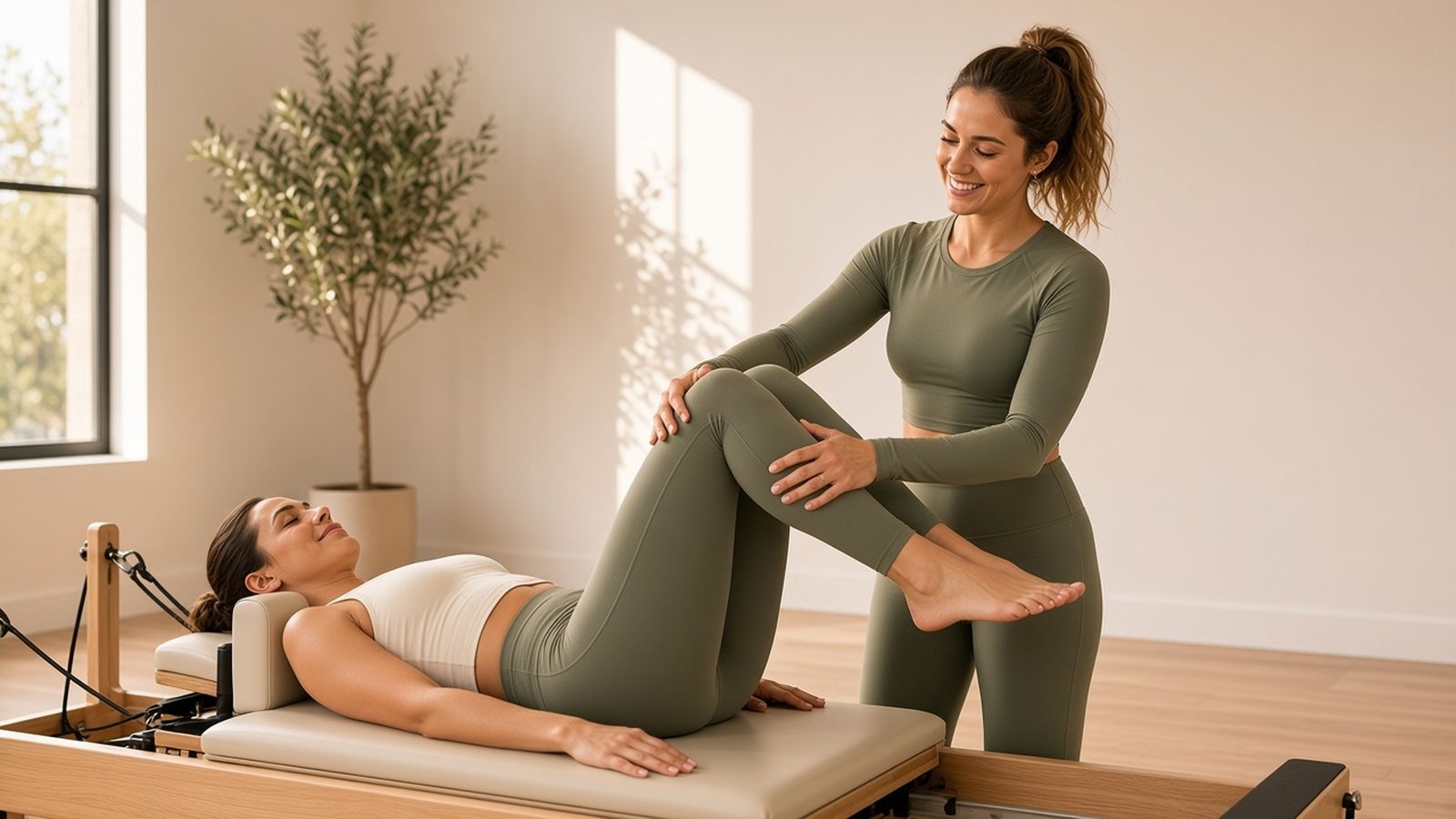
Ask whether the instructor has completed prenatal and postnatal education in addition to a foundational Pilates certification. Training can cover common adaptations, communication, breath, positioning, equipment choices, and when to refer a client out. A certificate is not a guarantee of fit, so also ask how the instructor approaches individual differences and how they keep class language nonjudgmental.
A prenatal class may use props and apparatus differently as balance, comfort, and range change. The instructor might offer side-lying, seated, supported standing, or other options, and may reduce exercises that create pressure or discomfort for you. The purpose is not to make every participant do the same version. It is to provide a clear route through class while respecting the body in front of the teacher.
Movement after birth
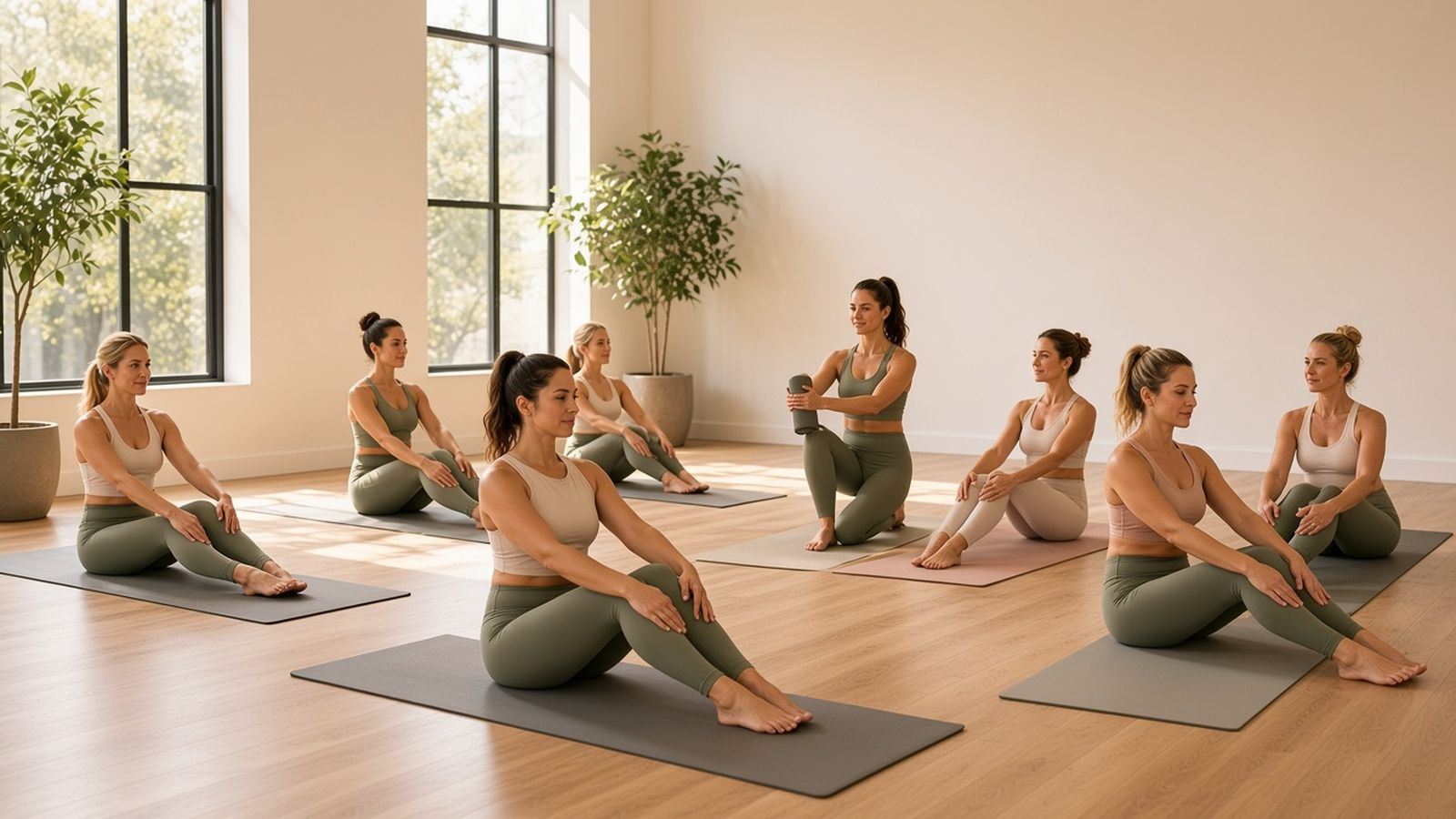
Returning to Pilates after birth is not a race back to a previous routine. Recovery can be influenced by birth experience, surgery, sleep, feeding, symptoms, pelvic health, childcare, and many other factors. Ask your doctor, midwife, or pelvic health physical therapist when and how to resume activity. A postnatal specialist can help you describe what you are experiencing and identify questions for your care team.
An instructor may begin with breathing, gentle awareness, supported positions, and low-pressure movement before adding more complex work. The exact sequence is less important than the quality of communication and the appropriateness of the progressions. You should be able to pause, feed or care for your baby when needed, and adjust the plan without feeling that you have failed.
Pelvic health is part of the conversation
Concerns such as heaviness, leaking, pain, or pressure deserve professional attention rather than a promise that more exercise will solve them. A pelvic health physical therapist or another qualified clinician can evaluate symptoms and coordinate with your movement instructor when appropriate.
Class formats and practical questions
A private session can offer more room for questions and individual adjustments, while a small group may provide community and a regular routine. Some studios offer dedicated prenatal or postnatal classes; others integrate modifications into general classes. Ask how many people attend, whether the instructor can see everyone clearly, what equipment is used, and whether you can change positions comfortably.
Also ask about booking flexibility. Pregnancy and early parenthood can make plans unpredictable, so a studio with understandable cancellation terms and a kind front desk can make a real difference. You may want a class near home, work, or childcare, and you may prefer a room where bringing a baby is or is not part of the arrangement. There is no universal best format.
Plan for the changing seasons of recovery
Prenatal and postnatal movement rarely follows a perfectly straight line. A class that felt comfortable one month may need a different setup later, and a plan that worked before birth may not fit during a week of limited sleep or changing symptoms. Build flexibility into your expectations. A shorter visit, a private check-in, or a pause can all be valid parts of staying connected to movement.
It can help to make a short list of questions before each stage: What has my care team advised? What feels different today? What does the instructor need to know? What would make this class easier to leave if I need to stop? These questions create a practical bridge between medical guidance and the studio experience. They also give you permission to change course without treating adaptation as failure.
Make a plan for questions and boundaries
Before class, decide what information you want to share and what you want to keep private. You can tell an instructor that you are pregnant, recently gave birth, or have a recommendation from your care team without explaining every personal detail. Ask how the studio handles rest, bathroom breaks, feeding, late arrival, and changes to your booking. Clear expectations reduce the pressure to improvise when you are already managing a lot.
A supportive teacher will not interpret a modification as a lack of effort. They will help you find a version that lets you participate while honoring the guidance you have received. If the room does not feel respectful, you are allowed to leave and choose another option. Your relationship with movement should have room for agency, privacy, and changing needs.
A supportive standard for yourself
Use comfort and communication as useful signals. A class can be challenging without being punishing, and rest can be part of a strong practice. Notice how you feel during and after movement, follow the boundaries set by your care team, and avoid comparing your timeline with someone else’s. Online examples may show polished routines, but they cannot account for your history or current needs.
The right studio will make space for uncertainty. It will describe its training honestly, invite questions, and refer out when a concern is beyond the instructor’s scope. Pilates can be one supportive part of prenatal or postnatal life when it is approached with care, flexibility, and respect for the expertise of your healthcare team.
Helpful next reads
Find a studio near you.
Explore local studios and choose a place that fits your schedule, questions, and way of moving.
FAQ
Can I do Pilates while pregnant?
Some people continue or begin modified Pilates during pregnancy, but ask your doctor or midwife first and work with an instructor trained in prenatal adaptations.
When can I return to Pilates after birth?
Timing varies with your birth, recovery, symptoms, and medical guidance. Ask your doctor, midwife, or pelvic health physical therapist for an individualized plan.
Should I choose a prenatal Pilates class?
A dedicated class may offer relevant training and modifications, but a general class can also work if the instructor is qualified and can adapt the session appropriately.
What if I feel pain or pressure during class?
Stop the movement and communicate with the instructor. Follow your care team’s advice and seek professional assessment for symptoms that concern you.
Can Pilates fix postpartum issues?
Pilates instructors should not promise to diagnose or fix medical issues. Consult a qualified healthcare professional, such as a pelvic health physical therapist, for symptoms or concerns.