
Pilates is a practice with many entry points. This guide offers useful context without making the experience more complicated than it needs to be.
What certification is meant to prepare you for
Pilates instructor education should help you understand the method, observe movement, communicate clearly, build appropriate sessions, and recognize when a client needs support outside your scope. A certificate is not a guarantee that someone is the right teacher for every person. It is one part of a professional pathway that also includes practice, mentorship, continuing education, and honest self-assessment.
Before enrolling, attend classes with several teachers and notice what you value. Do you want a strong classical lineage, a contemporary approach informed by anatomy and movement science, or a program that lets you study both? There is room for different traditions. The useful comparison is whether the program explains its history, curriculum, expectations, assessment, and limitations clearly.
Classical and contemporary approaches
Classical programs generally organize the repertoire and progression around the work associated with Joseph Pilates and established teaching lineages. Contemporary programs may integrate additional anatomy, biomechanics, and current movement education while still drawing on Pilates principles. Labels vary, so read the actual curriculum rather than assuming a term means the same thing everywhere.
Mat-only versus comprehensive education
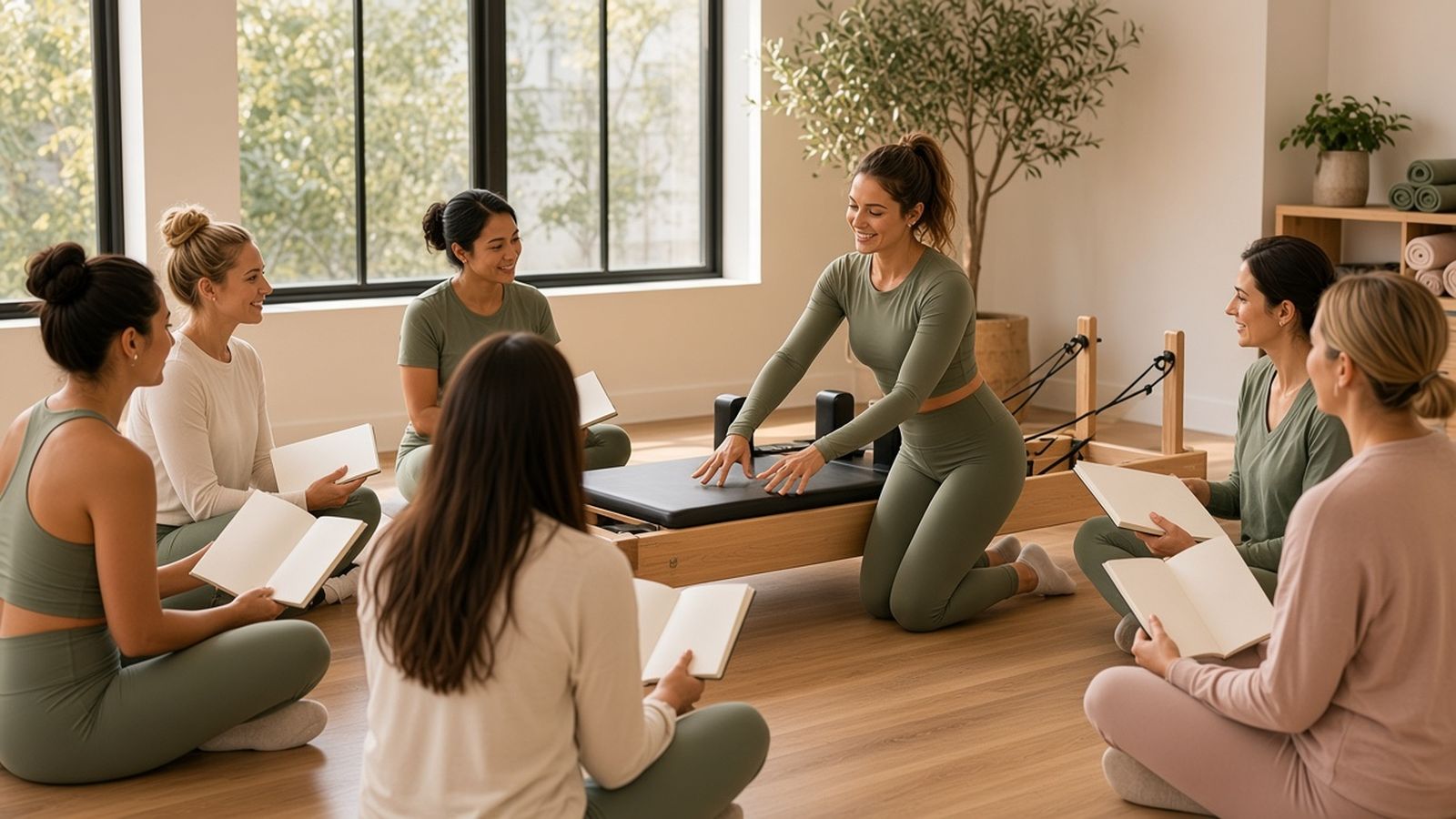
A mat certification can be a focused entry point for teaching floor-based classes. It often covers foundational principles, mat repertoire, cueing, anatomy, class design, and practice teaching. Mat-only programs may suit someone who wants to teach group fitness, add Pilates to an existing movement career, or explore the profession before committing to apparatus training. Ask how the program assesses teaching and what populations it prepares you to serve.
A comprehensive pathway usually includes mat plus apparatus such as the reformer, Cadillac or trapeze table, chair, and barrels. It takes more time and may include observation, self-practice, written or practical exams, and supervised teaching. Comprehensive does not mean an instructor is automatically prepared for every specialty. Prenatal, postnatal, older-adult, pain, rehabilitation, and accessibility work require additional education and appropriate referral relationships.
Hours, practice, and assessment
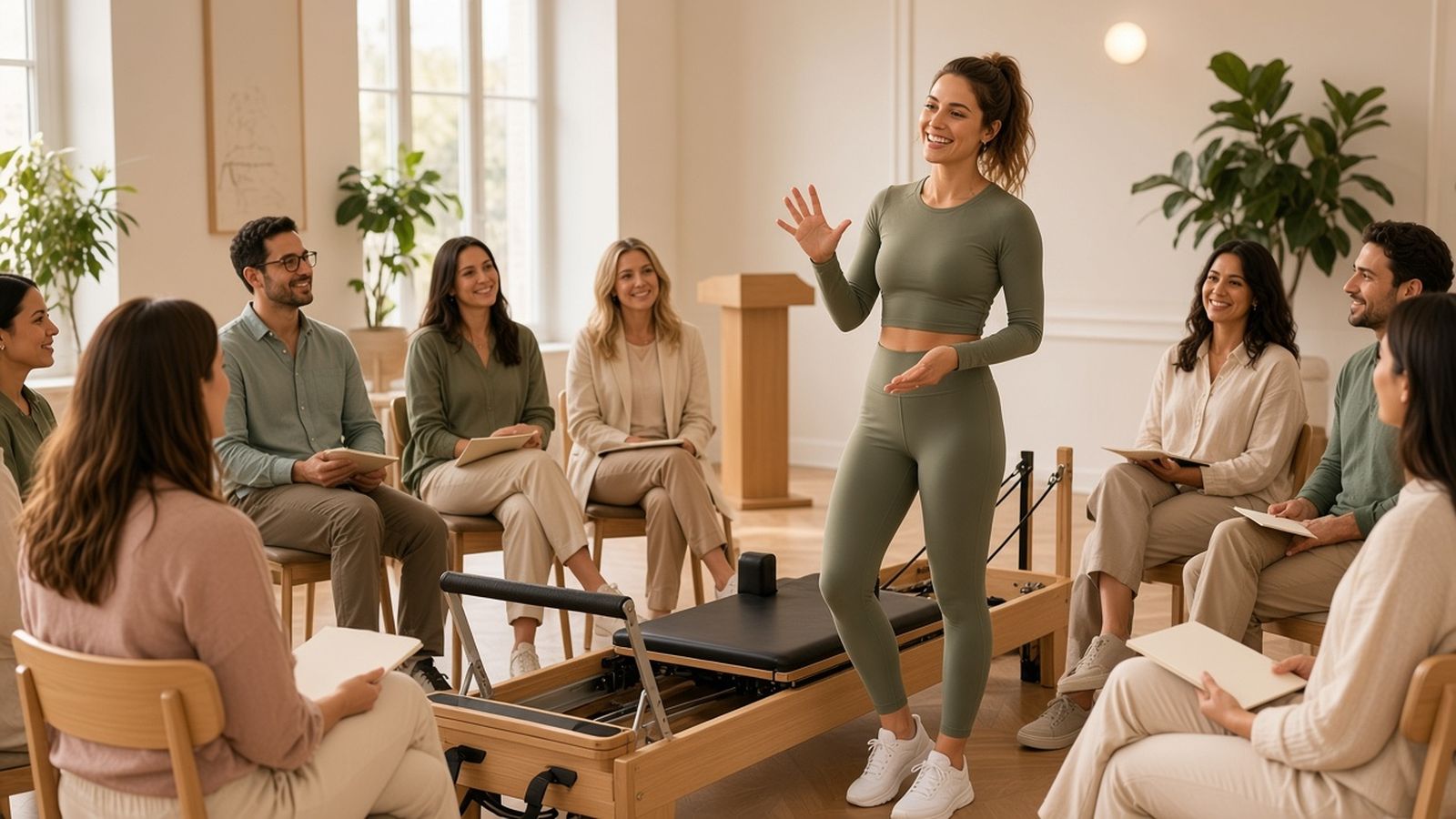
Programs describe hours differently, so compare what the number includes. A mat course may involve roughly 40–100 or more hours of lectures, movement practice, observation, and teaching depending on the provider. Comprehensive education can involve approximately 400–800 or more hours across modules, practice, observation, and assessment, but there is no universal requirement across all programs or employers. Treat these as broad planning ranges, not a standard.
Ask how much time is expected outside the classroom. You may need to log observation, personal practice, practice teaching, written work, and supervised hours. Find out whether assessments are practical, written, or both, who provides feedback, and what happens if you need more time. A program that makes learning expectations visible helps you plan honestly around work, family, and finances.
Well-known program examples
Balanced Body, Merrithew’s STOTT PILATES education, BASI Pilates, Polestar Pilates, Peak Pilates, and Power Pilates are well-known examples in the field. They differ in lineage, curriculum, delivery, and certification structure. This is not a ranking. Review each provider’s current materials and speak with graduates before deciding.
Mentorship and the first teaching years
Formal education gives you a map, but mentorship helps you read the room. Observe experienced instructors, practice concise cues, and ask for feedback on pacing, transitions, modifications, and professional boundaries. A mentor should be clear about the relationship and should model respect for client consent, privacy, and individual differences.
Your first teaching work may happen in a studio, gym, community program, private space, or a combination. Ask employers how they handle orientation, coverage, pay, preparation time, and continuing education. Keep records of your training and understand what you are qualified to teach. Reliability, curiosity, and the ability to say “I do not know; let me refer you” are part of professional skill.
Understand the business side of teaching
Instructor education is also a chance to learn how teaching fits into a working life. Ask whether the program discusses planning a class, communicating with a studio owner, setting boundaries, documenting practice, and protecting client privacy. These subjects may feel less glamorous than repertoire, but they shape the quality and sustainability of your first teaching roles.
Consider the financial and logistical commitment honestly. Tuition may not include books, observation, travel, equipment access, assessment fees, or unpaid practice hours. Find out how often the cohort meets, whether missed modules can be made up, and what support exists after graduation. A clear picture helps you choose a pathway you can complete without rushing the learning or taking on a commitment that creates avoidable stress.
Talk with graduates and working teachers
A program’s current students and graduates can explain details that a brochure cannot. Ask how much time they spent observing, whether feedback was specific, how accessible the equipment was, and what the transition into teaching looked like. You can also ask working instructors which parts of their education they use most often and what they wish they had studied sooner.
Keep the conversation balanced. One graduate’s experience is not a universal verdict, and a program can change its faculty or delivery format. Look for patterns across several conversations and compare them with the written curriculum. The goal is not to find a perfect school; it is to understand the tradeoffs well enough to choose with open eyes.
Choose a program with care
Compare faculty experience, curriculum detail, training format, equipment access, cohort size, assessment, costs, schedule, and graduate support. Ask whether the program is recognized by the employers you hope to work with and whether any local insurance or continuing education expectations apply. Do not enroll because a sales page creates urgency. A good school can explain what it offers without promising a guaranteed career.
Teaching Pilates is a long practice of learning how to help people understand movement. Choose education that makes you more observant, more adaptable, and more responsible, not just more fluent in exercise names. The strongest pathway is the one you can complete thoughtfully and continue developing after the certificate is in hand.
Helpful next reads
Find a studio near you.
Explore local studios and choose a place that fits your schedule, questions, and way of moving.
FAQ
How long does Pilates instructor certification take?
It varies by provider and pathway. Mat programs may involve roughly 40–100 or more hours, while comprehensive programs can involve approximately 400–800 or more hours including practice and assessment.
Is a mat certification enough to teach Pilates?
It may prepare you for mat teaching within the program’s scope. Ask employers about their expectations and pursue additional apparatus or specialty education when appropriate.
What is the difference between classical and contemporary Pilates education?
Classical programs generally follow established repertoire and lineage, while contemporary programs may integrate additional anatomy and movement education. The definitions vary by provider.
Which Pilates certification is best?
There is no universal best program. Compare curriculum, faculty, practice teaching, assessment, equipment access, graduate support, and fit with your goals.
Can certification prepare me to teach prenatal or rehabilitation Pilates?
Foundational certification is not automatically specialty training. Seek additional education and coordinate with qualified healthcare professionals when teaching specialized populations.