Pilates is a practice with many entry points. This guide offers useful context without making the experience more complicated than it needs to be.
Why equipment matters
Pilates equipment is designed to give the body information. Springs, straps, bars, handles, and surfaces can support a movement, add resistance, guide a path, or make a small change easier to feel. The apparatus is not simply a collection of machines for making a workout harder. A thoughtful instructor chooses equipment because it serves a learning goal and can be adjusted for the person in front of them.
You do not need to know every piece of equipment before your first class. Studios should explain what you are using, how to adjust it, and how to move around it safely. If you are unsure about a spring, strap, or transition, pause and ask. Equipment is most useful when it creates confidence rather than pressure to keep up.
Studio equipment versus home equipment
A mat, small ball, ring, or band can support a broad home practice. Large apparatus requires space, investment, maintenance, and instruction. Try equipment at a studio before buying so you understand what you enjoy and what setup your home can reasonably accommodate.
The reformer
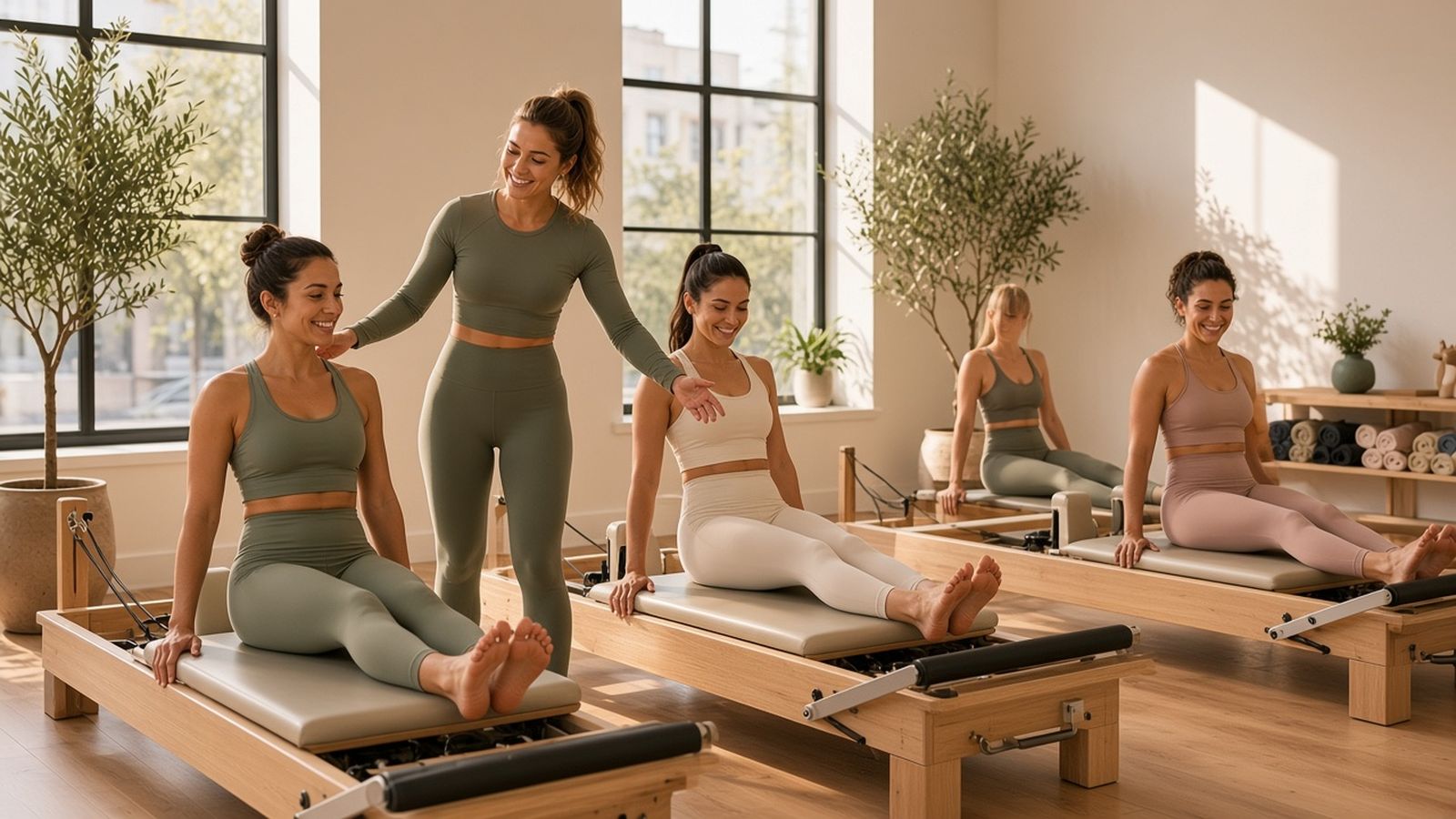
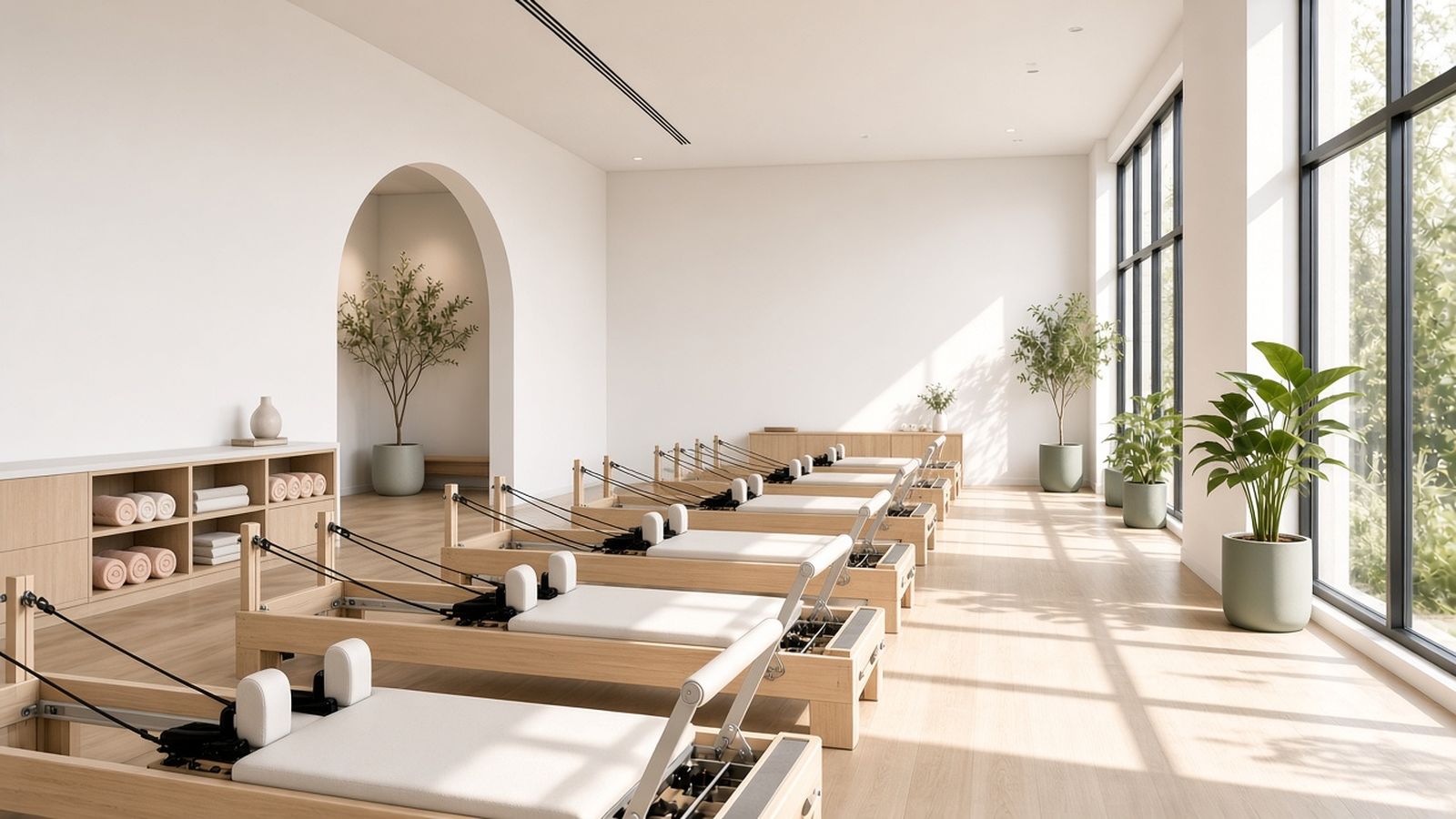
The reformer has a moving carriage, springs, a footbar, shoulder rests, and straps or ropes. The springs connect the carriage to the frame and can be changed to alter support or resistance. Exercises may happen lying down, sitting, kneeling, standing, or using the straps for the arms and legs. The moving carriage gives immediate feedback: your organization affects how smoothly and evenly it travels.
A reformer class can be a structured group experience or a highly individual private session. Beginners should receive an explanation of the carriage, footbar, straps, spring changes, and getting on and off. The right spring is not always the heaviest or lightest; it is the choice that supports the intention of the movement and lets you stay attentive.
Reformer safety basics
Keep hands and feet clear of moving parts, follow the instructor’s setup, and do not change springs or straps unless you have been shown how. Ask for help during transitions, especially when the carriage is not meant to move.
Cadillac or trapeze table
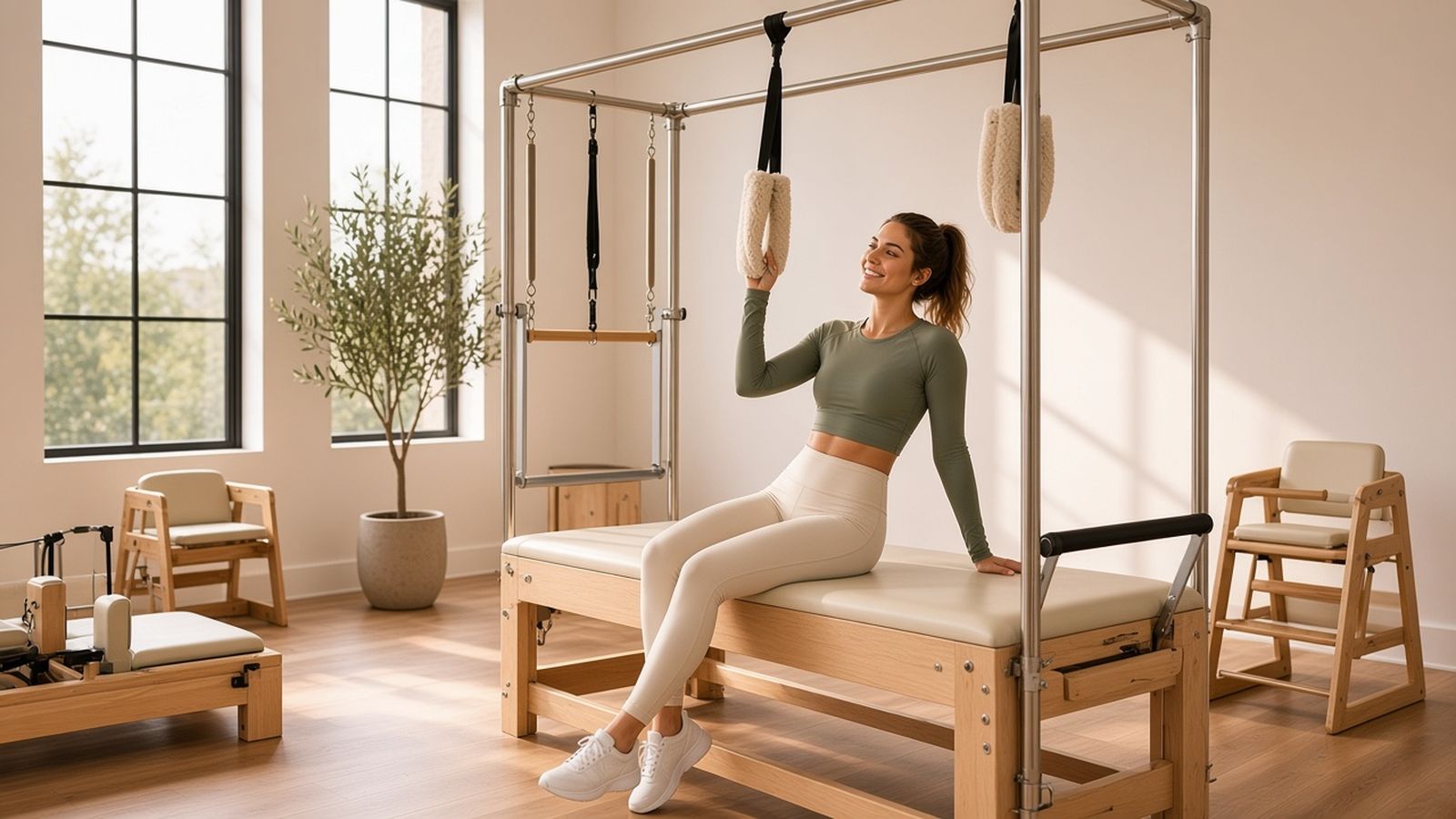
The Cadillac, also called the trapeze table, is a stable table surrounded by a frame with bars, springs, straps, and a trapeze. It offers a wide range of supported and resisted exercises, including work lying down, sitting, kneeling, or standing. Because the table does not move like a reformer carriage, it can provide a different kind of reference point and may be especially interesting in private or small-group sessions.
The frame and springs require careful instruction. Ask how the apparatus is set up, where to place your body, and whether a particular exercise is appropriate for your current experience. The Cadillac is not a prop to improvise with casually. A qualified teacher should guide the sequence and supervise changes to the equipment.
Chair and barrels
The Pilates chair is a compact apparatus with a pedal and springs. It can challenge balance, strength, and coordination in a small footprint. The pedal may be used with the hands, feet, or body supported in different ways. Because the chair can feel less stable than a large apparatus, instructors should demonstrate setup, offer support, and progress thoughtfully.
Barrels include curved surfaces such as the spine corrector, small barrel, and ladder barrel. They can provide support for spinal movement, open the front of the body, or change the angle of an exercise. The curve is not a demand to stretch as far as possible. Use the support that lets you breathe and organize comfortably.
Mat and small props
The mat is the foundation for many Pilates exercises. It cushions the body and gives you a consistent surface for floor-based movement. Small props can add feedback or variety: a ring may create a reference between the arms or legs, a ball may change balance, a band can offer resistance, and a foam roller can challenge stability. Props should make an idea clearer, not distract from it.
A studio may also use cushions, wedges, sliders, weights, or other tools. Ask whether a prop is required and how it should be placed. If something causes discomfort or makes breathing difficult, choose a different setup. Equipment is a means of learning, and a simpler option is often the most useful one.
A first equipment visit
If you are new to apparatus, ask the studio whether a tour or introductory lesson is available. You can look at the reformer, Cadillac, chair, and props without needing to try every exercise. Ask how equipment is cleaned, how springs are labeled, and how instructors teach people to get on and off. These details can make a future class feel much more approachable.
You can also ask what equipment appears in a typical group class and what is reserved for private instruction. Some studios have a strong reformer focus, while others build their identity around classical apparatus or a mat-centered practice. Knowing the room’s priorities helps you choose the right booking and prevents you from expecting a piece of equipment that the studio does not regularly use.
A thoughtful first setup
On a first visit, give yourself time to learn the room before the class begins. Notice where the springs, straps, and props are stored, and wait for the instructor before making an adjustment. If a setup feels confusing, ask for a demonstration instead of guessing. A few extra seconds can make an unfamiliar apparatus feel much more manageable.
The goal of equipment is to help you understand movement, not to make the session look complicated. A skilled instructor may use one simple prop for an entire class or change the apparatus several times. Both approaches can work when the choices are explained and the transitions are unhurried. Let the teacher know what you enjoy and what you would like to learn next.
Helpful next reads
Find a studio near you.
Explore local studios and choose a place that fits your schedule, questions, and way of moving.
FAQ
What is the main Pilates machine?
The reformer is the best-known Pilates apparatus, but the Cadillac or trapeze table, chair, barrels, and other equipment are also important parts of the method.
What is a Cadillac in Pilates?
The Cadillac, or trapeze table, is a stable table with a surrounding frame, bars, springs, straps, and a trapeze for supported and resisted exercises.
Do I need equipment to do Pilates?
No. Mat Pilates can be practiced with little or no equipment. A studio can introduce larger apparatus when you are ready.
Can beginners use a reformer?
Yes, when the class is appropriate and the instructor explains setup, spring choices, transitions, and modifications clearly.
Should I buy a reformer for home?
Try the apparatus at a studio first. Consider cost, space, maintenance, instruction, and whether a mat and small props would meet your needs.