
Pilates is a practice with many entry points. This guide offers useful context without making the experience more complicated than it needs to be.
Two practices, two histories
Pilates and yoga are often mentioned in the same breath, but they come from very different roots. Yoga is an ancient practice with philosophical, breath, and meditation traditions alongside its physical postures. Pilates is a much younger movement method, developed in the twentieth century by Joseph Pilates, with a structured repertoire and a set of purpose-built apparatus. Understanding that difference can make it easier to choose a class that matches what you are looking for.
Neither practice is a replacement for the other, and neither is universally better. A yoga class may spend more time in sustained postures, breathwork, and relaxation. A Pilates class may spend more time on controlled repetitions, spring resistance, and specific movement patterns. Your preference may depend on your goals, your schedule, or simply the kind of teaching you enjoy.
What a typical class feels like
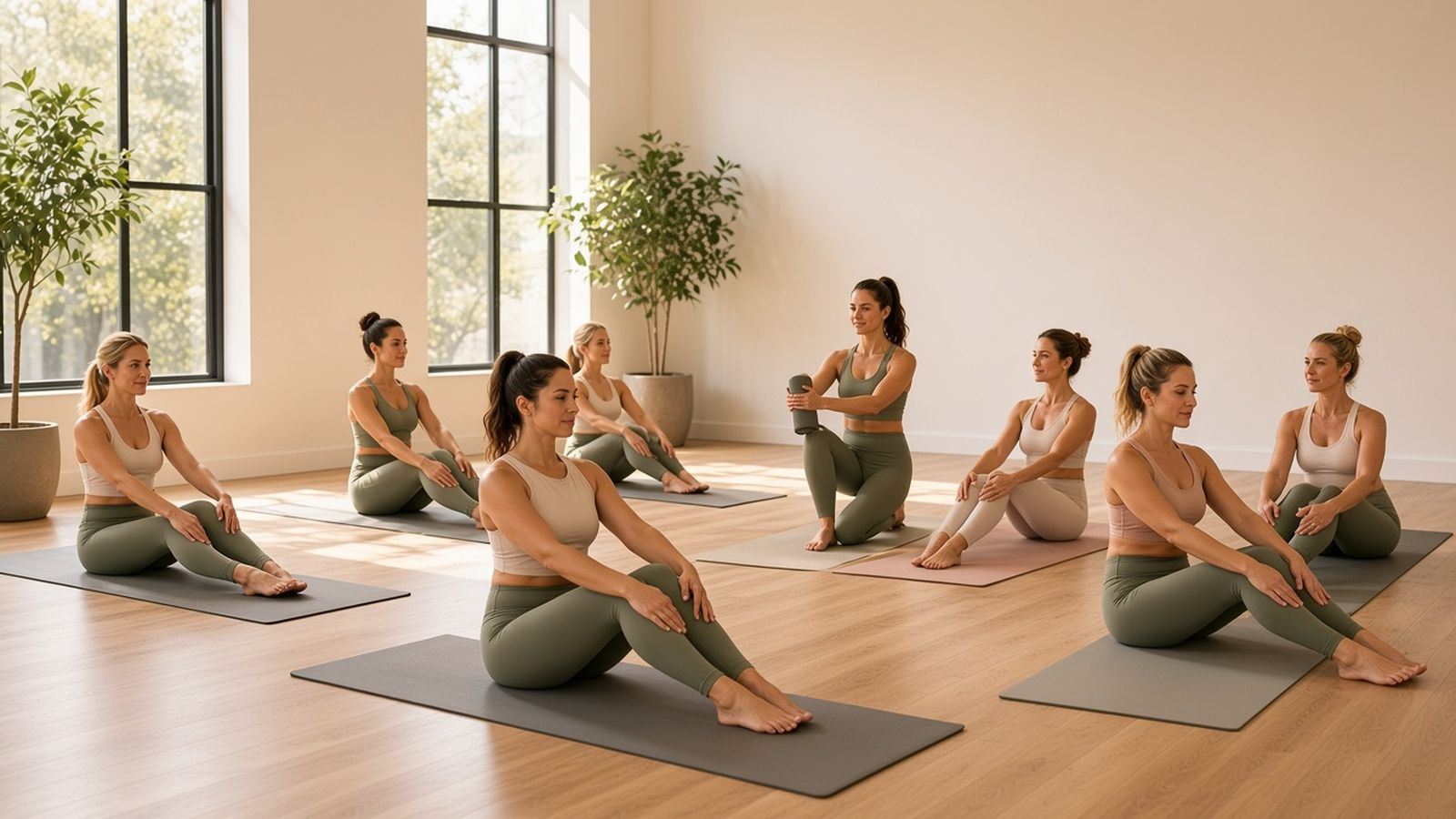
In a beginner Pilates class, you can expect clear instructions, a manageable number of exercises, and a lot of attention to how each movement is organized. The teacher may use imagery and precise cues, and the session often follows a sequence that builds from foundational work to more coordinated patterns. On apparatus, the springs and straps give your body immediate feedback about effort and control.
In a beginner yoga class, you can expect postures linked by breath, a mix of standing and floor shapes, and usually a period of rest or guided relaxation at the end. Styles vary widely, from slow and restorative to physically demanding flowing sequences. The instructor may offer options for different levels of flexibility and balance.
The role of breath
Both practices use breath, but they teach it differently. Pilates classes often coordinate breath with specific phases of a movement, using the exhale to support effort. Yoga classes may use breath as a steady rhythm that carries you between postures and settles the nervous system. Neither approach is wrong; they serve the practice they belong to.
Equipment and setting
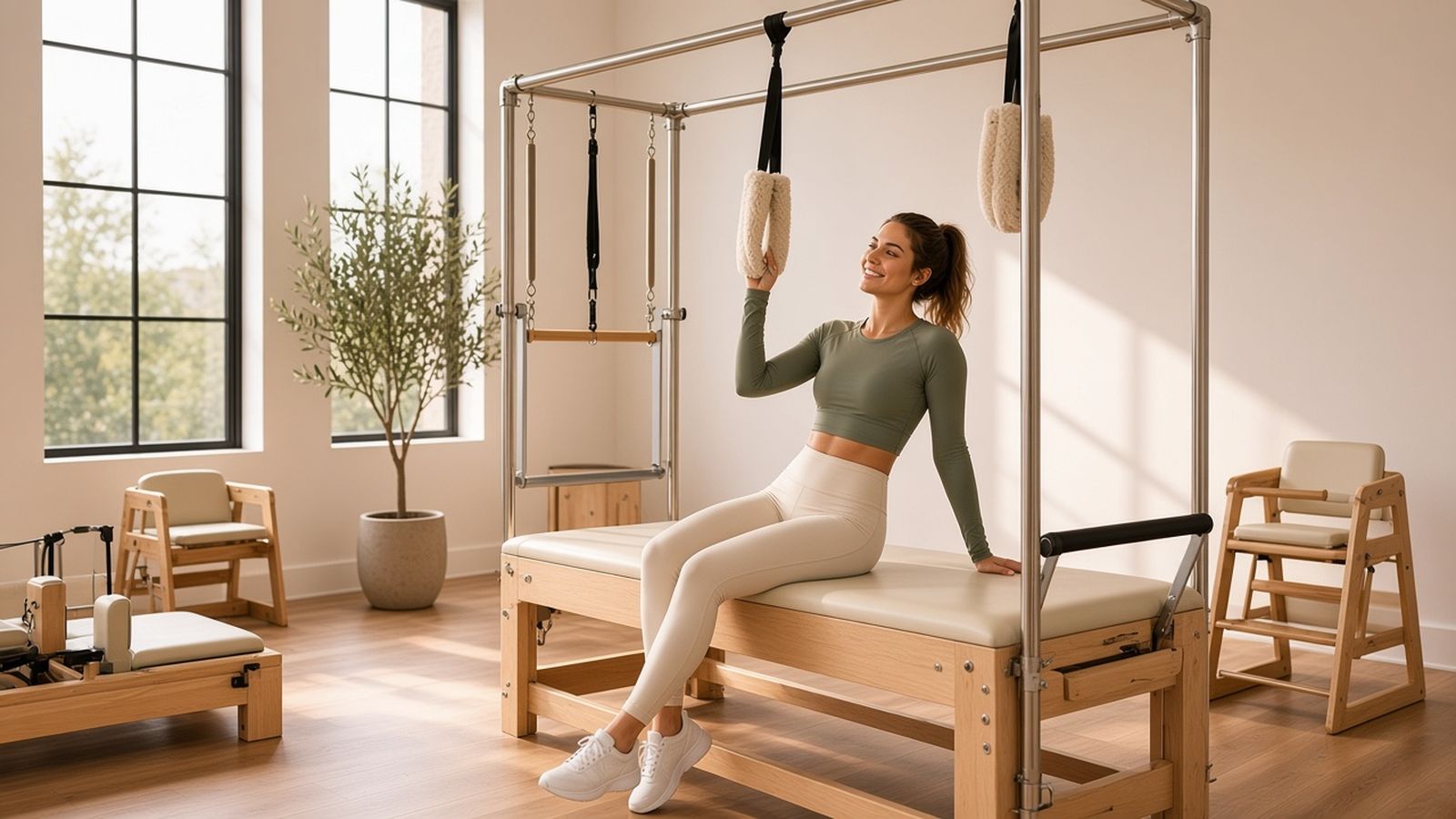
Mat Pilates needs little more than a mat and comfortable clothing, which makes it as portable as most yoga styles. Where Pilates diverges is apparatus: reformers, towers, chairs, and barrels found in dedicated studios. Those tools offer spring resistance and support that change how an exercise feels. Yoga generally uses fewer props, though blocks, straps, and bolsters are common and genuinely useful.
Setting matters for consistency. A Pilates studio near your commute, a yoga space with a schedule that fits your week, or a gym that offers both can each be the right answer. Consider trying the formats available where you already spend time, because the practice you attend regularly is the one that gives you the most benefit.
Strength, flexibility, and general wellness
Both practices can contribute to strength, mobility, balance, and stress management. Pilates commonly emphasizes trunk organization, controlled resistance, and the coordination of small, deliberate movements. Yoga commonly emphasizes flexibility, sustained postures, and the relationship between breath and attention. Descriptions like these are general patterns, not promises: the actual class depends on the teacher, the style, and the level.
If you have a health condition, an injury, or you are returning from illness or pregnancy, ask your doctor or another qualified professional what kind of movement is appropriate before starting either practice. Then share that guidance with your instructor. A responsible teacher in either discipline will welcome the conversation and offer modifications within their training.
How to choose between them
Start with your intention. If you want structured, repeatable movement with close attention to mechanics and the option of apparatus, Pilates may be the better first stop. If you are drawn to breath-centered practice, varied postures, and a longer relaxation component, yoga may fit. If you are curious about both, there is no rule against alternating weeks until one earns a permanent slot in your schedule.
Practical questions help too. Which studio is easier to reach at the times you can actually attend? Which offers a beginner or foundations class this month? Which teacher explains things in a way that makes you want to return? Fit and consistency matter more than the theoretical ranking of two excellent practices.
Enjoying both practices
Many people keep both a Pilates and a yoga class in their week, and the two can complement each other: one offering precise, resisted movement and the other offering longer holds and unwind time. If you do both, tell each instructor about your other practice. It helps them understand your experience and offer useful options.
You can also treat this guide as a starting point rather than a verdict. Try a beginner class of each style, notice how you feel during and after, and let your own experience settle the question. The best practice is the one you look forward to, can do safely, and can sustain.
Helpful next reads
Find a studio near you.
Explore local studios and choose a place that fits your schedule, questions, and way of moving.
FAQ
Is Pilates or yoga better for beginners?
Both welcome beginners when the class is labeled appropriately. Choose based on the experience you want: structured resisted movement in Pilates, or breath-led postures and relaxation in yoga.
Is Pilates just yoga with machines?
No. Pilates is a distinct twentieth-century method with its own repertoire and apparatus, even though both practices value controlled movement and breath.
Can I do Pilates and yoga in the same week?
Yes. Many people alternate the two, and the combination can be complementary. Mention both practices to your instructors so they can tailor options.
Which burns more calories?
It depends on the style, pace, and duration of the specific class. Neither practice should be chosen mainly for calorie comparisons; choose for movement quality and enjoyment.
Do I need to be flexible for yoga or strong for Pilates?
No. Beginner classes in both practices assume no prior ability. A good teacher offers options and progressions whatever your starting point.