
Pilates is a practice with many entry points. This guide offers useful context without making the experience more complicated than it needs to be.
What Pilates is and why people begin
Pilates is a movement practice built around attention, control, breathing, alignment, and coordinated strength. A class may look quiet from the outside, but small, deliberate movements can ask a lot of your concentration. People begin for many different reasons: they may want a new way to exercise, a more focused group experience, a supportive return to movement, or simply a chance to learn what Pilates feels like. There is no single correct reason to start, and you do not need to arrive with a particular body type or fitness background.
The best first step is to choose an environment that explains itself clearly. Look for a class description that names the level, format, duration, and any preparation needed. If you have a health condition, recent surgery, pregnancy, persistent pain, or another concern, tell the studio before booking and ask whether a qualified medical professional should guide your return to activity. A good studio will welcome questions rather than treating them as an inconvenience.
The vocabulary may be new
You may hear names for exercises, positions, springs, straps, or breathing patterns that are unfamiliar. That is normal. Instructors usually demonstrate, describe, and repeat the important ideas throughout class. It is completely appropriate to ask for clarification, take a pause, or watch a round before joining in. Learning the language happens through exposure, not memorization before your first visit.
What to expect at a first class
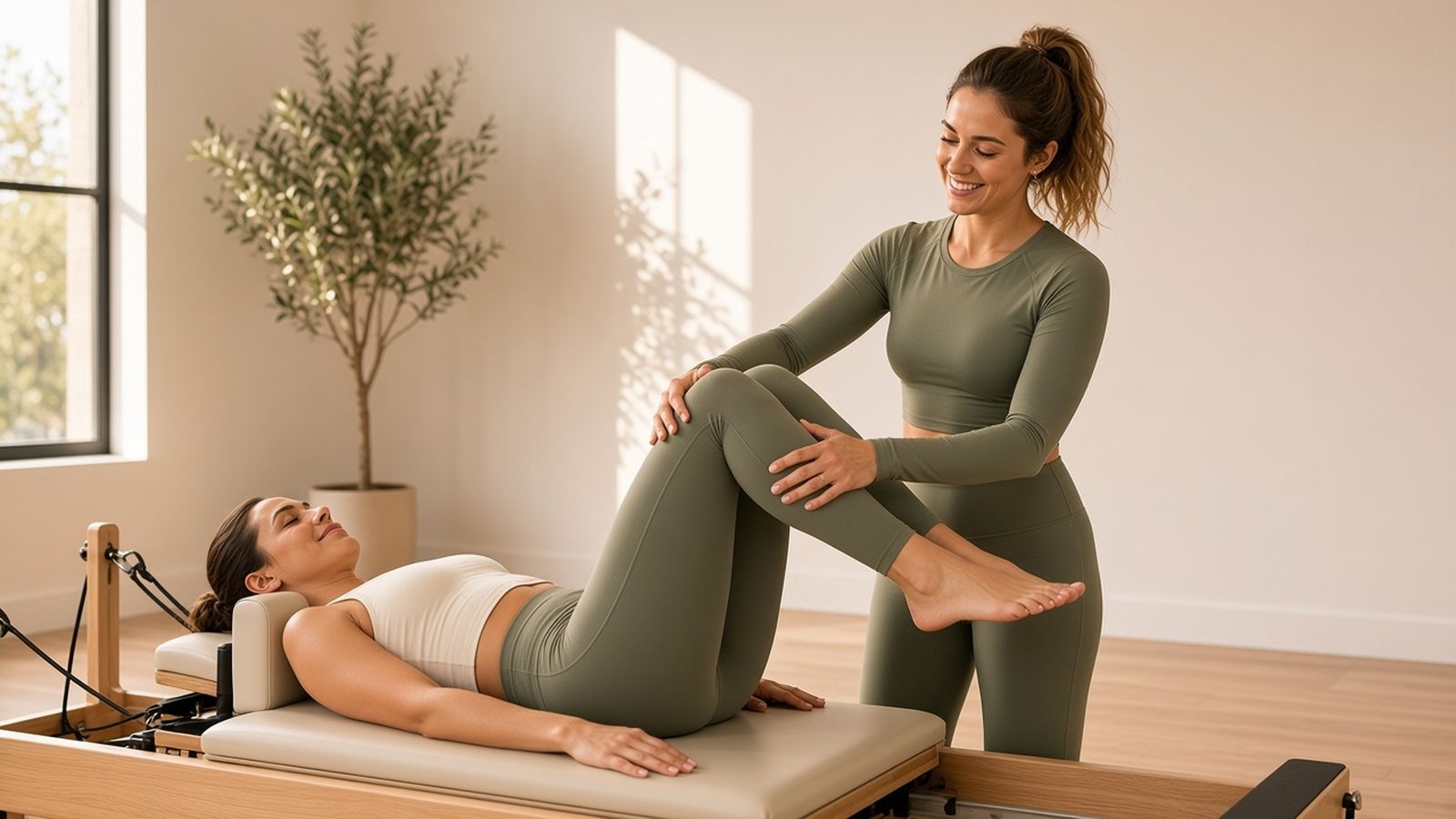
Arrive a little early so you can check in, put away your belongings, and tell the instructor that you are new. Wear clothing that lets you move without constant adjustment; fitted layers are often practical because the instructor may need to see how your spine, shoulders, and legs are organizing. Many studios ask participants to remove shoes, and some require grip socks. Bring water if the studio does not provide it, but you generally do not need a large amount of equipment.
The class may begin with a short explanation of the apparatus or a gentle warm-up. You will be given choices for resistance, range, or position, and the instructor may offer hands-on or verbal cues depending on the studio’s policies and your consent. Expect to feel some muscles working in unfamiliar ways, but not to force through sharp pain. You can always reduce the range, stop, or ask for another option. A thoughtful teacher values clear communication over performance.
After class
Notice what you learned rather than judging the class by how tired you feel. You may have questions about the format, the teacher’s cues, or what to book next. Ask the front desk or instructor what a sensible next class would be. If anything felt concerning or unusual, share that information and seek appropriate professional advice before repeating the movement.
Mat versus reformer for a first visit
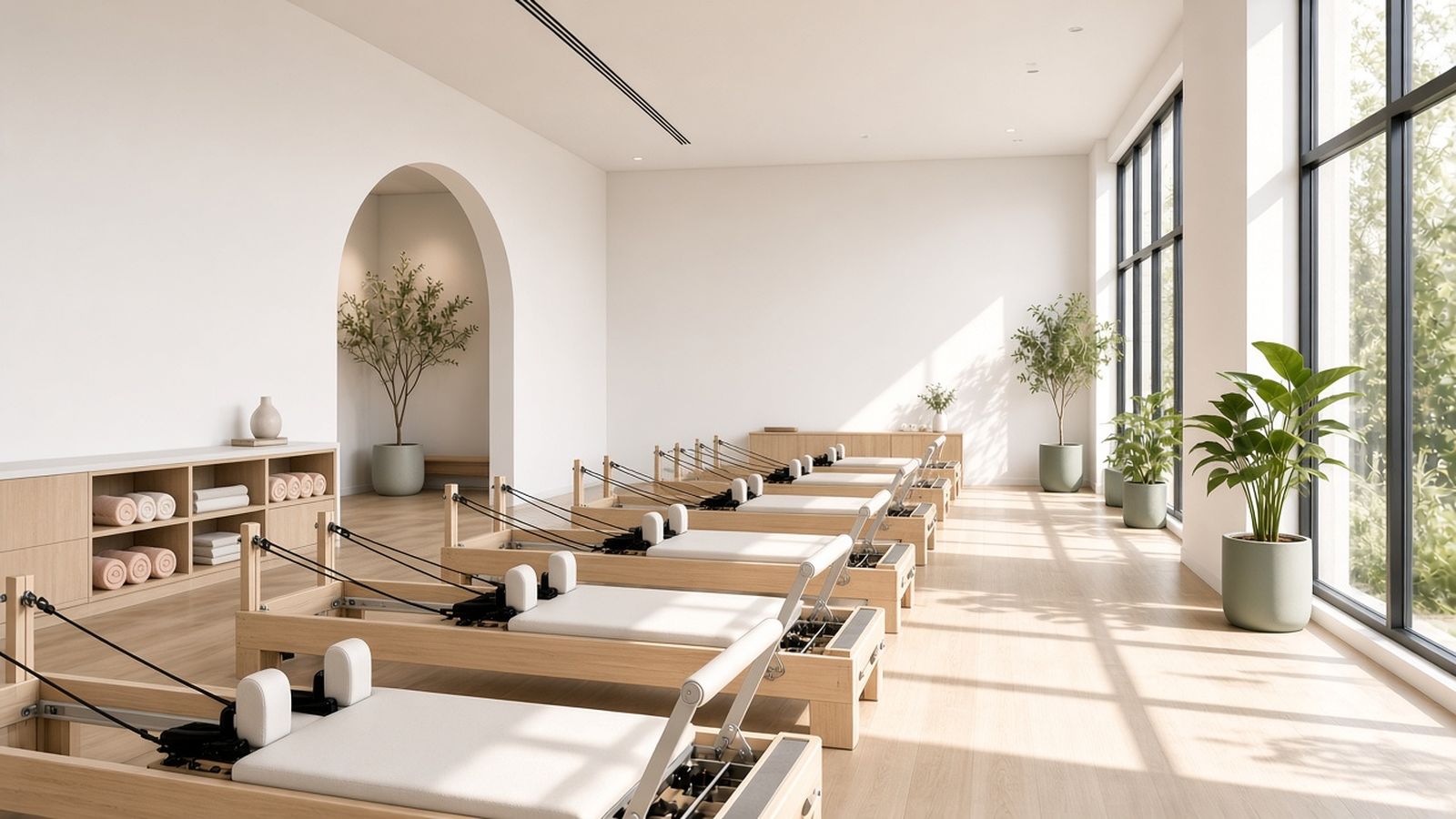
Mat Pilates uses the floor, body weight, and optional props such as a ring, ball, or band. It can be a welcoming introduction because the setup is simple and the skills transfer easily to home practice or travel. A mat class can still be challenging; the absence of a large apparatus does not make it automatically easier. The instructor may use imagery, breath, and precise positioning to help you understand how the work is organized.
Reformer Pilates uses a moving carriage, springs, straps, and a footbar to provide resistance, assistance, and feedback. Many beginners enjoy the clear structure and variety of a reformer session, while others prefer the grounded simplicity of the mat. Neither format is universally better. Consider whether you enjoy equipment, whether you want a studio-based routine, and whether the class description matches your current experience.
A private or introductory session
A private or small-group session can be useful if you want more explanation, have specific questions, or prefer a quieter start. It may cost more than a group class, but the extra attention can make the first experience feel more understandable. Ask what the session includes and whether the instructor is trained for the needs you want to discuss.
How often to practice
For many people, one class per week is a realistic way to learn the basics and notice how the practice fits into daily life. Two classes per week can create more continuity if your schedule, budget, and recovery allow it. A short, gentle home practice can supplement studio visits, but it is not a requirement. The right rhythm is one you can maintain without turning movement into another source of pressure.
Consistency also means leaving room for rest and for other kinds of movement. Walking, strength training, mobility work, dance, and recreational activity can all coexist with Pilates. If a class leaves you unusually sore, fatigued, or uncertain about a symptom, speak with the instructor and consider professional guidance. Progress is not a contest to attend the most classes; it is the gradual process of becoming more familiar with your body and choices.
How to choose your next class
After one or two visits, compare the experience with what you hoped to find. Did the instructor explain the purpose of the work? Did you feel able to ask questions? Was the class size comfortable, and did the equipment appear well maintained? A welcoming studio will describe its levels honestly and help you progress without making you feel that you must buy a large package immediately.
You can also try more than one studio or teacher. Differences in teaching style are part of the richness of Pilates, and one awkward first class does not mean the method is not for you. Read the guide to choosing a Pilates studio, compare reformer and mat formats, and use local listings to find a place that fits your schedule. Starting slowly gives you room to build trust in the practice.
Helpful next reads
Find a studio near you.
Explore local studios and choose a place that fits your schedule, questions, and way of moving.
FAQ
Do I need Pilates experience before taking a beginner class?
No. A beginner class is designed to introduce the basic language, positions, and pacing. Tell the instructor that you are new so they can orient you.
What should I wear to Pilates?
Choose comfortable clothing that stays in place and allows the instructor to see your alignment. Many studios ask for grip socks and have you remove shoes.
Is mat Pilates easier than reformer Pilates?
Not necessarily. Mat and reformer classes challenge you in different ways. The best starting point depends on the class description, your preferences, and the support you want.
How many times a week should a beginner do Pilates?
One class per week is a reasonable starting rhythm for many people. Add frequency only when it fits your schedule, recovery, and budget comfortably.
Can I do Pilates if I have an injury or health concern?
Ask your doctor or another qualified health professional for appropriate guidance, then tell the instructor about relevant limitations before class. A responsible teacher will stay within their training.