Pilates is a practice with many entry points. This guide offers useful context without making the experience more complicated than it needs to be.
Two ways to learn the same method
Every Pilates class, whether private or group, teaches the same underlying method. The difference is the ratio of teacher attention to participant. In a private session, the instructor plans the lesson around you: your experience, your questions, your goals, and how you respond on the day. In a group class, the instructor plans around the room and offers options within a shared sequence.
Neither format is the better one in the abstract. A private can go deeper faster; a group can be easier to sustain week after week. Most practitioners move between the two at different times, and the mix you need in your first month may differ from the mix you want a year later.
What a private session offers
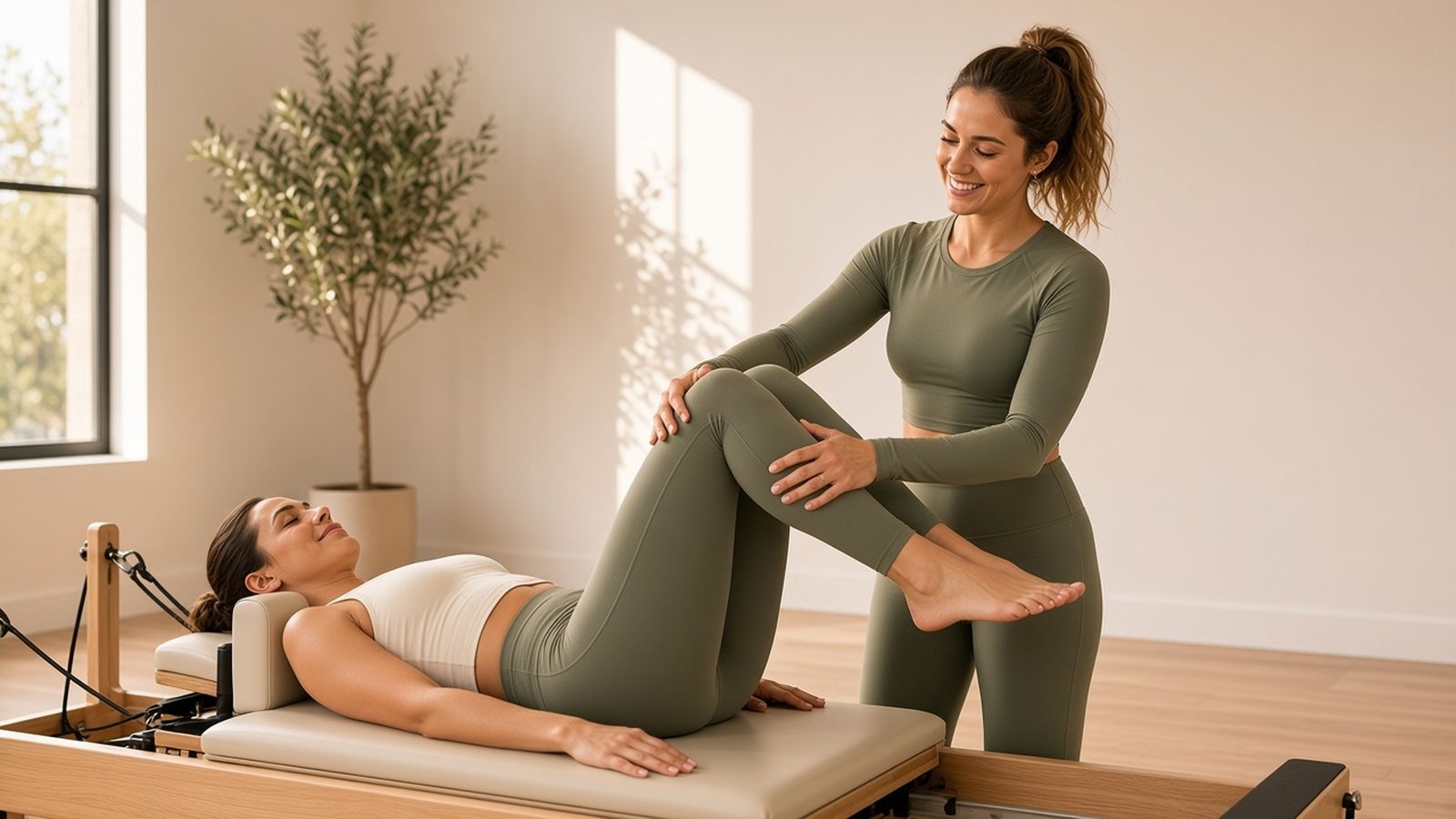
A private session gives the instructor time to understand your history, watch your movement closely, and adjust the plan in real time. Apparatus work that a group schedule cannot accommodate — the Cadillac, the chair, longer apparatus sequences — often happens in privates. If you are returning from injury, starting with a health consideration, or preparing for something specific, private instruction gives that context room.
Privates are also the fastest way to learn technique. Corrections arrive the moment they are relevant, and the lesson moves at your pace rather than the room’s. The tradeoffs are cost and scheduling: privates cost more per session, and you book with one teacher at a time that suits you both.
Semi-private sessions
A semi-private sits between the two: two or three participants share one instructor. It costs less than a private but offers more attention than a group class, and it works well for friends or family members with similar goals who want to learn together.
What a group class offers
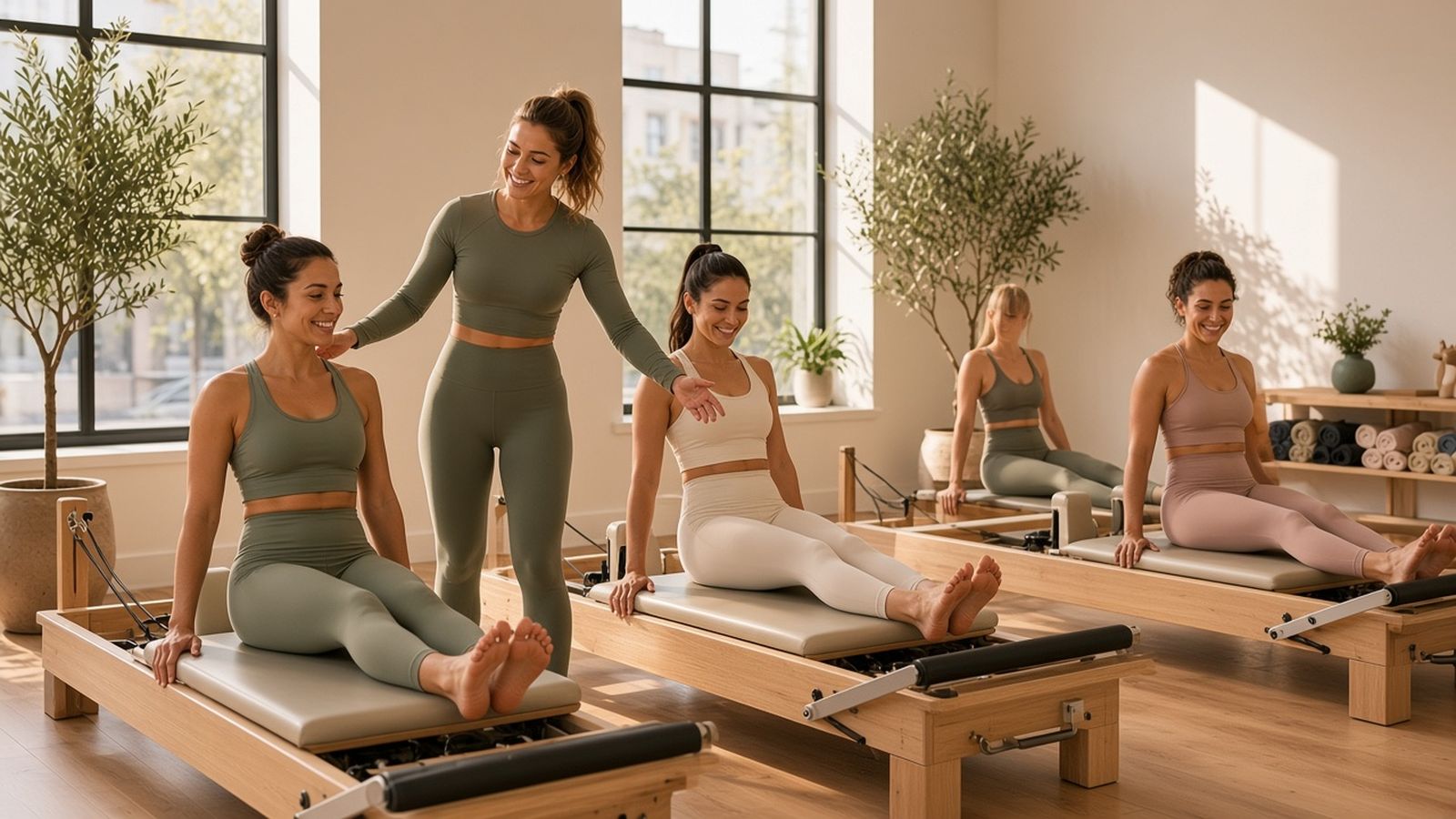
A group class gives you a consistent weekly appointment, the energy of a shared room, and a per-class cost that makes regular attendance practical. Group teaching has its own skill: a good instructor demonstrates clearly, circulates, offers modifications without singling anyone out, and keeps the sequence intelligible for a mixed room.
The tradeoff is attention. In a class of many participants, the teacher cannot watch every repetition, and the sequence serves the room rather than any individual. That is not a flaw — it is what the format is — but it matters if you are learning new equipment, managing an injury, or working toward something specific.
Choosing by goal
If you are brand new to apparatus, a private or very small session is the easiest way to learn the reformer without holding up a class. If you have a health consideration, privates give your history room and let the instructor work within professional guidance. If you want a sustainable weekly habit, a group class you enjoy is more likely to survive a busy season than a costly appointment you feel guilty about skipping.
These are starting recommendations, not rules. Many people take a few privates to establish technique, settle into group classes for the weekly rhythm, and return to privates occasionally for a tune-up. Ask a studio how it structures progression between the two; the answer reveals a lot about how they teach.
Costs and commitments
Privates cost more per session than group classes in virtually every studio, and the gap varies by city and by instructor experience. If cost is the deciding factor, a consistent group habit usually beats occasional privates — but a single private early on can make every group class after it more productive, which is its own kind of value.
Read the booking terms either way. Cancellation windows, package expiration, and rescheduling rules apply to privates more strictly than to classes in some studios. Ask before purchasing, and choose the commitment that fits the schedule you actually live.
Health considerations in either format
Whether you choose privates or groups, the same principle applies: tell the instructor what your healthcare team wants them to know. In a group class, a word before class is usually enough; in a private, the whole lesson can be built around it. If a condition is new, changing, or serious, ask a qualified professional before starting or changing any exercise routine.
A responsible studio will be clear about which format suits your situation. Some will require a private before joining group apparatus classes; that is a sign of care for the room, not a sales tactic. Ask, and take the recommendation seriously.
Finding your mix
Start honestly: if you have never touched a reformer, book a private or an intro session; if you have some experience, a beginner group class is a fine start. Try both formats at a studio you like, then choose the mix that fits your budget and calendar. There is no prize for choosing one forever.
What matters in the long run is attendance and attention, not format. A group class taken consistently with focus builds more than a private taken sporadically, and vice versa. Pick the room and rhythm that keep you engaged, and let the format serve the practice.
Helpful next reads
Find a studio near you.
Explore local studios and choose a place that fits your schedule, questions, and way of moving.
FAQ
Is it worth starting with private Pilates sessions?
For many newcomers to apparatus, a private or intro session is the easiest way to learn the equipment and establish technique before joining a group.
Are private Pilates sessions much more expensive?
Privates cost more per session than group classes, with the gap varying by city and instructor. Ask the studio for current rates and package terms.
What is a semi-private Pilates session?
A session shared by two or three participants with one instructor, offering more attention than a group class at a cost between group and private rates.
Can I switch between private and group sessions?
Yes, and most practitioners do. Many take privates to learn or refine, and group classes to build the weekly habit.
Which format is better for an injury or health condition?
Follow your healthcare team’s guidance first. Privates give your history more room, and a responsible instructor will work within professional advice and refer out when needed.