
Pilates is a practice with many entry points. This guide offers useful context without making the experience more complicated than it needs to be.
Why athletes step into a Pilates studio
Running, cycling, swimming, and field sport all reward repetitive efficiency, but repetition narrows the movement diet. Strides, pedal strokes, and swings reuse the same patterns thousands of times, while rotation, deceleration, and controlled hip work go undertrained. Pilates spends its time on exactly those gaps: controlled trunk work, spring resistance through full ranges, and single-leg patterns that ask for balance as well as strength.
Athletes also tend to appreciate the method’s precision. A Pilates teacher watches how you organize a movement and adjusts it in small increments, which is a familiar kind of coaching for anyone who has worked with a strength coach or technical trainer. The apparatus provides feedback you can feel, and the progressions are measurable.
What a class adds to your training
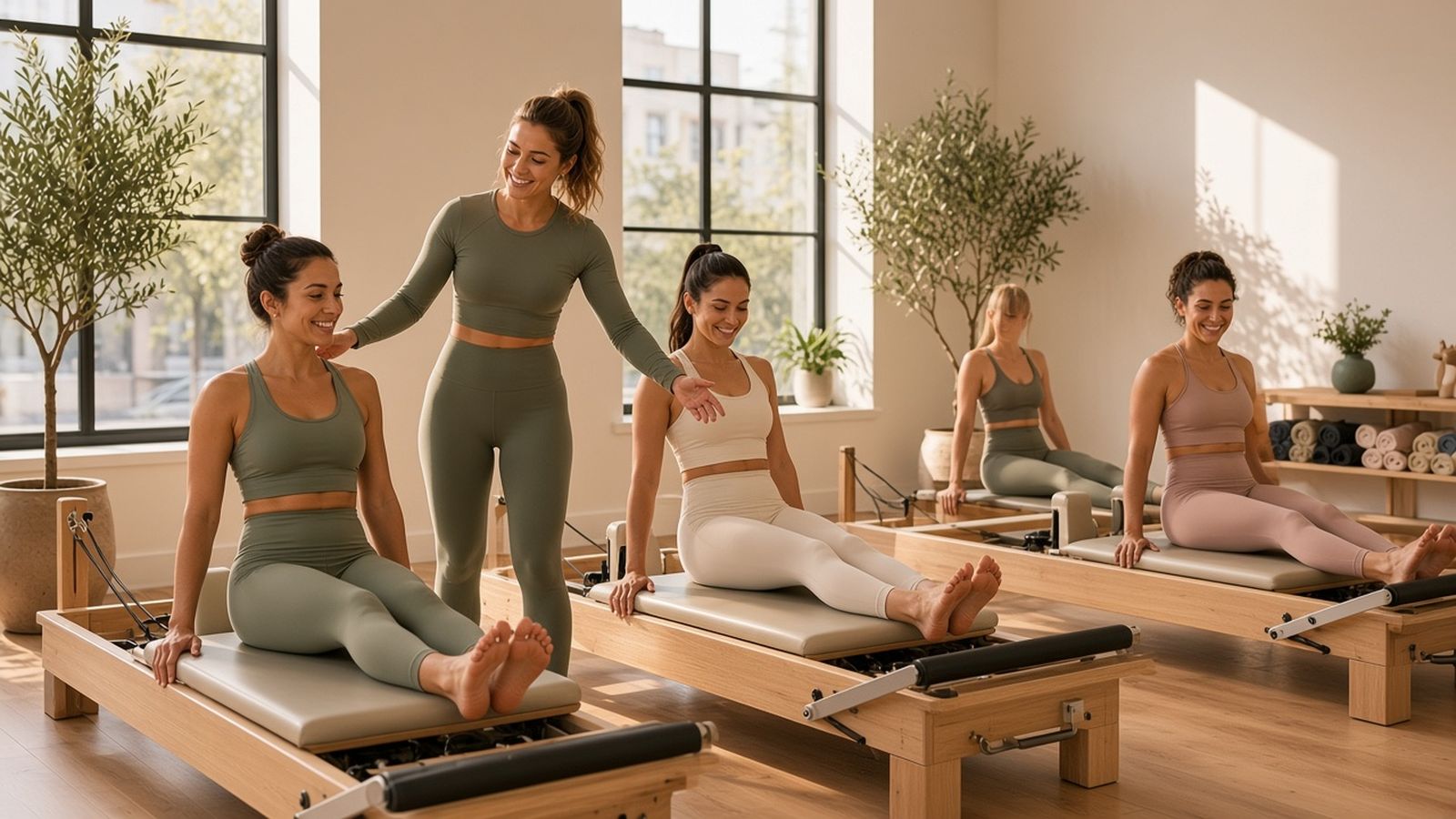
On a reformer, spring resistance works in both directions of a movement, challenging the transitions and end ranges where gravity-based training is weakest. For runners, that often means controlled hip work, trunk patterns under moving load, and the kind of single-leg control that shows up in every stride. For field and court athletes, rotation and anti-rotation work maps directly to throwing, swinging, and changing direction.
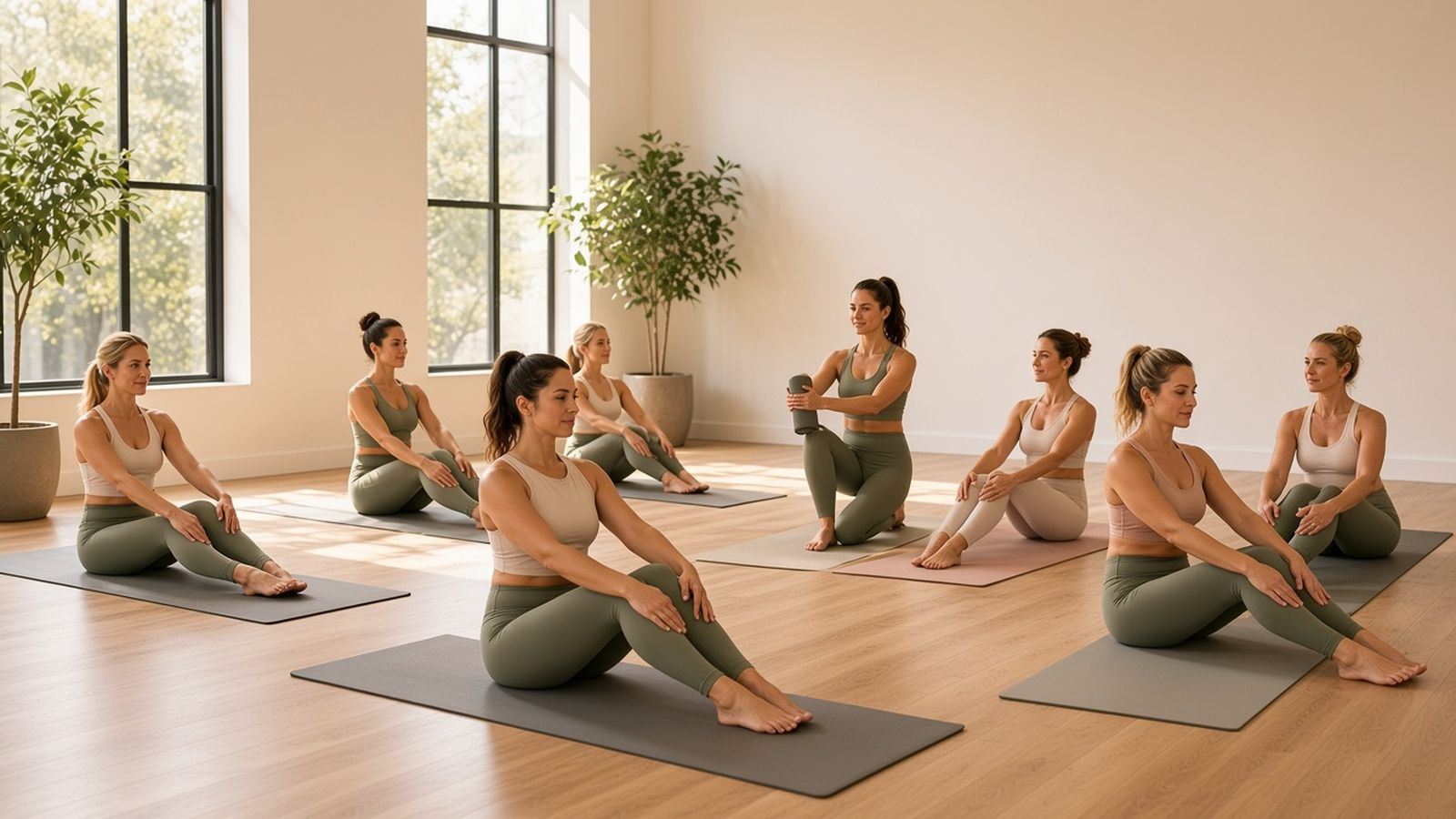
Mat classes cover similar ground with body weight and props, and the pacing is often gentler, which makes them useful between harder training days. Neither format is a strength program in itself, and it does not need to be. The value is in the patterns and the control, not in replacing your existing training.
Trunk control, the useful kind
Sport requires trunk control that holds up under fatigue and in motion. Pilates trains it with resisted, coordinated movement rather than endless floor repetitions, which is why many athletes describe the work as harder than it looks.
Fitting classes into a training week
One or two Pilates classes a week is a common pattern for athletes. Place them where they support the rest of the program: a mat class on a recovery day, or an apparatus class well separated from key sessions. Avoid scheduling a demanding leg-focused class immediately before a hard running workout or a match, and let the instructor know what the rest of your week looks like.
During a competition phase, you might reduce to one gentler class a week; in an off-season or base phase, you can increase frequency and use the studio work to address movement gaps. The schedule should flex with your season rather than compete with it.
Injuries and comebacks
Injury changes the conversation. If you are rehabbing, the qualified professionals managing your recovery — doctors, physical therapists, athletic trainers — should set the boundaries of what you do. A Pilates instructor can then work within that guidance, and many do exactly this in collaboration with clinicians. Be wary of any studio that promises to fix an injury or bypass the rehab process.
When you return to full training, tell the instructor what your season looks like and what your care team has advised. A good class plan respects that context, offers modifications without ceremony, and refers out when a request belongs with a clinician.
What the method emphasizes for endurance sport
Endurance athletes live in repeated patterns, and the method’s emphasis on the opposite — varied, controlled, resisted movement through full ranges — is precisely why it pairs well with high-mileage training. A long-distance runner or cyclist rarely spends training time on lateral movement, spinal articulation, or deliberate deceleration, and those gaps are where a weekly class does its most useful work.
The apparatus is particularly good at loading positions that gravity training reaches awkwardly. Spring resistance works during the return phase of a movement as well as the effort phase, which trains control in both directions. For athletes, that often shows up as a felt difference in how supported and organized the body is during long sessions, though individual experiences vary and no class replaces sport-specific practice.
What your first class will feel like
Expect precision and control rather than exhaustion. Athletes are often surprised that modest springs and small ranges can be demanding, because the work targets coordination under resistance rather than output. Take the easier option when it is offered; the progressions in the method are patient, and the point is to build patterns you can actually use.
Wear your usual training kit with fitted layers, bring grip socks if the studio requires them, and arrive early enough to mention your sport and any restrictions. That five-minute conversation shapes the class more than anything else you can do.
Choosing a studio
Look for studios that offer beginner or foundations classes and that welcome athletes. Ask whether the instructors have experience with sport training or work with clients who run, lift, or play. Many do, and the ones who do will ask about your season before telling you what to book.
Convenience and schedule matter as much as reputation. A studio near your training routes or commute makes the weekly class realistic, and trial classes let you compare teaching styles cheaply. Pick the room that makes you want to return, and let the method do its slow, precise work in the background of your season.
Helpful next reads
Find a studio near you.
Explore local studios and choose a place that fits your schedule, questions, and way of moving.
FAQ
Is Pilates good for runners?
Many runners use it to train control, rotation, and single-leg patterns that running itself undertrains. One or two classes a week is a common complement.
Will Pilates make me slower or stiff?
No. The method trains controlled range and coordination. When scheduled sensibly around key sessions, it supports training rather than competing with it.
Should athletes use a reformer or a mat class?
Both can work. Reformer classes add spring resistance through full ranges; mat classes are often gentler and suit recovery days.
Can Pilates help me come back from injury?
Follow the guidance of your doctor or physical therapist first. A Pilates instructor can then teach within that guidance and refer out when needed.
How many classes a week should an athlete take?
One or two is a practical starting point, scheduled away from your hardest sessions. Adjust with your season and recovery.