
Pilates is a practice with many entry points. This guide offers useful context without making the experience more complicated than it needs to be.
A method open to everyone
Pilates sometimes gets labeled as a women’s workout, but the history says otherwise. Joseph Pilates developed the method on his own body and taught it to athletes, boxers, and dancers of every gender. Today the method is used across sport and fitness, and men are a growing share of classes in most cities. The apparatus and the repertoire were designed for bodies, not for one gender.
If the studio schedule looks unfamiliar, that is the only real barrier. Beginner classes assume no experience in anyone, and the exercises scale across strength and flexibility. If you are managing a health condition or returning from injury, ask your doctor or another qualified professional about appropriate exercise first, then share that guidance with the instructor.
What Pilates trains
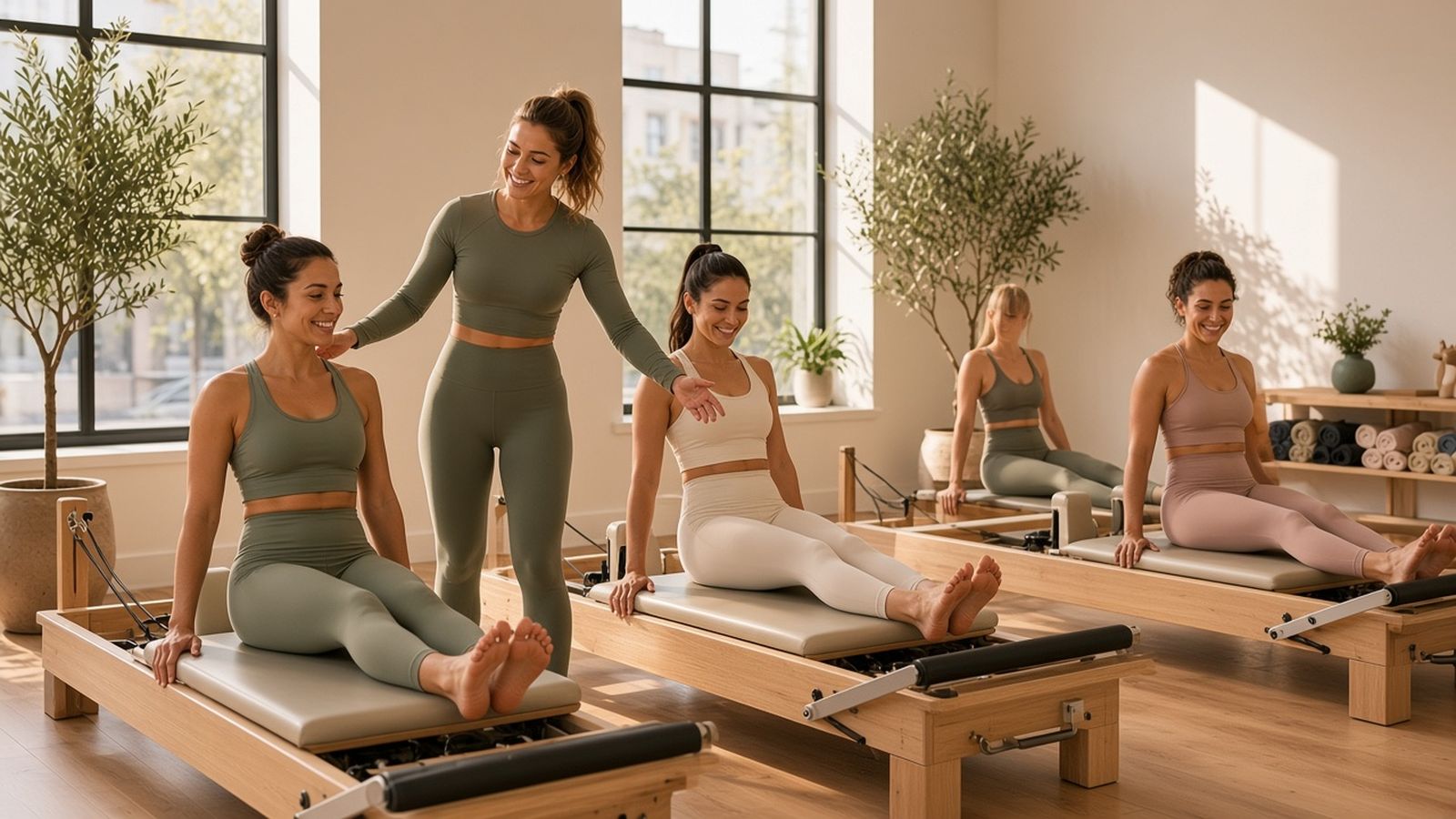
Pilates emphasizes controlled movement, trunk organization, breath, and precision. On apparatus, springs provide resistance and support that can be tuned precisely, which makes the same exercise easier or harder without changing its shape. The result is a practice that asks you to coordinate effort rather than maximize it — a different skill from adding weight to a bar, and a genuinely useful one.
Many men come to the method from strength training, running, cycling, or field sport, where patterns are repetitive and range is limited. A Pilates class spends time on the movements those activities skip: rotation, spinal articulation, controlled hip work, and the kind of trunk control that is trained through resistance rather than repetition to fatigue.
Control is the skill
The method was originally called Contrology, and the name describes the goal: moving with attention and command rather than momentum. For people used to measuring workouts by weight or output, the first classes can feel humbling and informative at the same time.
Your first class
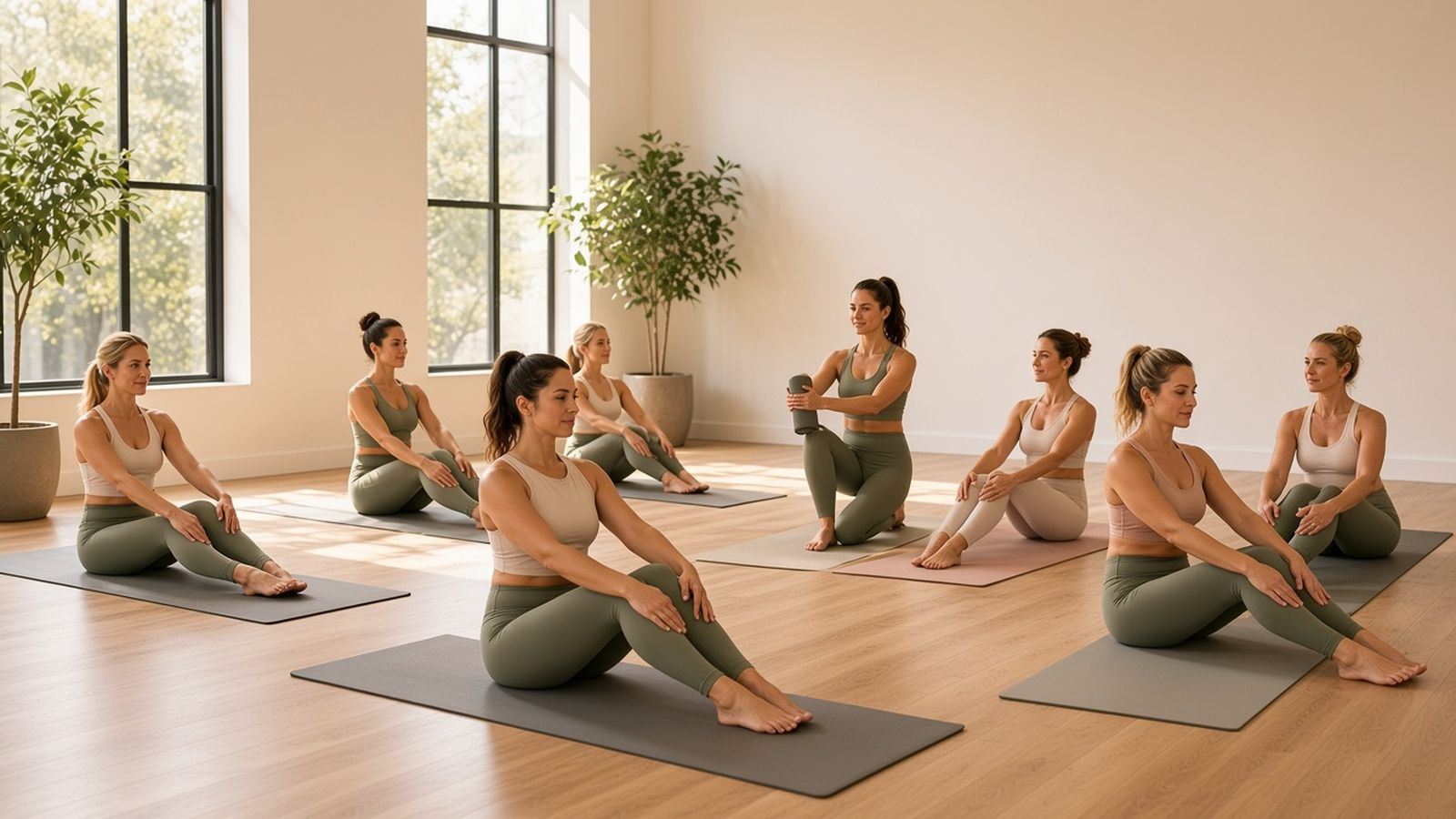
Book a class labeled beginner or foundations, and arrive a few minutes early so the instructor can orient you. On a reformer, you will learn how the carriage moves, how springs are changed, and how the straps work. On a mat, you will learn a few foundational patterns and how breath coordinates with them. Wear fitted movement clothing and grip socks if the studio requires them.
Expect the instructor to offer easier and harder versions of each exercise and to explain the purpose of what you are doing. Take the easier version when you need it; the method rewards control over effort, and every exercise has a progression waiting once the foundation is solid.
How it complements lifting and sport
For people who train with weights, Pilates can add controlled range and trunk coordination that heavy compound lifts do not emphasize. The spring resistance of the reformer is different from gravity-based loading: it challenges the end ranges and the transitions where many lifts are weakest. For field and court sport, the emphasis on rotation, single-leg control, and deceleration maps well to the demands of play.
None of this makes Pilates a replacement for a strength program or sport practice, and it does not need to be. One or two classes a week alongside your existing training is a common and workable pattern. Tell the Pilates instructor what else you are doing each week so they can suggest class levels and recovery spacing.
Injuries and limitations
If you are carrying an injury or returning to exercise after a layoff, get qualified guidance before starting any new activity. A doctor or physical therapist can tell you what is appropriate; a Pilates instructor can then teach movement within that guidance. A responsible instructor will ask about your history, offer modifications, and refer questions of diagnosis or treatment back to professionals.
Be skeptical of any studio that promises to fix a problem or guarantees an outcome. What good Pilates teaching offers is attention, clear instruction, and a method that scales. That is a real and worthwhile offer, and it is the honest version of the pitch.
Finding a class that fits
Look for beginner or foundations classes on the schedule and read how the studio describes its teaching style. Some rooms are quiet and technical; others are energetic and social. Trial classes are common, and trying two different studios is a reasonable way to find a good match. Convenience counts: the class you can reach easily at a workable time is the one you will keep attending.
The method has room for every kind of participant, and the fastest way past any hesitation is a single beginner class. Most men who try it discover that the work is harder and more interesting than its reputation suggests, and that the room is more welcoming than they expected.
Helpful next reads
Find a studio near you.
Explore local studios and choose a place that fits your schedule, questions, and way of moving.
FAQ
Is Pilates a good workout for men?
Yes. The method trains controlled strength, coordination, and movement quality, and it complements lifting and sport training well.
Will Pilates build muscle?
Pilates develops strength and control, particularly through trunk and hip patterns, but it is not a substitute for a dedicated hypertrophy program if that is your goal.
I am not flexible. Can I still do Pilates?
Yes. Beginner classes assume no prior flexibility, and every exercise has a version that works for stiff and mobile bodies alike.
Can Pilates help with back issues?
Discuss any back concern with a doctor or physical therapist first. A Pilates instructor can then teach within that guidance, but cannot diagnose or treat.
What should men wear to Pilates?
Fitted movement clothing and grip socks if the studio requires them. The same clothing rules apply to every participant.