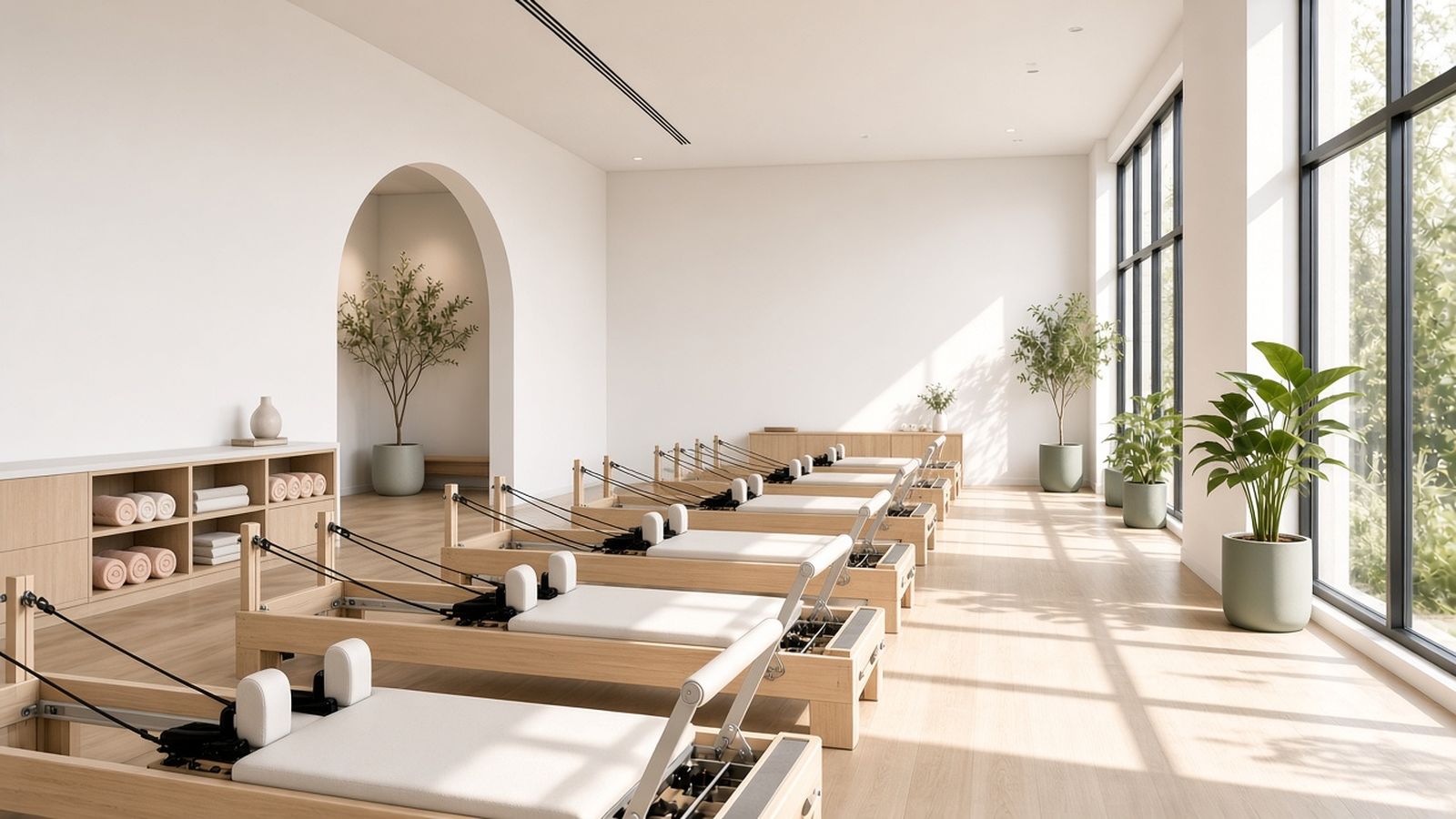
Pilates is a practice with many entry points. This guide offers useful context without making the experience more complicated than it needs to be.
There is no magic number
A common question from newcomers is how many Pilates classes a week they should take, and the honest answer is that it depends. Your schedule, budget, recovery needs, other activity, and goals all shape the right number. What matters most is not finding an ideal frequency but finding a rhythm you can keep without turning movement into another source of pressure.
Frequency also means something different in different formats. A demanding apparatus class and a gentle mat class do not impose the same recovery needs, and two classes in a row on consecutive days can feel very different from two spaced across the week. Start small, notice how your body responds, and adjust from there.
A realistic starting rhythm
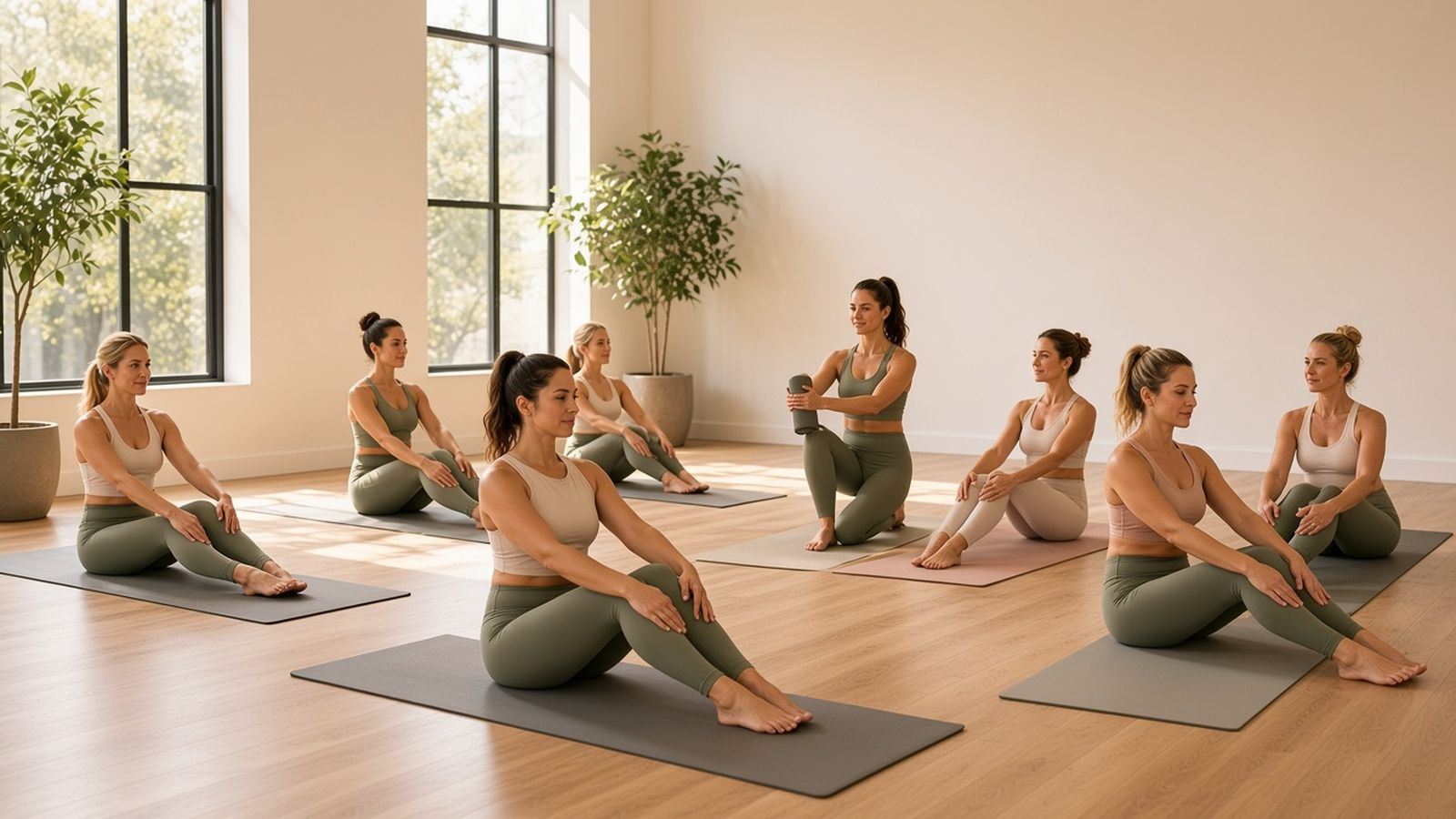
For many people, one class a week is enough to learn the format, remember the setup, and feel the practice take hold. A second weekly class adds continuity if your schedule and recovery allow, and many practitioners settle at two. Beyond that, adding sessions makes sense when the extra visits fit your life rather than compete with it.
If you are choosing between two classes one week and none the next, the more even distribution usually serves you better. Consistency gives you familiarity with the repertoire, which makes each class more valuable and makes progress easier to notice.
Spacing your sessions
Spacing classes across the week — for example, one early in the week and one later — gives your body time to recover and your mind time to consolidate what you learned. If you take consecutive-day sessions, consider making the second one gentler.
Recovery and listening to your body
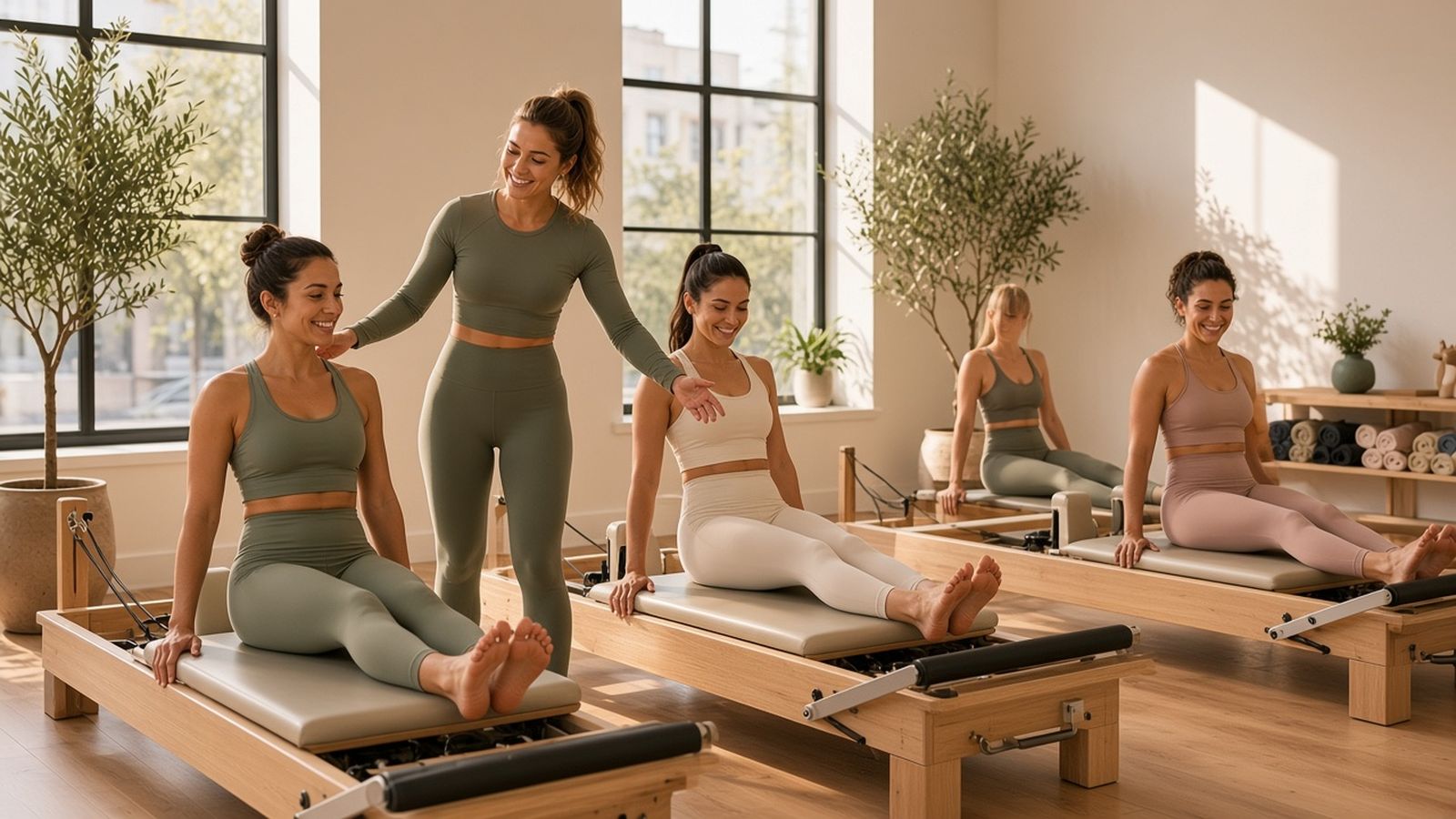
Pilates is low impact but not effortless, and new practitioners often feel muscle tiredness a day or two after class. That response is common after any new activity and usually settles as your body adapts. Plan rest or light movement between demanding sessions, and treat sleep, hydration, and ordinary daily movement as part of the plan rather than a competing demand.
Distinguish tiredness from warning signs. Sharp pain, joint pain, unusual fatigue, or symptoms that concern you deserve a pause and, where appropriate, professional advice. If you have a health condition, are pregnant, or are returning from injury, ask your doctor or another qualified professional how often and how intensely to exercise before setting your schedule.
Fitting Pilates into an active week
Pilates can sit alongside walking, running, strength training, swimming, cycling, or recreational sport. Many people use it as a complement: the controlled, resisted movement and attention to mechanics balance the repetitive patterns of other activities. If you already train several days a week, one or two Pilates classes may be all you need, and more is not automatically better.
Think about your whole week when scheduling. A demanding leg-focused class the day before a long run may not be the pairing you want, while a mat class after a heavy strength day can feel restorative. Tell your instructors what else you are doing; they can suggest class levels and timing that fit the rest of your training.
Progress over months, not days
Weekly rhythms also compound slowly, which is easy to forget in a culture of quick results. The measurable things — how smoothly the carriage travels, how clearly you understand a cue, how a familiar exercise feels compared with last month — change in small increments that only become visible across weeks. If you assess the practice after two classes, you will learn almost nothing; if you assess it after two months, the picture is real.
This is another reason to protect a modest schedule rather than an ambitious one. Two classes a week for six months builds more than six classes a week for three weeks followed by a stop. When life interrupts, scale the practice down rather than pausing it: a single short session in a crowded week keeps the thread alive until time opens up again.
Budget and commitment
Frequency is also a financial decision. Class packs and memberships price per visit differently, and the best value is the plan you actually use. Before buying a large package, attend a few classes at the frequency you are considering, then calculate whether the commitment matches your realistic attendance. An unused class is not a bargain.
If budget is the limiting factor, remember that a single weekly class at a studio you love can be a complete practice, and that mat work at home can supplement studio sessions between visits. Frequency does not have to be uniform year-round; a busier month can hold one class a week, and a quieter month can hold three.
Noticing progress
However many classes you choose, measure progress in quality rather than quantity. Movements feel smoother, transitions feel clearer, and you understand the teacher’s cues faster. Those changes are gradual and easy to miss if you only count sessions attended. A simple note after class — what felt easier, what you want to ask next time — makes progress visible over months.
The schedule that works is the one that keeps you curious and rested enough to return. Start with a number that feels almost too easy, protect it in your calendar, and adjust only when your body, budget, and week genuinely support more.
Helpful next reads
Find a studio near you.
Explore local studios and choose a place that fits your schedule, questions, and way of moving.
FAQ
Is once a week enough?
Yes, for many people one weekly class builds familiarity and a sustainable habit. You can add sessions when your schedule and recovery allow.
Can I do Pilates every day?
Daily gentle mat work suits some people, but demanding apparatus sessions need recovery days. Follow professional guidance if you have health conditions, and let recovery shape the plan.
How long until I see results?
Progress varies by person and goal. Many practitioners notice smoother, more coordinated movement within weeks of consistent practice, but timelines are individual.
Should I do Pilates before or after other workouts?
Either can work. Avoid pairing a demanding Pilates class immediately before work that needs your freshest effort, and ask your instructors for scheduling advice.
Is more Pilates always better?
No. Consistency and recovery matter more than maximum frequency. Choose the schedule you can sustain and enjoy.