Pilates is a practice with many entry points. This guide offers useful context without making the experience more complicated than it needs to be.
The short answer
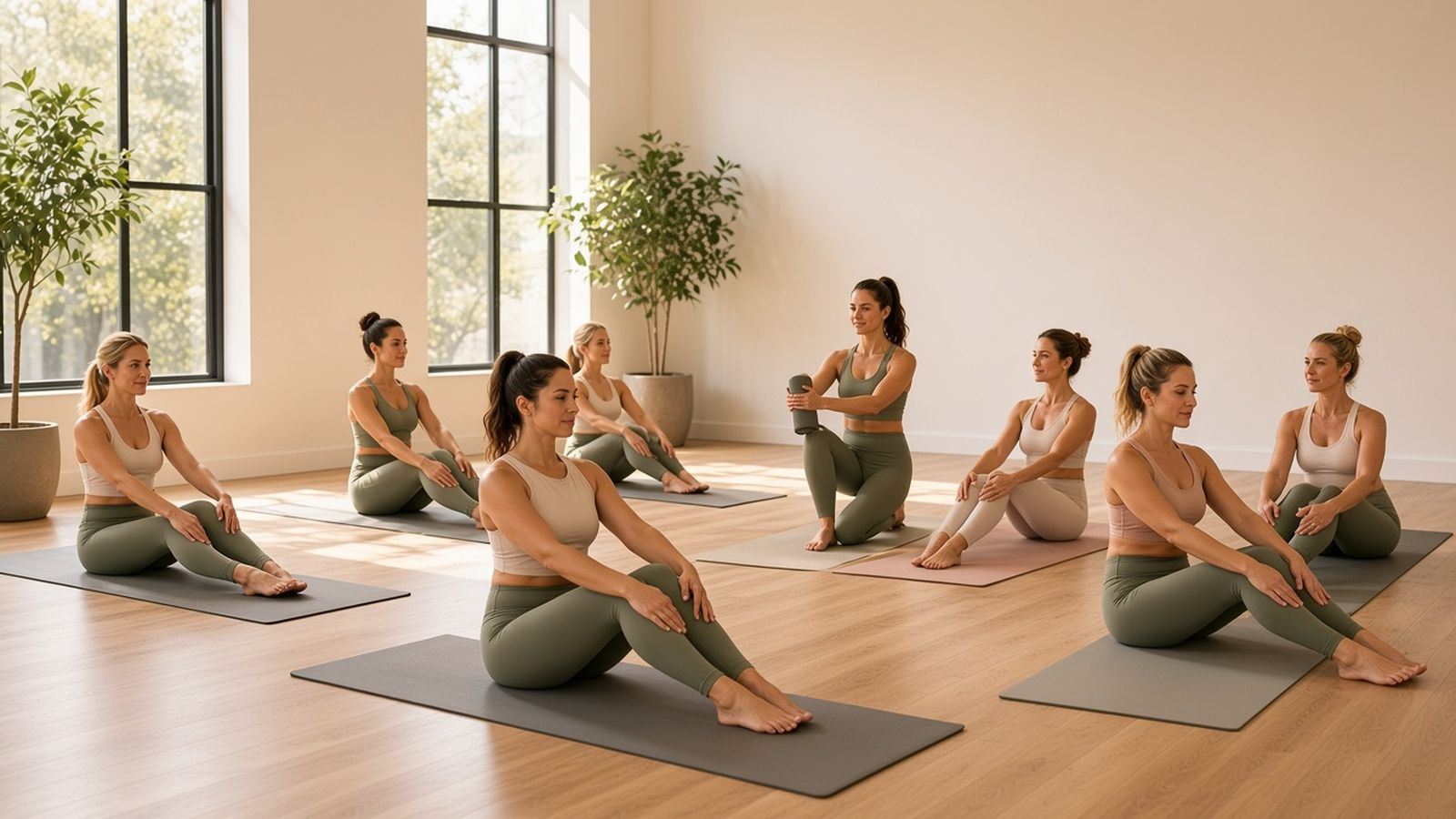
Wear clothing you can move in comfortably: leggings, shorts, or joggers with a fitted top or a t-shirt that will not fall over your face when you lie down. Something stretchy that stays in place is the goal. If you already own workout clothes, you almost certainly own appropriate Pilates clothes, and no branded outfit will make the method work differently.
The one genuinely useful purchase is a pair of grip socks. Many studios require them, especially for reformer and equipment classes, because the rubberized soles improve traction on the carriage and footbar and keep classes hygienic. If you do not own any, call ahead or check the studio’s website; most sell them at the front desk.
Why fitted beats loose
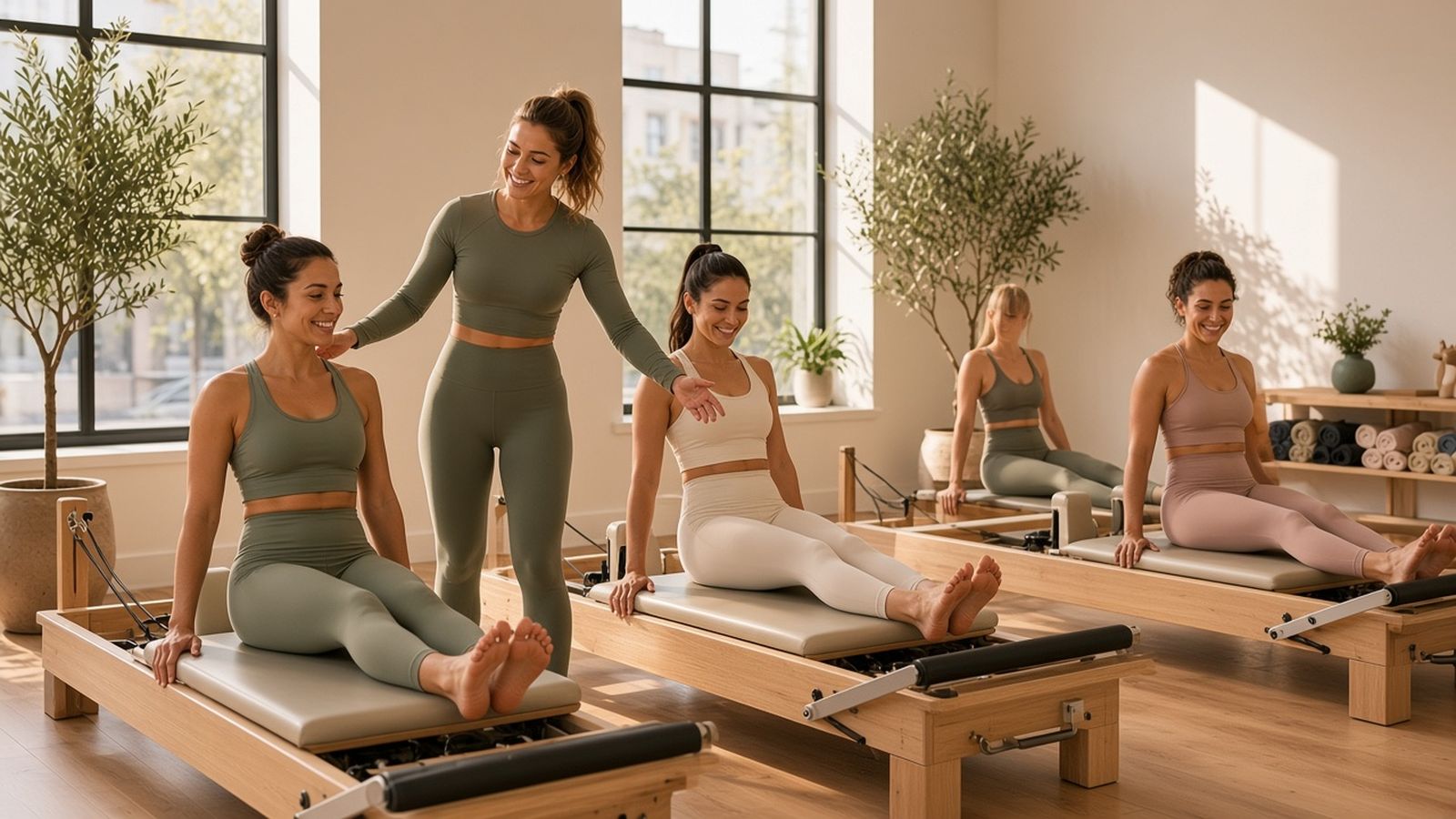
Instructors watch alignment: how your spine, shoulders, hips, and legs organize through a movement. Loose fabric hides the very information they use to teach you, and draped hems can catch on reformer springs, straps, or the footbar. A fitted top also stays comfortable in inverted or folded positions, where a loose shirt slides toward your head.
Fitted does not mean tight or restrictive. You should be able to breathe fully, reach overhead, and fold at the hips without waistbands digging in. If you are shopping specifically for the class, choose fabrics with stretch and a flat seam that will not press into your skin when lying on the carriage or mat.
Layers for the room
Studios vary in temperature, and early classes can feel cool before your body warms up. A light layer you can shed after the warm-up, such as a fitted long-sleeve over your top, keeps the first ten minutes comfortable without interfering with movement.
Grip socks, explained
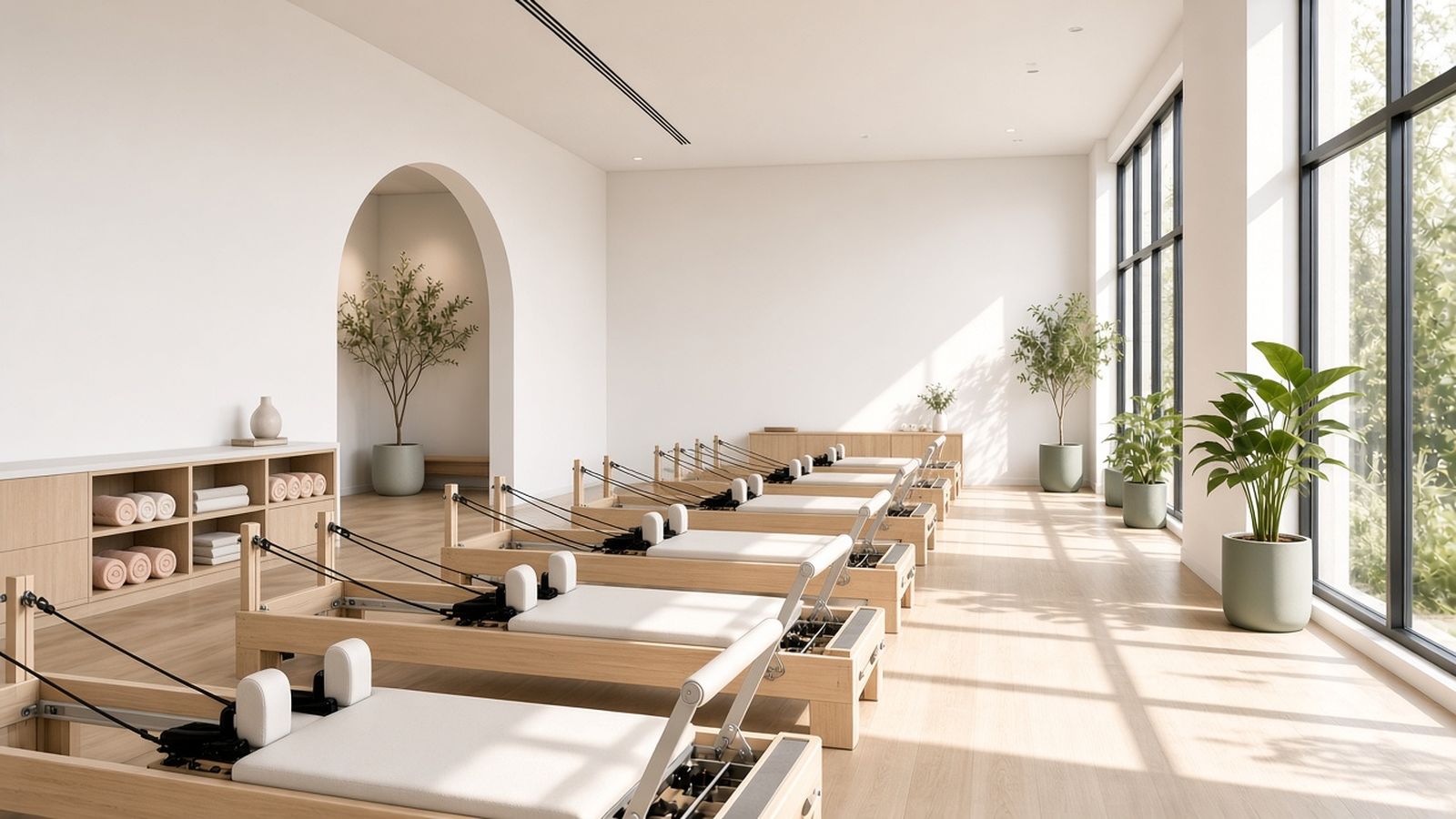
Grip socks look like regular socks with rubberized dots or treads on the sole. They give you traction on mats and apparatus, reduce slipping when your feet are on the footbar or in straps, and provide a hygienic barrier between your skin and shared surfaces. Policies differ: some studios require them for all apparatus classes, some only recommend them, and some are relaxed for mat classes.
Buy a pair with a snug arch band and treads covering the whole sole, not just the heel and toe. Bring them to every class and keep a spare in your bag. If you forget them, ask at the desk before borrowing anyone else’s; hygiene policies exist for everyone’s benefit.
What to bring
Bring water, and bring a small towel if you like one for mat work. Most studios provide mats and props for mat classes and all equipment for reformer classes, but check the class description or call ahead if you are unsure. A hair tie is practical for longer hair, and minimal jewelry avoids scratching upholstery or catching in springs.
Leave valuables at home or in the cubbies provided. If you are heading somewhere after class, pack a change of clothes; studio changing rooms usually have space, but planning ahead keeps your exit unhurried.
Footwear and hygiene
Pilates is practiced barefoot or in grip socks; outdoor shoes stay at the door in most studios. This keeps the equipment clean and gives your feet direct feedback on the mat and footbar. If you need supportive footwear for walking or a medical reason, wear what you need to arrive and change at the studio.
Cleanliness matters in shared rooms. Come to class with clean socks and wash grip socks after each use; most are machine washable. If you use studio mats or props, wipe them down if the studio asks, and mention any spills or damage to the front desk so the next class starts fresh.
Movement-friendly details
A few small details improve comfort across any outfit. Choose underwear and sports bras that stay invisible and in place through folded and inverted positions, because adjusting them mid-class is a distraction you can plan away. If you perspire heavily, moisture-wicking fabric keeps grip socks and carriage surfaces drier, which helps traction. And if you sit at a desk most of the day, a slightly higher waistband that does not dig in when you hinge forward is worth more than any fashion consideration.
Long hair benefits from a secure tie positioned where it will not press into your spine during floor work. If you wear glasses, a well-fitted pair or a strap saves constant adjustment; contact-lens wearers sometimes prefer them for apparatus classes where you look upward along the carriage. None of these are rules. They are the accumulated small comforts that let you give your attention to the class instead of your clothing.
Comfort and confidence
Clothing should serve the practice, not the other way around. Choose colors and styles you like, because feeling comfortable in the room helps you pay attention to the work. There is no Pilates uniform, no expectation of expensive activewear, and no reason to postpone a first class until you have shopped.
If you are unsure what a specific studio expects, its website or a quick phone call will tell you: whether grip socks are required, whether mats are provided, and how early to arrive. With those details settled, your outfit is the easiest part of the visit. Dress to move, bring your grip socks, and enjoy the class.
Helpful next reads
Find a studio near you.
Explore local studios and choose a place that fits your schedule, questions, and way of moving.
FAQ
Are grip socks required for Pilates?
Many studios require them for apparatus classes, and some require them throughout. Check the studio’s policy; most sell grip socks at the front desk.
Do I need special Pilates clothes?
No. Fitted, comfortable movement clothing you already own is appropriate. Avoid very loose garments that can catch on equipment.
Should I wear shoes to Pilates?
Pilates is practiced barefoot or in grip socks. Outdoor shoes usually stay at the studio entrance.
What should I bring to a reformer class?
Water, grip socks if required, and a hair tie for longer hair. The studio provides the equipment and, usually, cleaning supplies.
Can I wear jewelry to Pilates?
Minimal jewelry is best. Rings and bracelets can catch in springs and straps, and watches can scratch upholstery.