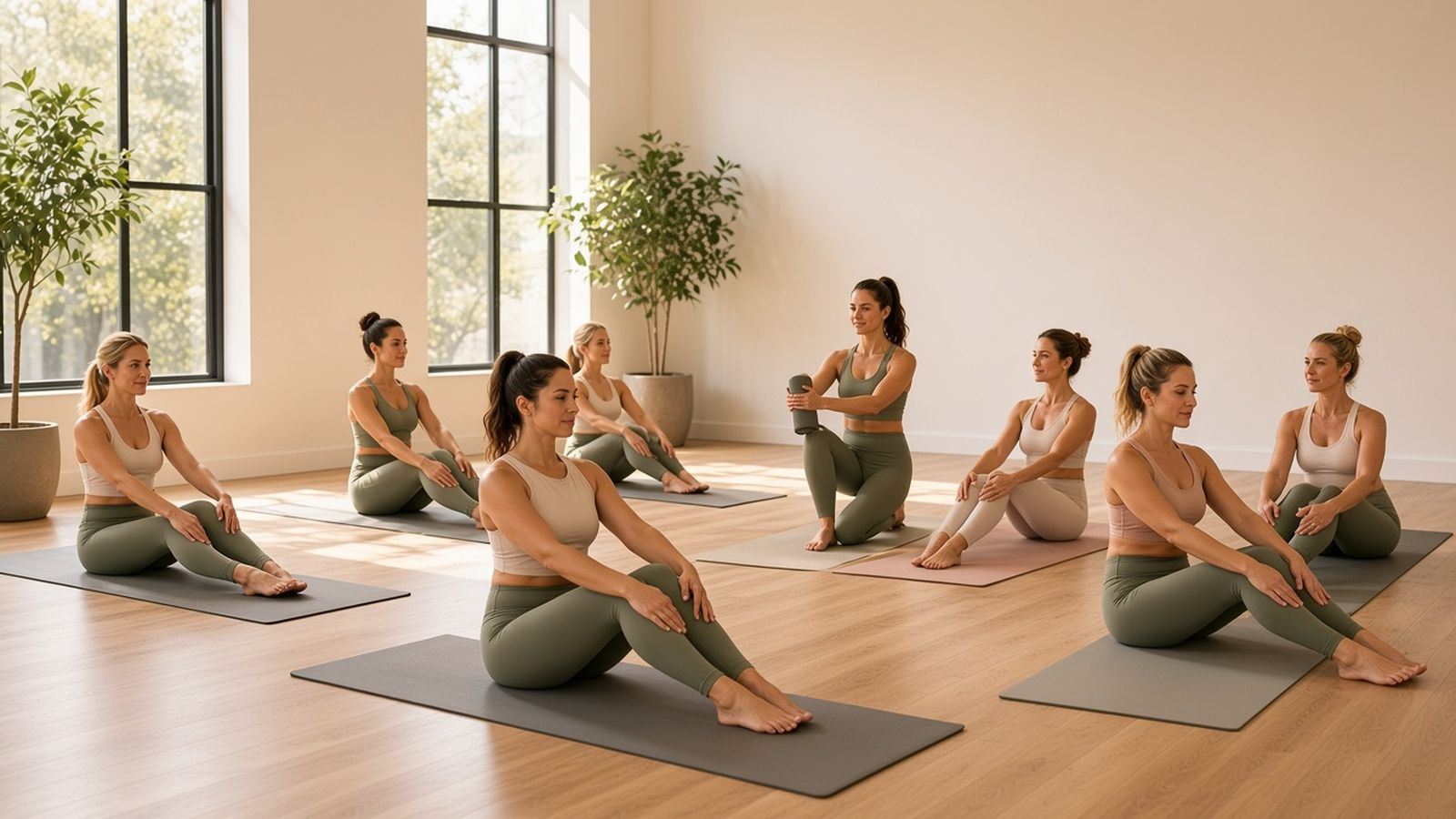
Pilates is a practice with many entry points. This guide offers useful context without making the experience more complicated than it needs to be.
What wall Pilates actually is
Wall Pilates is a loose term for mat-based Pilates exercises performed with a wall as a prop. The wall can support your back or legs, provide a reference for alignment, or act as a surface to press against for resistance. A leg series might press against the wall; a trunk series might use it to check the position of your spine. The method itself is unchanged — the wall simply fills the role a teacher or a spring might play.
Its recent popularity comes from accessibility: it needs no equipment beyond a mat and a clear patch of wall, and the exercises scale from gentle to demanding. That same popularity produces a lot of inconsistent material online, so treat sources with care and favor ones that explain setup and purpose rather than selling intensity.
Building a home practice
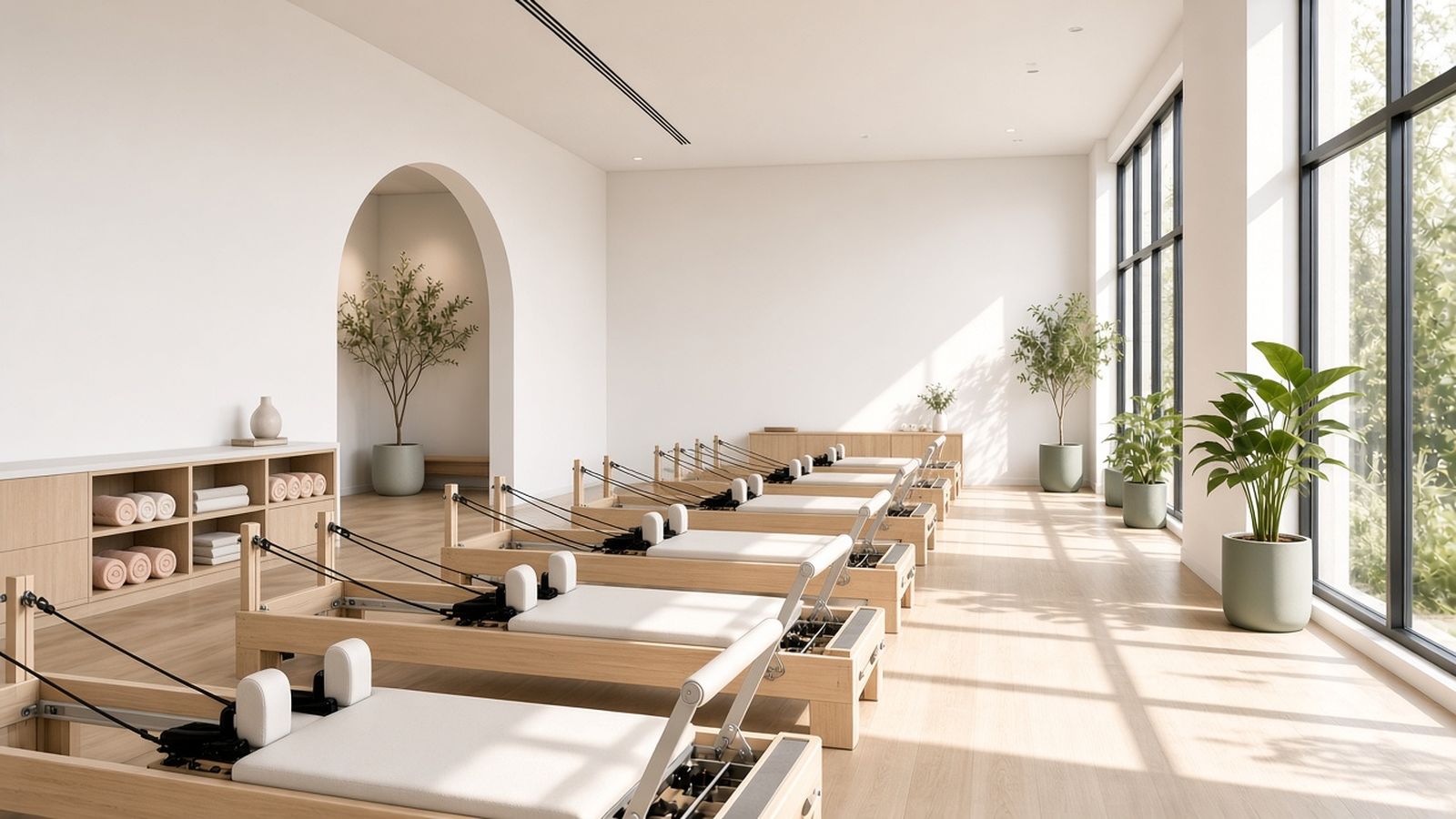
A useful home setup is modest: a non-slip mat, enough floor space to lie down with arms overhead, and optional props such as a small ball, a resistance band, or a ring. These cover a wide range of mat repertoire. Comfortable clothing and grip socks, if your floor is slippery, complete the picture. Nothing here requires a spare room or a large budget.
Structure helps a home practice stick. Choose a regular time, start with ten or fifteen minutes, and follow a small set of exercises you already know rather than improvising. If you are learning from videos, watch the whole demonstration before attempting the movement, and skip anything that causes pain.
Safety at home
Without a teacher in the room, your own judgment is the safety system. Move slowly, keep ranges comfortable, stop for sharp pain, and consult a qualified professional about any injury or health condition before starting a new routine.
What home practice cannot do
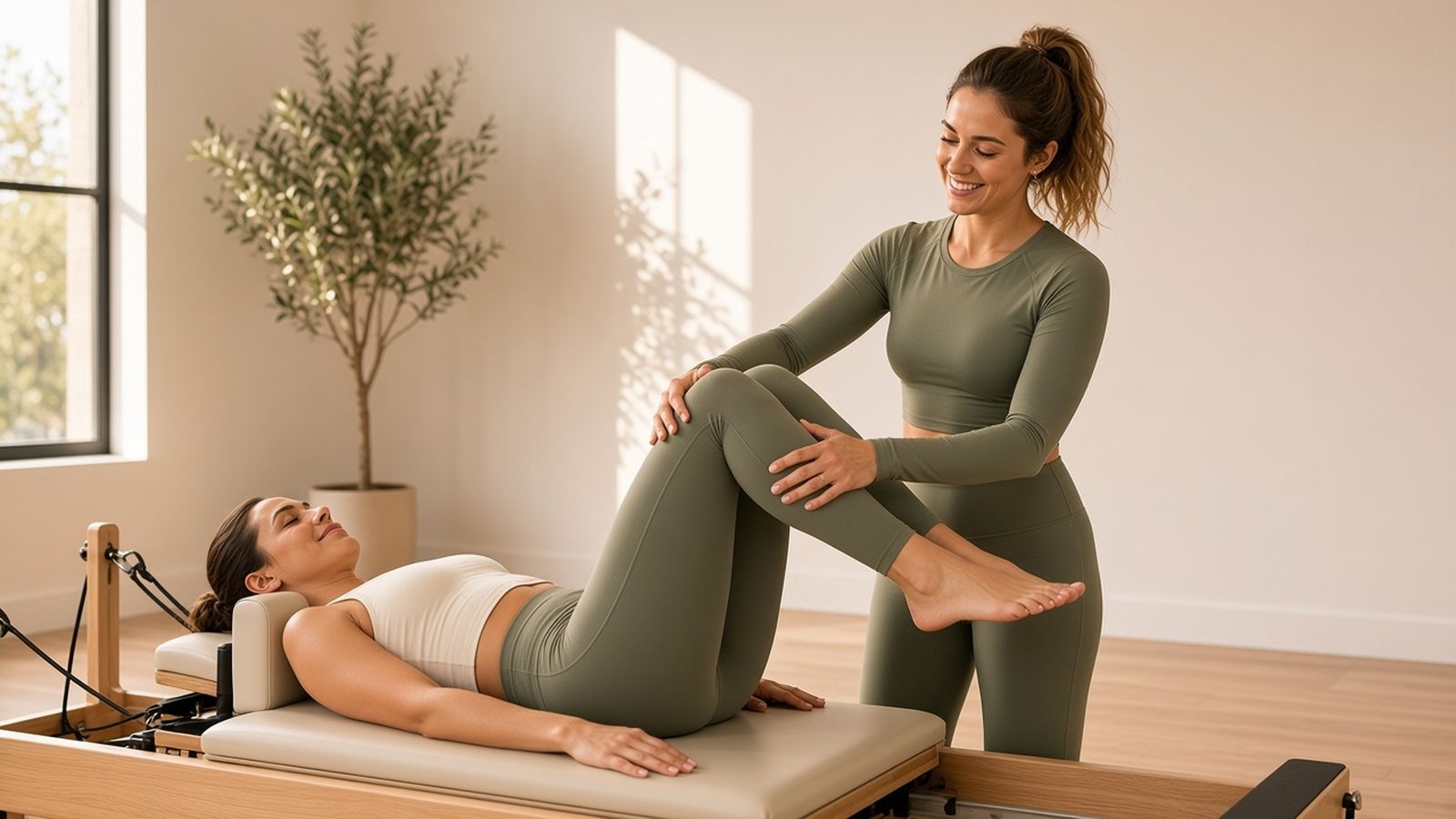
A wall and a mat cannot reproduce spring resistance, and they cannot watch your alignment. Apparatus work gives calibrated support and load that home practice approximates but does not match, and an instructor catches the small compensations — a rib flare, a hip hike, a held breath — that self-assessment misses. Those limits do not make home practice worthless; they make it one part of a practice rather than the whole.
If you have a health condition, are pregnant, or are returning from injury, home videos are not a substitute for professional guidance. Ask your doctor or another qualified professional what is appropriate, and consider a studio class or private session to establish technique before relying on solo practice.
Combining home and studio practice
A workable pattern for many people is one studio class a week to keep technique honest, plus short home sessions in between for consistency. Home practice also carries you through travel and busy weeks, so a missed class does not become a missed month. Tell your instructor what you do at home; they can suggest exercises worth practicing and corrections to keep in mind.
If you eventually want apparatus work at home, spend time in a studio first. Trying the reformer, chair, or barrels under instruction tells you which movements you enjoy and what a safe setup involves, which is far better guidance than a product listing.
Choosing what to follow online
Look for instructors who name their training, demonstrate modifications, and explain the purpose of each exercise. Be cautious of content that promises dramatic transformations, prescribes exercises for injuries, or treats every movement as urgent. The method is patient, and the teaching that reflects that patience is usually the teaching worth following.
It is also reasonable to ask a studio teacher to review your home routine. Many will suggest two or three exercises appropriate for solo practice and flag anything to avoid. That small amount of personalization makes home sessions safer and more useful than any generic program.
Travel and small spaces
Home practice earns its keep most obviously when you travel. A hotel room mat or towel, a wall, and twenty minutes cover a useful session, and the familiarity of the repertoire means you do not need to invent anything on the road. The same applies to small apartments: a mat’s footprint is the entire requirement, and props that mattered at the studio can be replaced by everyday objects without fuss.
Small spaces also change the safety calculus. Clear the area around your mat, check that the wall surface is smooth and clean, and skip anything that sends you toward furniture or the ceiling with raised limbs. If a session feels cramped, do fewer exercises at a slower pace rather than trying to squeeze the full sequence into a tight room.
A simple starting week
A gentle starting week might include one studio class and two short home sessions, each built from four or five exercises you know, plus a wall series for the legs or trunk. Keep sessions short enough that they never feel like a project. The aim is a rhythm you can keep on ordinary weeks, not a program that only works when everything goes right.
Home practice rewards the same qualities the studio rewards: attention, control, and consistency. Treat the wall as a patient teacher, treat discomfort as information, and let the practice grow at the pace your schedule and body support.
Helpful next reads
Find a studio near you.
Explore local studios and choose a place that fits your schedule, questions, and way of moving.
FAQ
Does wall Pilates really work?
It can be a useful form of mat Pilates that uses a wall for support and resistance. Its value depends on the exercises chosen and the attention you bring, not the trend.
Do I need equipment for at-home Pilates?
A mat is enough to start; a small ball, band, or ring adds variety. Large apparatus is not required for a useful home practice.
Can wall Pilates replace studio classes?
It can complement them. Studio instruction keeps technique honest and provides apparatus work that home practice cannot reproduce.
Is wall Pilates safe for beginners?
Generally yes when you move within comfortable ranges and stop for pain. Consult a qualified professional first if you have a health condition or injury.
How long should a home Pilates session be?
Ten to twenty focused minutes is a practical start. Consistency matters more than session length.