Pilates is a practice with many entry points. This guide offers useful context without making the experience more complicated than it needs to be.
Early life in Germany
Joseph Hubertus Pilates was born in Germany in 1883. Accounts of his childhood describe a frail young man who turned to physical study — including gymnastics, boxing, and the movement traditions of his era — to build his own health. That early experience of strengthening a weak body through deliberate practice shaped the philosophy his method would later carry: that disciplined, attentive movement is a foundation for wellbeing.
By his twenties, he was studying and teaching physical training. The method he began to develop drew on the fitness culture of early twentieth-century Europe, combining elements of gymnastics, wrestling, and the emerging science of physical education into something distinct.
England and the war years
During the First World War, Pilates was among German nationals interned in England, and it was during those years that much of his practical innovation took shape. Working with fellow internees who had limited space and no equipment, he developed floor exercises that required nothing but a mat — the work that would become known as mat Pilates.
Stories from this period describe him adapting hospital beds, using springs and straps to let bedridden patients exercise against resistance. Whether every detail is precisely documented or polished by retelling, the through-line is real: the idea that springs could support and resist a body in motion, which became the heart of his later apparatus.
New York and the studio years
Pilates emigrated to the United States in the 1920s and opened a studio in New York City with his wife Clara. The studio occupied a building shared with the dance world, and over the following decades dancers became a large share of his clients and his teaching circle. Injuries, rehabilitation, and the demands of professional performance gave the method a practical proving ground.
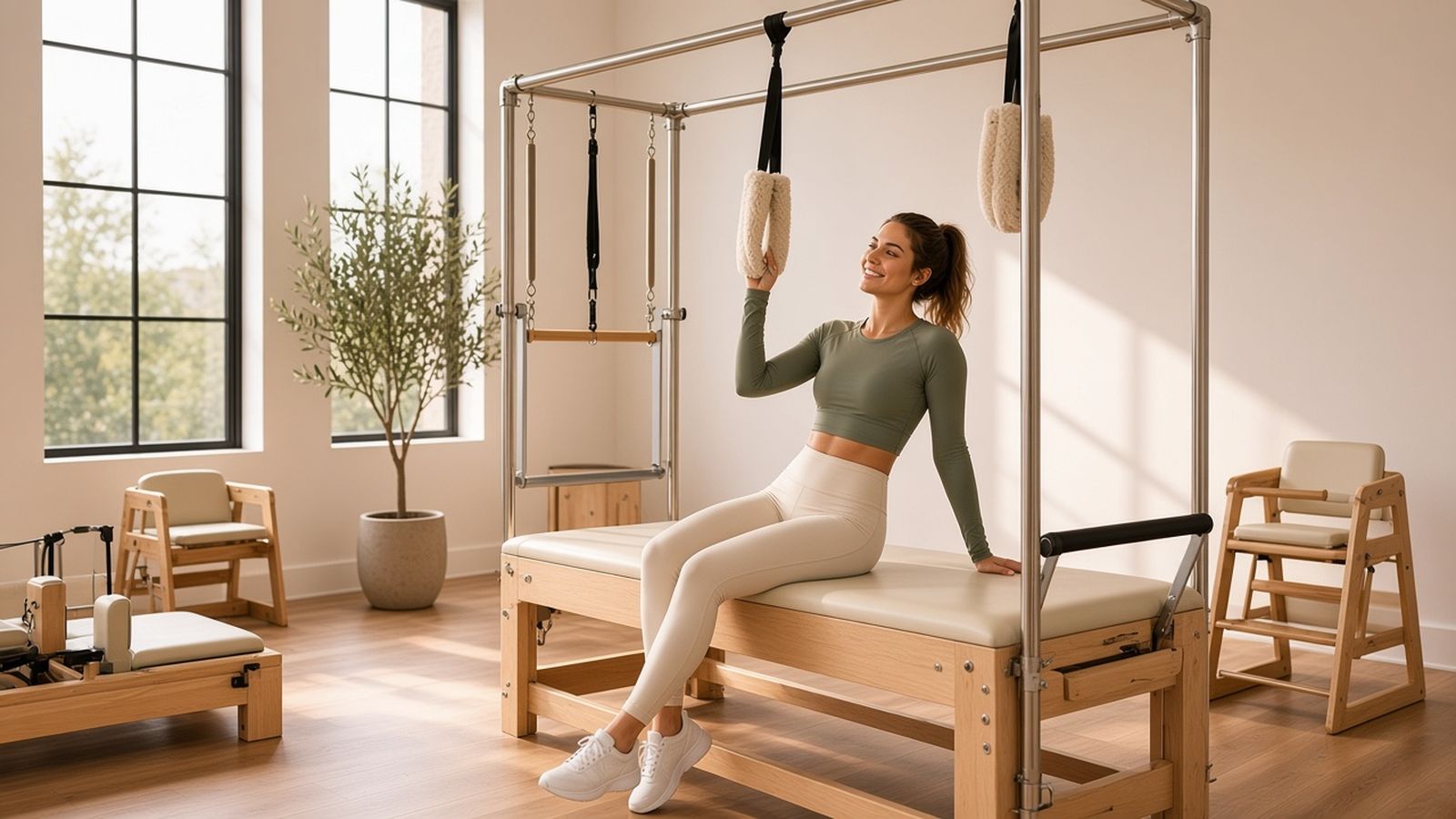
It was in New York that his apparatus took its recognizable form: the reformer with its sliding carriage and springs, the Cadillac or trapeze table, the chair, and the barrels. He continued to refine both the equipment and the exercise repertoire, and he wrote about his philosophy, describing the method he called Contrology — the complete coordination of body, mind, and spirit through controlled movement.
Contrology, the original name
Pilates did not originally call his method by his own name. In his writing he described a system he called Contrology, emphasizing control, breath, precision, and flow. The exercises acquired his name only later, as his students carried the work forward.
The students who carried it forward
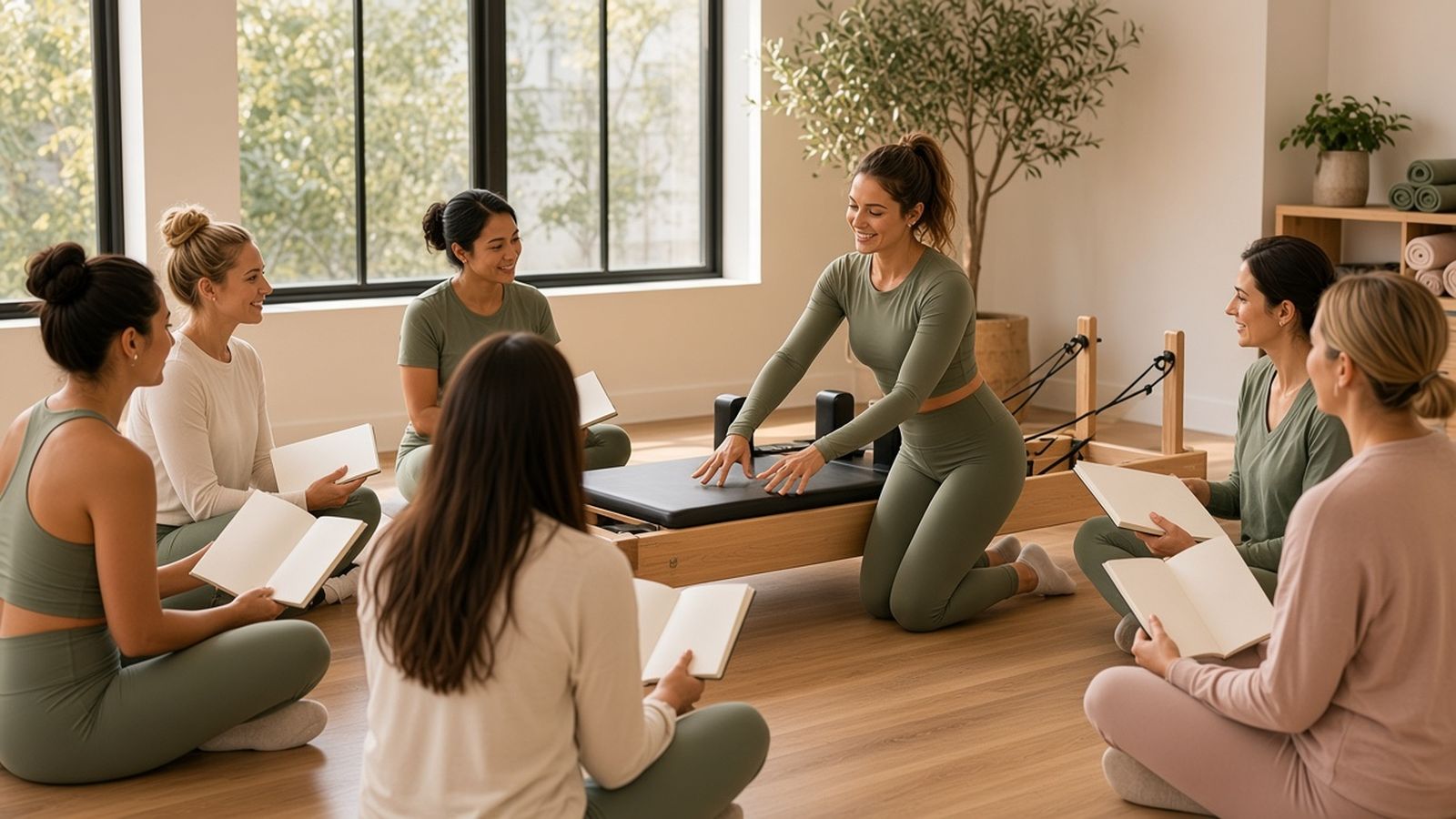
After Joseph Pilates died in 1967, the method survived through the community around his studio. Teachers who had studied with him — often called the elders of the method — continued teaching, opening studios, and training new instructors. Their students, in turn, carried the work to new cities and countries, which is why modern Pilates lineages so often trace their teaching through a small number of people who studied with him directly.
Over the following decades the method spread from its dance-adjacent origins into the wider fitness world. Contemporary teacher-training programs adapted the repertoire with modern anatomy and exercise science, while classical programs worked to preserve the original order and apparatus. Both trace their roots to the same studio and the same body of work.
The apparatus as part of the history
The equipment tells the story of the method’s priorities. Springs, rather than weights, provide resistance that works in both directions of a movement and can be tuned precisely. The moving carriage of the reformer gives immediate feedback on how evenly effort is organized. These designs were not accidents; they embody the principle that the method teaches control rather than maximal output.
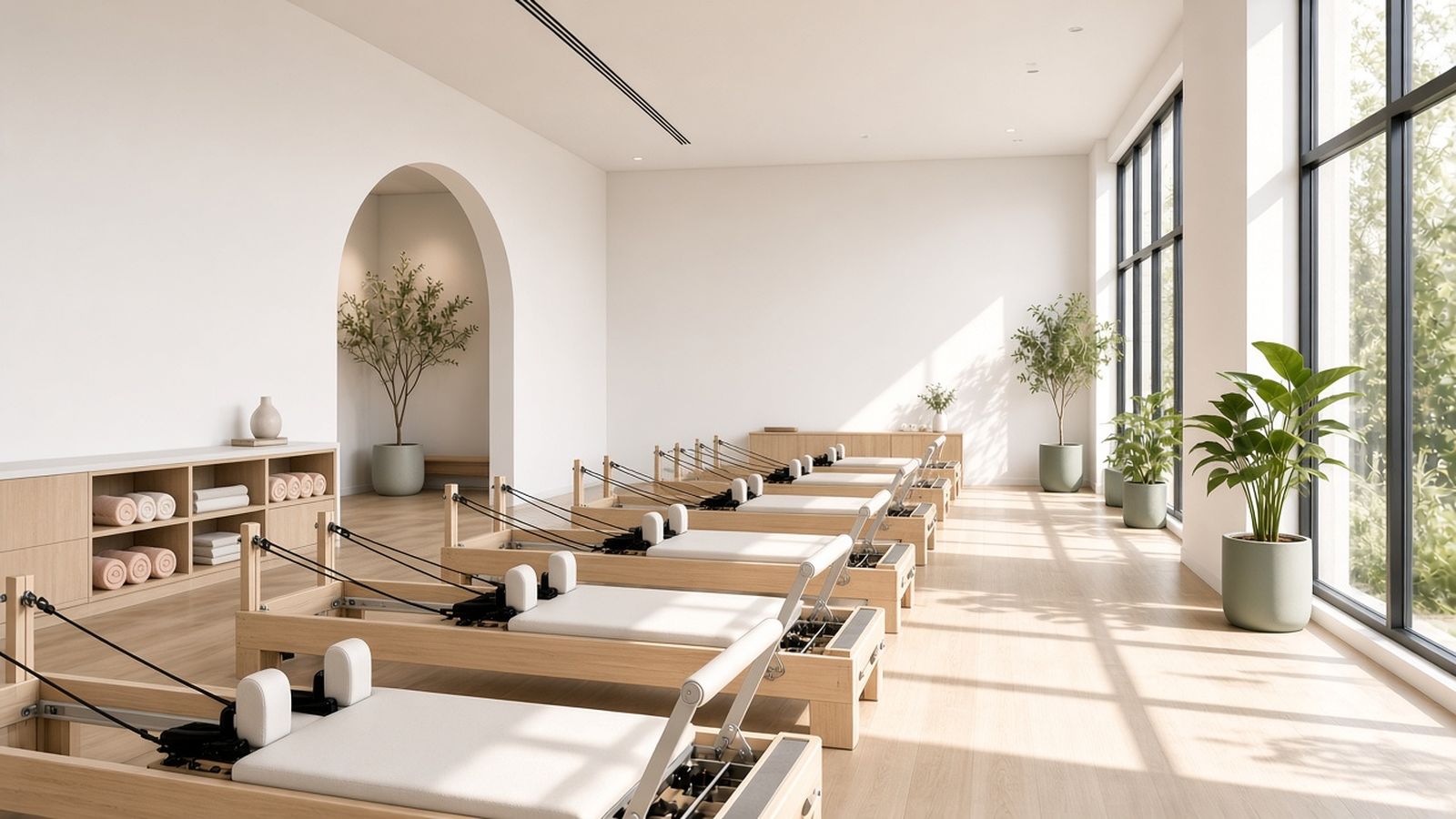
Modern manufacturers build to the same basic designs, with updated materials and dimensions. A reformer in a contemporary studio is still recognizable as the apparatus Pilates developed: a carriage, a frame, springs, straps, and a footbar, all in service of resisted, controlled movement.
Why the history matters today
Knowing the method’s history helps make sense of studio practice. The set order of a classical class, the vocabulary of exercise names, the design of the apparatus, and the emphasis on control over effort all trace back to one person’s study of movement and his students’ commitment to carrying it forward. Understanding that lineage turns isolated exercises into a coherent system.
It also explains the method’s openness to adaptation. Joseph Pilates spent his life refining his own work — adapting exercises for internees, patients, dancers, and athletes alike. Modern classical and contemporary teaching both continue that process in different ways. The history is not a set of rules to obey; it is the context that makes the method’s principles legible.
From one studio to studios everywhere
The distance from one New York studio to thousands of studios worldwide was covered in a few generations, largely by word of mouth and teacher to teacher. Today, the method is practiced on mats and apparatus in dedicated studios, gyms, physical therapy settings, and homes in many countries.
That reach is worth remembering when you walk into a beginner class: the exercises you will learn were shaped by a century of practice, refinement, and teaching. Taking a class connects you to that lineage, whether you practice classically or in a contemporary style, and whatever your goals.
Helpful next reads
Find a studio near you.
Explore local studios and choose a place that fits your schedule, questions, and way of moving.
FAQ
Who was Joseph Pilates?
Joseph Pilates (1883–1967) was a German-born physical trainer who developed the Pilates method and its apparatus, later establishing a studio in New York City.
Did Joseph Pilates invent the reformer?
He developed and refined the apparatus that became the reformer, drawing on spring-based exercise methods he pioneered in the early twentieth century.
What was Contrology?
Contrology was Joseph Pilates’s original name for his method, emphasizing the complete coordination of body and mind through controlled movement.
How did Pilates spread after his death?
His students and their students carried the method forward through studios and teacher training, spreading it from the dance world into mainstream fitness.
What is the difference between classical and modern Pilates?
Classical teaching preserves the original repertoire and order; contemporary teaching adapts the work with modern movement science. Both trace their roots to Joseph Pilates’s studio.