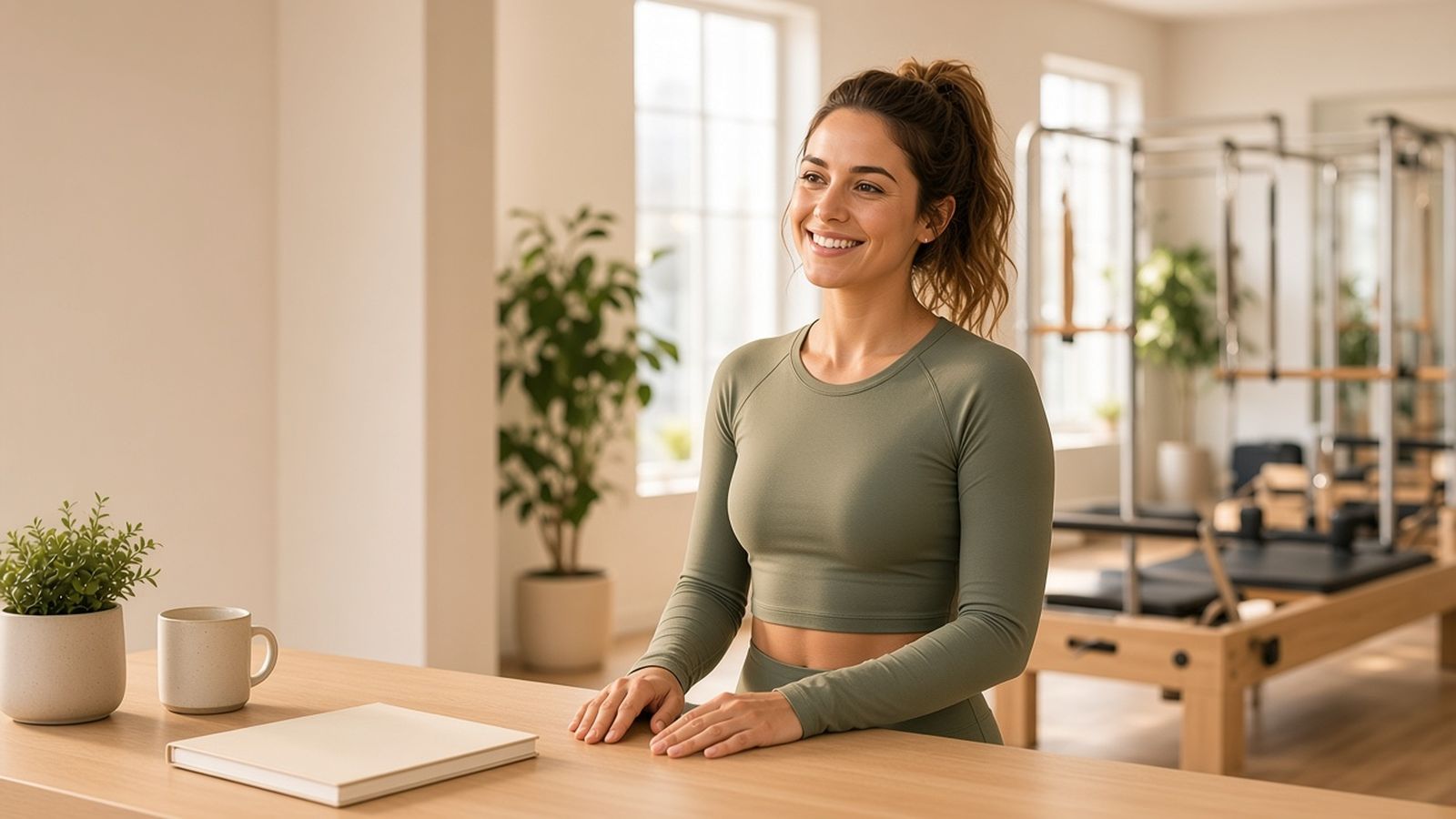
Pilates is a practice with many entry points. This guide offers useful context without making the experience more complicated than it needs to be.
What the labels mean
Classical Pilates refers to teaching that stays close to the repertoire, sequence, and apparatus associated with Joseph Pilates and the students who carried his work forward. Classes often follow a recognizable order, use traditionally built equipment, and treat the original exercises as a complete system to be learned over years.
Contemporary Pilates keeps the principles of the method — concentration, control, breath, precision, and flow — while adapting exercises with anatomy, biomechanics, and ideas from other movement fields. Contemporary teachers may modify the classical order, add props, or incorporate current research about the body. Both approaches aim to teach the same underlying method; they differ in how strictly they preserve its original form.
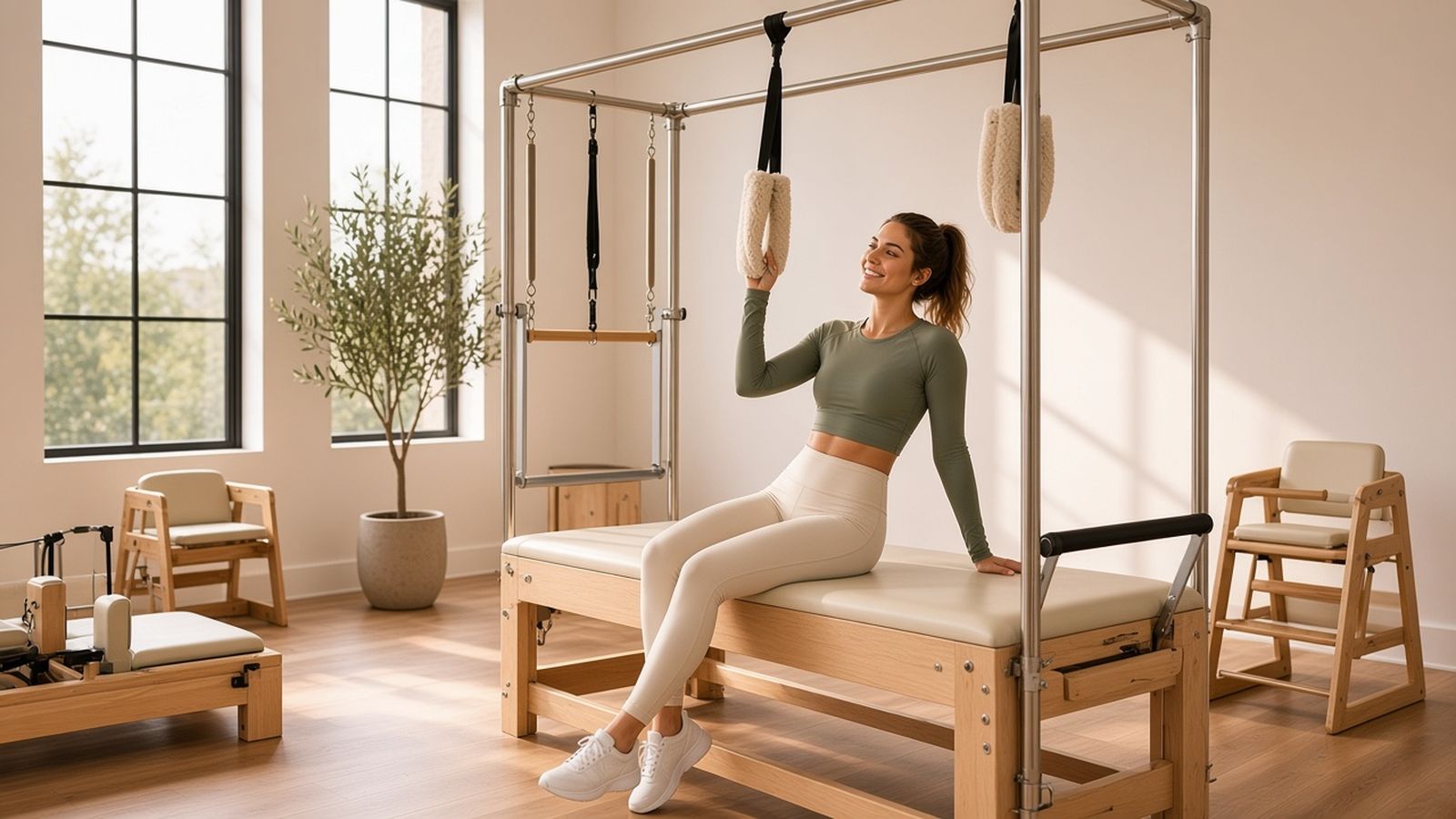
A classical class experience
In a classical studio, you may notice the session has a familiar shape from week to week. Exercises appear in a traditional order on the mat or reformer, and progression means refining how you perform them rather than inventing new ones. The apparatus is often built to traditional dimensions, with leather straps and specific spring configurations.
Teachers in this lineage usually train through classical programs and apprentice under experienced teachers. The strengths of this approach are its coherence and its depth: the system was designed as a whole, and practicing it in order can reveal relationships between exercises. Beginners are welcome, and the foundational versions of each exercise are taught first.
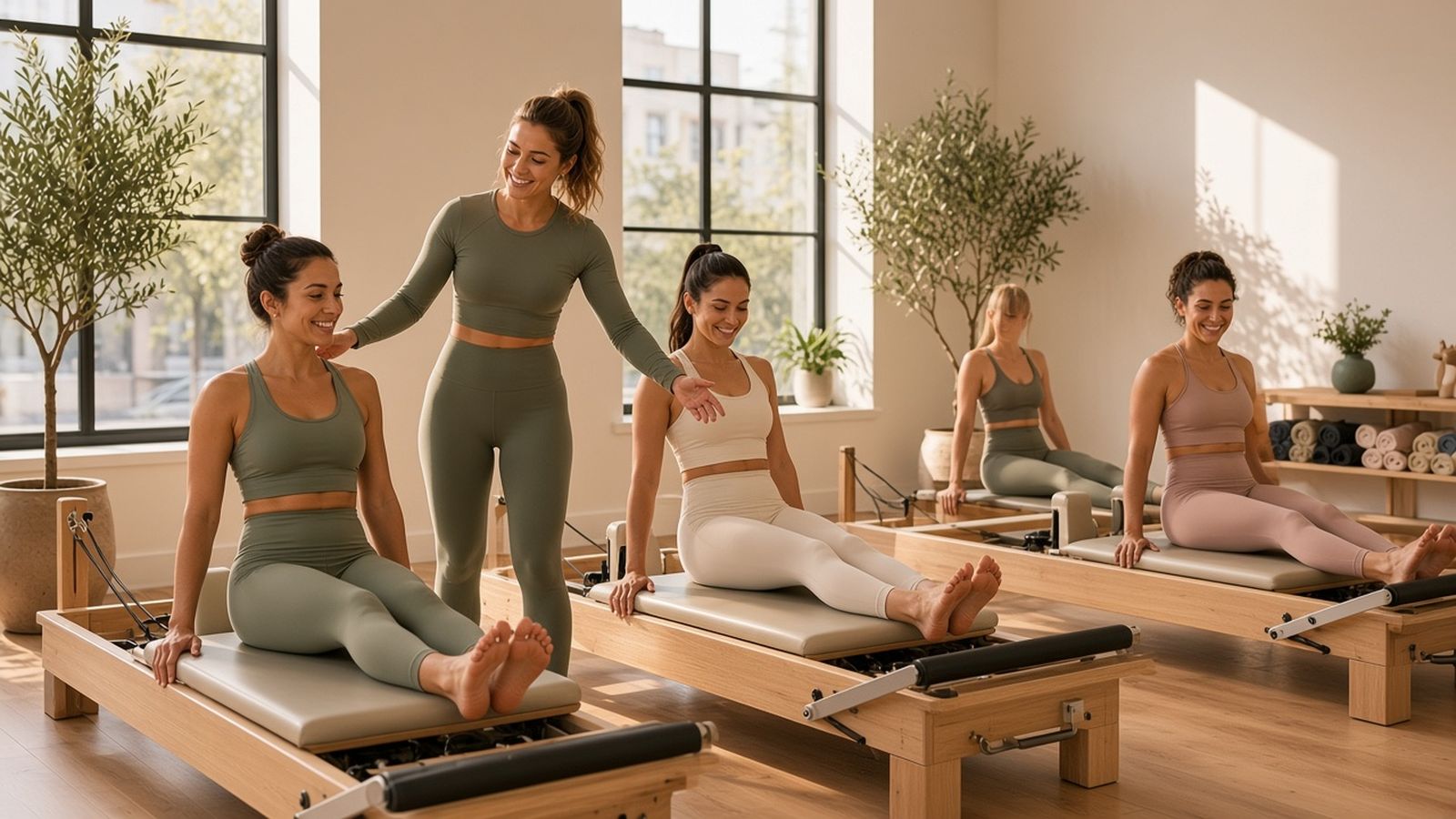
A contemporary class experience
In a contemporary studio, you may notice more variety from week to week. The teacher might blend classical exercises with modern adaptations, use props such as balls and bands, and adjust sequences for different bodies and goals. Equipment may be built by modern manufacturers with contemporary spring systems and upholstery.
Contemporary teacher training commonly includes additional anatomy coursework and encourages instructors to integrate knowledge from physical therapy and exercise science. The strengths of this approach are adaptability and range: classes can be tailored to mixed-level rooms, special populations, and specific athletic goals while still teaching Pilates principles.
Hybrid studios are common
Many studios teach both. A studio may offer a classical reformer class alongside a contemporary mat class, or its teachers may have trained in different lineages. Ask how the studio describes its approach and what its instructors studied.
Choosing between them
If you enjoy structure, tradition, and a long apprenticeship in a defined system, classical teaching may resonate with you. If you enjoy variety, adaptation, and a class shaped around current movement science, contemporary teaching may fit better. If you are unsure, sample both: one class in each style will tell you more than any description.
Whatever you choose, look past the label to the teaching itself. A great classical teacher and a great contemporary teacher share the same essentials: clear communication, sensible progressions, respect for individual bodies, and honest boundaries about what Pilates can and cannot do. A poor teacher in either lineage is still a poor teacher.
How the two appear on a studio schedule
Class names rarely announce their lineage outright, but the schedule leaves clues. A class described as following a set order, or named after the traditional mat or reformer sequence, is usually classical in orientation. Classes that blend formats, list modern equipment alongside apparatus, or describe themselves as athletic or fitness-oriented are usually contemporary. Neither description is a judgment; they are signposts for what the hour will feel like.
The same applies to equipment. A studio with traditionally built apparatus, leather straps, and a full classical complement signals one tradition, while a room with modern reformers, props on open shelves, and mats for blended formats signals another. Many studios mix both comfortably, and the mixture is often a strength: you can learn the classical foundation in one class and enjoy a contemporary variation in the next.
Questions to ask a studio
Ask how the studio would describe its approach and where its instructors trained. Ask whether the class follows a set sequence and how beginners are introduced to the repertoire. Ask how the studio adapts classes for different needs and whether private sessions are available for individual attention.
These questions are not about finding a right answer. They help you understand the studio’s identity so you can match it to your own preferences. A confident studio will answer easily and will not treat one lineage as a marketing weapon against the other.
Helpful next reads
Find a studio near you.
Explore local studios and choose a place that fits your schedule, questions, and way of moving.
FAQ
Is classical Pilates harder than contemporary?
Not necessarily. Difficulty depends on the exercise, the teaching, and your experience. Classical classes may follow a set order, while contemporary classes vary more in content.
Can beginners take a classical Pilates class?
Yes. Classical teaching includes foundational versions of every exercise, and a good instructor will teach the basics before progressing.
Is contemporary Pilates less authentic?
Contemporary Pilates keeps the principles of the method while adding modern movement education. Authenticity is better judged by teaching quality than by lineage alone.
Which lineage should teacher training follow?
Choose the curriculum, mentorship, and assessment that fit your goals and that local employers recognize. Our certification guide compares programs in detail.
Can I mix classical and contemporary classes?
Yes. Many students and teachers work across both, and the combination can deepen your understanding of the method.