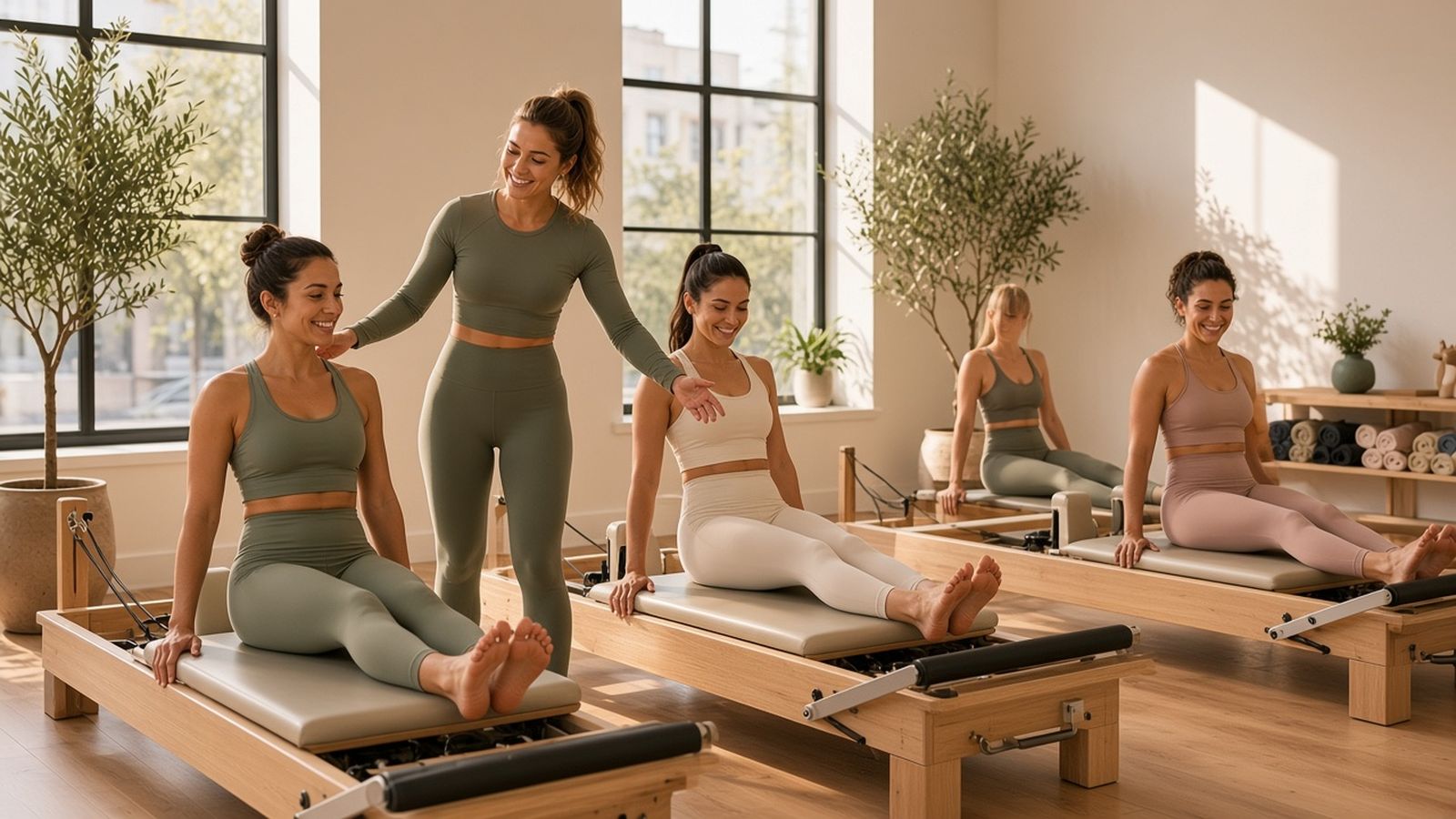
Pilates is a practice with many entry points. This guide is here to offer context without making the experience more complicated than it needs to be.
A method with room to evolve
Pilates is a movement method built around purposeful control, breath, alignment, and a thoughtful relationship between effort and ease. While many people first discover it through a reformer class, Pilates is not defined by one piece of equipment. Mat work, small props, apparatus sessions, private lessons, and group classes all offer different ways to practice the same underlying principles.
That flexibility is part of the method’s staying power. A studio can feel athletic, restorative, classical, community-oriented, or highly specialized while still belonging to the same broad Pilates world. For visitors, that means the right studio is less about finding a universal best option and more about finding an environment, teaching style, and class format that supports a personal goal.
The studio is the center of the experience
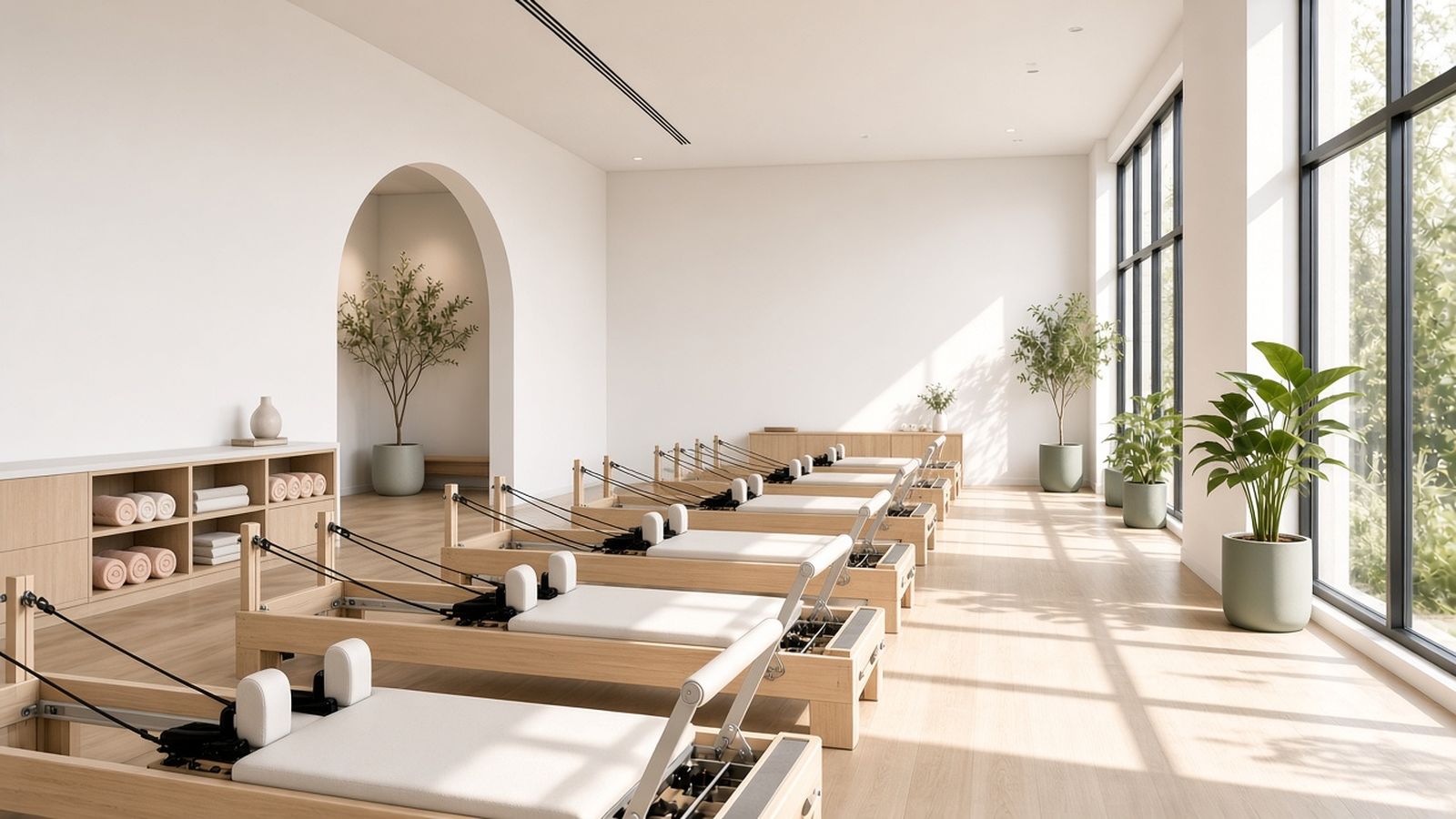
Pilates studios translate a method into a local experience. A studio’s schedule, class size, equipment, instructor education, neighborhood, and welcome all shape how it feels to attend. Some studios focus on small group reformer sessions with a strong sense of continuity. Others emphasize private instruction, classical sequencing, mat classes, or a mix of movement modalities.
Independent studios often build their identity around a particular teacher or community, while multi-location brands can make the experience easier to recognize across markets. Neither model is automatically better. The useful question is whether the studio communicates clearly, teaches responsibly, and creates a setting where people can practice consistently.
A broad professional ecosystem
The industry includes more than studios and instructors. Equipment makers, teacher-training programs, continuing education providers, booking platforms, wellness landlords, physical therapists, apparel companies, and local business partners all contribute to the ecosystem. This creates meaningful opportunities for collaboration when each partner respects the expertise of the others.
Positive growth in Pilates is not only about more classes. It can also mean better access, stronger education, thoughtful business operations, and more inclusive language. Studios that make room for different bodies, ages, abilities, and starting points help the method remain relevant without losing its care and precision.
What to look for next
For a visitor, a useful first step is to name the experience you want: a structured workout, a quiet reset, a specific apparatus, private guidance, or a friendly introduction. Then review the studio’s class descriptions, instructor information, policies, and first-visit guidance. A clear website and a straightforward booking path are small but meaningful signs of a considered operation.
For owners and vendors, the opportunity is to keep the industry human. Build durable relationships, communicate what you actually offer, invest in education, and measure success by the quality of the experience as well as the size of the schedule. The method can continue to evolve while its central promise stays familiar: move with attention, build capacity, and leave with a stronger sense of yourself.